
England’s creative landscape represents a fascinating convergence of tradition and innovation. From Grade I listed buildings hosting cutting-edge performances to independent galleries championing emerging talent, the arts sector thrives on balancing preservation with progress. Whether you’re producing an event in a protected structure, exploring immersive theatre in London’s West End, building an art collection, or seeking funding for a community project, understanding the practical realities of each domain empowers you to navigate this vibrant ecosystem with confidence.
This comprehensive resource introduces the essential knowledge areas that define contemporary arts and creativity in England. We’ll explore the unique challenges of working with historic venues, examine how technology is reshaping theatrical experiences, demystify the independent art market, and clarify the pathways to securing support for creative initiatives. Each section provides the foundational understanding you need to engage meaningfully with these subjects, whether you’re a practitioner, enthusiast, or supporter of the arts.
England’s architectural heritage provides some of the most atmospheric settings for creative events, but these spaces demand specialised knowledge. Listed buildings—categorised as Grade I, Grade II*, or Grade II based on their historical significance—are protected under stringent conservation laws administered by Historic England. Approximately 500,000 structures across the country carry this designation, and working within them requires balancing artistic vision with preservation responsibilities.
Any alteration to a listed building, even temporary installations, typically requires Listed Building Consent from the local planning authority. This applies to seemingly minor interventions: affixing decorations to walls, installing lighting rigs, or modifying existing features. The approval process can take several weeks, demanding advance planning that many event timelines don’t naturally accommodate. Conservation officers evaluate proposals based on their reversibility and impact on historic fabric—think of it as borrowing a priceless artwork where you must return it in precisely the same condition.
Restrictions extend beyond visible alterations. Many listed structures have limitations on:
Historic buildings rarely anticipated modern technical requirements. Power supply often proves the most immediate constraint—original electrical systems may lack the capacity for contemporary lighting, sound, or audiovisual equipment. Solutions require creative problem-solving: portable generators positioned externally, battery-powered equipment, or temporary distribution systems that avoid penetrating historic fabric. A Georgian assembly room, for instance, might offer only domestic-level power circuits where a production needs theatre-grade capacity.
Accessibility presents another complex dimension. Current regulations require reasonable adjustments to accommodate disabled visitors, yet installing permanent ramps or lifts in a Grade I structure may conflict with conservation principles. Venues navigate this through temporary access solutions, careful route planning, and transparent communication about limitations—an imperfect balance between inclusion and preservation.
The financial stakes of working in listed buildings are substantial. Standard public liability insurance often excludes or severely limits cover for heritage damage, requiring specialist policies that account for conservation-grade restoration costs. A damaged 18th-century plasterwork ceiling, for example, demands craftspeople with traditional skills and materials—expenses that dwarf conventional repairs. Event producers must typically demonstrate comprehensive risk assessments, proof of adequate insurance (often £5-10 million in coverage), and detailed condition surveys before and after use. Load-in and load-out scheduling becomes critical, as rushed installations increase accident risk in spaces with uneven floors, low doorways, and narrow staircases never designed for modern equipment.
England’s theatre sector, particularly in London, has witnessed a dramatic shift towards participatory storytelling that dissolves traditional boundaries between performer and audience. This evolution extends beyond gimmickry, representing a fundamental reimagining of how narratives unfold in physical space and how spectators engage with artistic content.
Virtual reality (VR) and augmented reality (AR) technologies have transitioned from experimental novelty to legitimate theatrical tools. Productions now incorporate VR headsets to transport audiences into impossible environments—underwater scenes, historical reconstructions, or abstract psychological landscapes—while AR overlays digital elements onto physical performances in real time. The National Theatre and Royal Shakespeare Company have both invested in exploring these technologies, not as replacements for live performance but as expansions of theatrical vocabulary.
The impact proves most profound when technology serves narrative purpose rather than spectacle. A production might use AR to visualise a character’s memories hovering above the stage, or VR to place audiences inside a protagonist’s subjective experience during a crucial moment. These approaches demand new production skills:
Immersive theatre companies like Punchdrunk have normalised experiences where audiences move freely through elaborately designed environments, choosing which narratives to follow. This format transforms spectators into active explorers, creating personalised story arcs that differ with each viewing. However, this freedom introduces practical considerations that traditional proscenium theatre never confronts.
Choosing the right seat becomes choosing the right experience. Some immersive shows offer tiered participation levels: passive observers wearing distinguishing markers, willing participants who might be pulled into scenes, or fully committed players who receive character assignments. Understanding these distinctions before booking prevents mismatched expectations—an introvert unexpectedly thrust into the spotlight, or an enthusiast relegated to watching from the periphery.
Technical requirements escalate significantly. Multiple simultaneous scenes demand distributed sound systems that prevent acoustic bleeding, lighting that adapts to audience movement, and sight lines designed for 360-degree viewing. Production values shift from perfecting a single viewed perspective to crafting coherent environments that withstand scrutiny from any angle, much like designing a museum exhibition rather than a painting.
Current trends suggest several trajectories for stagecraft evolution. Hybrid performances combining live and digital audiences are becoming permanent fixtures rather than pandemic-era compromises, with productions designed simultaneously for in-person and remote participants. Motion capture technology allows performers’ movements to control digital avatars in real time, creating layered realities where physical and virtual performers interact.
Environmental storytelling—where set design, soundscapes, and even scent create narrative meaning independent of dialogue—continues gaining sophistication. The distinction between installation art, themed entertainment, and theatre grows increasingly porous, challenging traditional categorisations and creating new hybrid forms that defy simple classification.
The independent art market in England operates on different principles than mainstream retail, shaped by relationships, reputation, and long-term value rather than immediate transactions. For newcomers, this ecosystem can seem opaque, but understanding its fundamental dynamics makes it far more accessible than it first appears.
Emerging artists—typically those in the first decade of professional practice—present both opportunity and uncertainty for collectors. Pricing at this level follows loose guidelines based on factors including the artist’s exhibition history, educational credentials, critical reception, and comparable sales. A recent graduate from prestigious institutions like the Royal College of Art or Goldsmiths might command higher initial prices than equally talented artists from less recognised programmes, reflecting market perception rather than intrinsic artistic merit.
Gallery pricing typically reflects several calculation methods:
Think of emerging artist pricing as parallel to property in developing neighbourhoods—current value reflects potential as much as present amenities. A £2,000 painting today might appreciate significantly if the artist’s career trajectory continues upward, or it might plateau if recognition doesn’t materialise. Either outcome can be satisfying if you genuinely connect with the work itself.
Successful gallerists function as curators, advocates, and intermediaries, investing years in developing artists’ careers through exhibitions, fair participation, and collector introductions. Building genuine relationships with gallery staff opens access to information and opportunities unavailable to transactional buyers: advance notice of new work, invitations to studio visits, and insights into an artist’s development and direction.
Effective relationship-building practices include:
Direct artist relationships offer different rewards. Studio visits provide context that transforms understanding—seeing works in progress, failed experiments, and the physical environment where ideas develop. Many artists welcome engaged collectors who appreciate their work conceptually, not merely decoratively. However, purchasing directly from artists represented by galleries often violates agreements that sustain the artist’s broader career infrastructure.
Assessing an artist’s long-term potential combines subjective judgement with objective indicators. Critical recognition through reviews in publications like Frieze, ArtReview, or The Guardian signals professional validation. Inclusion in public collections (Arts Council Collection, regional museums, university galleries) demonstrates institutional confidence. Representation by established galleries with track records of career development suggests professional support infrastructure.
Yet the most reliable predictor of satisfaction remains personal connection. Collecting art you genuinely love ensures reward regardless of financial appreciation. The market for contemporary art proves notoriously unpredictable—buying purely for investment often disappoints, while passion purchases occasionally appreciate spectacularly as happy accidents.
Practical considerations matter equally. Proper framing protects works on paper from light damage, acidification, and physical stress. Hanging techniques should accommodate both the work’s weight and your wall type—solid brick walls allow different solutions than plasterboard partitions. Conservation framing using acid-free materials and UV-filtering glazing represents a worthwhile investment for works you intend to keep long-term, preventing degradation that diminishes both aesthetic and financial value.
Supporting the local creative ecosystem creates ripple effects beyond individual transactions. Purchases at independent galleries, artist studios, and graduate shows fund continued practice, exhibition spaces, and the economic viability of artistic careers. This patron role, accessible at any budget level, directly enables the cultural production you value.
Arts funding in England flows through diverse channels, from national bodies like Arts Council England to local authority grants, charitable trusts, and crowdfunding platforms. Each source carries distinct priorities, application requirements, and accountability expectations. Understanding this landscape transforms funding from mysterious lottery to navigable system.
The term “public engagement” appears throughout funding criteria, often causing confusion for applicants. Essentially, funders increasingly expect supported projects to demonstrate benefit beyond the immediate artistic output—community participation, skills development, accessibility initiatives, or social impact. A theatre production might incorporate workshops in underserved areas; a sculpture commission might include public talks about the creative process; a gallery exhibition might partner with schools for educational programming.
Effective applications articulate this engagement dimension clearly:
Arts Council England, the primary national funder, operates various programmes targeting different scales and purposes—project grants for specific initiatives, Developing Your Creative Practice for individual artists, and National Portfolio Organisation funding for established institutions. Each programme carries specific eligibility criteria and assessment frameworks, requiring careful matching between your project and the appropriate funding stream.
Budgeting for funded projects demands more rigour than personal finance. Funders expect detailed breakdowns demonstrating realistic cost estimation, value for money, and appropriate resource allocation. Common budget categories include artist fees (typically calculated using day rates aligned with sector standards), materials and production costs, venue hire, marketing, documentation, and evaluation expenses. Many applicants underestimate administrative time or overlook essential costs like insurance, accessibility provisions, or contingency reserves.
Successful budgets show you’ve researched actual costs rather than guessing. Quote three suppliers for major expenses, account for VAT where applicable, and include matched funding or in-kind contributions that demonstrate broader support. Think of the budget as a narrative that tells funders you’ve thoroughly planned and can deliver what you promise.
Post-project reporting typically requires both financial accounting and impact evaluation. Financial reports reconcile projected versus actual spending with explanations for significant variances. Impact evaluation assesses whether stated engagement and artistic objectives were achieved, using the metrics you defined in your application. Maintain documentation throughout—attendance records, participant feedback, photos, press coverage—rather than reconstructing evidence after completion.
Many funders now emphasise learning and development over rigid success metrics, recognising that artistic experimentation involves productive failure. Honest reporting about challenges encountered and lessons learned often proves more valuable than inflated claims of unqualified success. This approach builds trust for future applications and contributes to sector-wide knowledge about what works in different contexts.
Understanding these interconnected dimensions of arts and creativity—from the practical realities of heritage venues to the evolving nature of performance, from art market dynamics to funding pathways—provides a foundation for deeper engagement. Each area rewards continued exploration, offering both challenges that demand expertise and opportunities for meaningful participation in England’s rich creative culture.

The secret to a successful Arts Council England application is reframing it from a creative request into a strategic investment proposal that solves their problems. Demonstrate measurable economic and social return on investment, not just artistic merit. Align every aspect…
Read more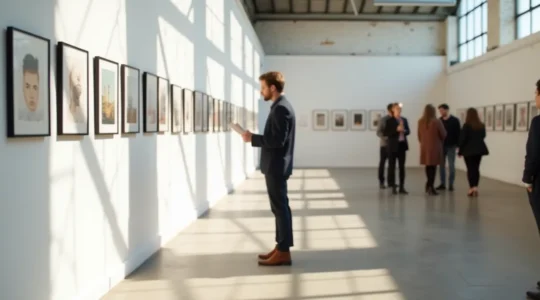
Buying your first original artwork isn’t about having a “good eye”—it’s about learning to read the industry’s signals of value to make a confident purchase. An original artwork’s price reflects the artist’s labour, studio costs, and gallery commission, not just…
Read more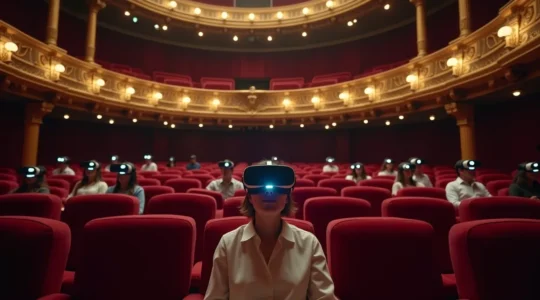
The soaring price of a West End ticket is no longer just about star power; it’s driven by a fundamental shift in value, where immersive technology is creating a new ‘experiential currency’. Productions increasingly use technology like VR and projection…
Read more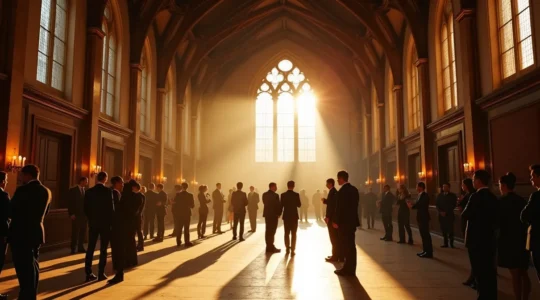
Hosting an event in a Grade I listed building isn’t about navigating restrictions; it’s about mastering heritage-specific operational solutions. Preservation rules are not barriers but technical challenges that have approved, professional workarounds. Success depends on proactive planning around non-negotiables like…
Read more