
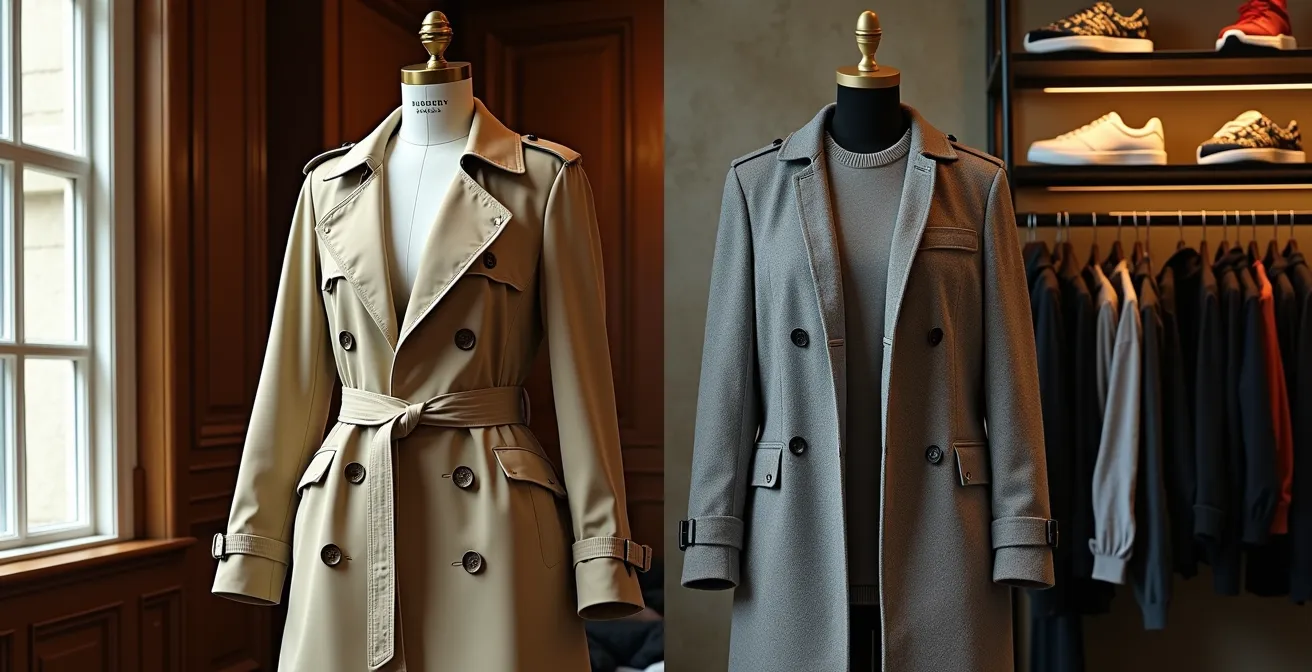
The Burberry trench coat is a smart investment, but only as a strategic anchor within a diversified fashion portfolio, not as a standalone purchase.
- While Burberry handbags can lose up to 70% of their value, the classic trench coat often appreciates on the resale market.
- True value now lies in a mix of assets: heritage pieces, authenticated vintage, and scouting emerging designers from hubs like London Fashion Week.
Recommendation: Shift your mindset from buying single “it” items to building a ‘wardrobe portfolio’ that balances timeless quality with high-potential new talent.
The quintessential British fashion dilemma: invest in the timeless elegance of a Burberry trench coat, a piece steeped in over a century of heritage, or dive into the vibrant, fast-moving world of streetwear and contemporary labels? For the discerning fashion consumer in the UK, this isn’t just a style choice; it’s an investment decision. The common advice is to stick with the classics, assuming they will hold their value and transcend fleeting trends. But in today’s complex market, is that assumption still valid?
The landscape has shifted. We see luxury brands pushing prices to new heights while high-street collaborations offer a taste of designer prestige for a fraction of the cost. The secondary market is booming, but it’s a minefield of fakes and fluctuating values. This guide moves beyond the simple “classic vs. trendy” debate. We propose a new way of thinking: the ‘wardrobe portfolio’. The real question is not *if* you should buy the trench, but *how* it fits into a broader, more strategic collection of fashion assets.
This article will deconstruct the modern UK fashion ecosystem. We will analyse the hard numbers behind resale values, reveal how to spot the next big designer before they become unaffordable, and decode the true investment potential of British craftsmanship. By the end, you will have a clear framework for making smarter, more valuable additions to your personal collection, treating each purchase not as a mere expense, but as a calculated part of your style portfolio.
This comprehensive guide breaks down the key components of building a modern fashion portfolio in the UK. Explore each section to understand where true value lies today.
Contents: Heritage vs Streetwear: A Modern Investment Guide
- Resale Value: Which British Designer Handbags Hold Their Price?
- London Fashion Week: How to Buy from New Designers Before They Get Expensive?
- Harris Tweed vs Tartan: What Is the Difference and Usage?
- Brick Lane or Portobello: Where to Find Genuine Vintage Bargains in London?
- Designer Collaborations: Are the H&M x Designer Collections Worth the Queue?
- Bespoke vs Made-to-Measure: Which Service Justifies the £1,500 Price Difference?
- Instagram vs Newsletters: How to Find Out Where the Best Pop-Ups Are?
- The 3-Coat Rule: Which Outerwear Do You Need for UK Weather?
Resale Value: Which British Designer Handbags Hold Their Price?
The first rule of building a fashion portfolio is to understand depreciation. While we often associate luxury with lasting value, the reality for many British designer handbags is starkly different. Unlike their French counterparts, which can sometimes appreciate, many UK-based luxury bags struggle on the secondary market. A key factor is brand strategy and perceived exclusivity. When a brand over-saturates the market or makes pricing missteps, consumer confidence and resale value plummet.
This is a critical lesson for any investor. According to recent market analysis, some brands like Goyard see over 100% value retention, while Burberry bags retain only 30-50% of their original retail price. This demonstrates that heritage alone is not enough to guarantee a return on investment, especially when it comes to accessories like handbags.
Case Study: Burberry’s Pricing Predicament
Burberry learned a tough lesson about pushing its prices too aggressively. Under new leadership, the brand nearly doubled the price of its most popular handbags, with some models jumping from around £990 to over £1,700. As a report on luxury market dynamics highlights, customers did not respond well to this sharp increase, leading to a downward revision of revenue and profit forecasts. This illustrates how even an iconic brand can damage its market position and, consequently, the investment value of its products, by misjudging its customer base.
To understand what underpins true value, one must look closely at the materials and construction. The finest leather, meticulous stitching, and quality hardware are the tangible assets that endure beyond brand hype. An item’s intrinsic quality often has a greater say in its long-term desirability than the logo it carries.
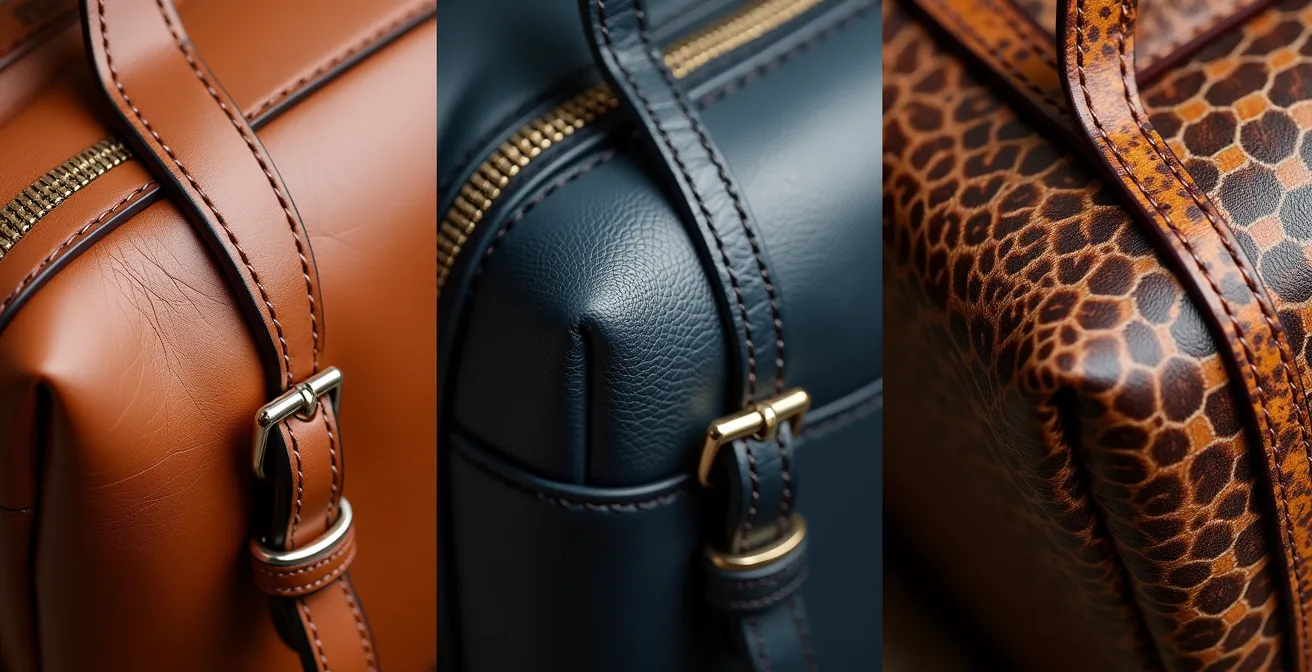
As the close-up image reveals, the tactile qualities of luxury—the grain of the leather, the precision of the stitching—are where real, lasting value is held. These are the elements that a discerning second-hand buyer will look for. Therefore, the smart investor prioritises impeccable craftsmanship over fleeting brand popularity when selecting a handbag as a portfolio asset.
London Fashion Week: How to Buy from New Designers Before They Get Expensive?
While established brands can offer stability, the greatest potential for ‘value arbitrage’ in your fashion portfolio lies in identifying emerging talent. London has one of the most dynamic and influential fashion scenes in the world, nurtured by prestigious institutions and support schemes. Buying a piece from a rising star designer isn’t just a purchase; it’s an early-stage investment in cultural capital. The key is knowing where to look before the designer’s work becomes globally recognised and prohibitively expensive.
London Fashion Week (LFW) is the epicentre, but the real opportunities are not on the main runways. They are in the showrooms and presentations of designers supported by talent incubators. The British Fashion Council (BFC), for example, provides crucial support. In a significant move to bolster new talent, the BFC waived September’s Fashion Week participation fees, which can range from £500 to £10,000. This lowers the barrier to entry, allowing a new wave of creativity to be showcased.
Spotting the next Simone Rocha or JW Anderson requires a strategic eye. You’re looking for a unique aesthetic, a high level of craftsmanship, and institutional backing. Organisations like the BFC and Fashion East are the venture capitalists of the fashion world; their endorsement is a powerful signal of a designer’s potential. Owning an early piece is like holding a first-edition book—its value is tied to its place in a creative history.
Your Action Plan: Identifying Future Fashion Stars
- Track BFC NEWGEN Recipients: This scheme is the gold standard for identifying the best emerging UK talent. These designers are selected for their creativity and innovative approach, with the aim of building future global brands.
- Monitor Graduate Shows: Keep a close eye on the graduate collections from top universities like Central Saint Martins, the London College of Fashion, and the University of Westminster. This is where raw talent first emerges.
- Follow the Fashion East Programme: This non-profit talent incubator has a legendary track record for discovering and launching designers who go on to define the industry.
- Look for Financial Backing: Designers who receive a financial bursary from the BFC to support their collection are receiving a direct vote of confidence and a significant investment in their future.
- Assess the Value-in-Kind Support: NEWGEN’s showcasing support alone averages around £80,000, indicating a serious level of institutional investment that signals strong long-term potential.
Harris Tweed vs Tartan: What Is the Difference and Usage?
Beyond designer names, the very fabric of a garment can be a significant asset. In the UK, two textiles stand out for their rich heritage and investment potential: Harris Tweed and Tartan. While both are associated with British and Scottish identity, they are fundamentally different in their production, authentication, and role within a modern fashion portfolio. Understanding these differences is key to making a smart investment in craftsmanship.
Harris Tweed is a protected textile, legally defined as cloth that has been handwoven by islanders at their homes in the Outer Hebrides of Scotland, using pure virgin wool dyed and spun in the Outer Hebrides. Each bolt is certified with the iconic Harris Tweed Orb mark, a guarantee of authenticity and quality that no other fabric possesses. This makes it a tangible, protected asset. By contrast, Tartan refers to a specific criss-cross pattern, or ‘sett’. While many tartans are registered with the Scottish Register of Tartans and linked to specific clans, the fabric itself can be machine-woven from various materials anywhere in the world.
From an investment perspective, this distinction is crucial. A vintage Harris Tweed jacket from a reputable tailor carries intrinsic value due to its protected origin and handmade nature. A bespoke kilt in a specific family tartan holds immense cultural and personal value, but a mass-produced tartan scarf has little to no secondary market worth. The following table breaks down the key differences for the modern investor, based on a comparative analysis of British heritage materials.
| Aspect | Harris Tweed | Tartan |
|---|---|---|
| Authentication | Harris Tweed Orb label certification | Scottish Register of Tartans |
| Production | Handwoven in Outer Hebrides only | Machine or handwoven globally |
| Investment Value | Higher resale in vintage jackets | Bespoke kilts hold cultural value |
| Modern Usage | Savile Row tailoring revival | Contemporary streetwear adoption |
| Price Range | £300-800 per meter | £50-500 per meter |
Ultimately, the choice depends on your portfolio strategy. Harris Tweed is an investment in legally protected, artisanal craftsmanship. Tartan is an investment in pattern and cultural identity, whose value is highly dependent on the quality of its production and the context of its use.
Brick Lane or Portobello: Where to Find Genuine Vintage Bargains in London?
The vintage market offers a compelling route to acquiring high-quality, unique pieces for your fashion portfolio, often at a fraction of their original cost. London, with its world-famous markets like Portobello Road and the boutiques of Brick Lane, is a treasure trove for the determined hunter. However, “bargain” is a relative term. The real skill lies in distinguishing between a genuinely undervalued gem and a well-worn, overpriced item. The market is split between casual, uncurated stalls and a more professionalised, authenticated pre-loved luxury sector.
Your approach should depend on what you’re seeking. For unique, characterful pieces without a focus on designer labels, the sprawling markets are perfect for discovery. This is where you might find a beautifully constructed 1960s wool coat or a one-of-a-kind handmade bag. For high-value designer items, however, a more discerning approach is required to ensure authenticity. The pre-loved market has matured significantly, and today Designer Exchange is the UK’s largest preloved luxury retailer, offering a safer route for those seeking guaranteed authenticity.
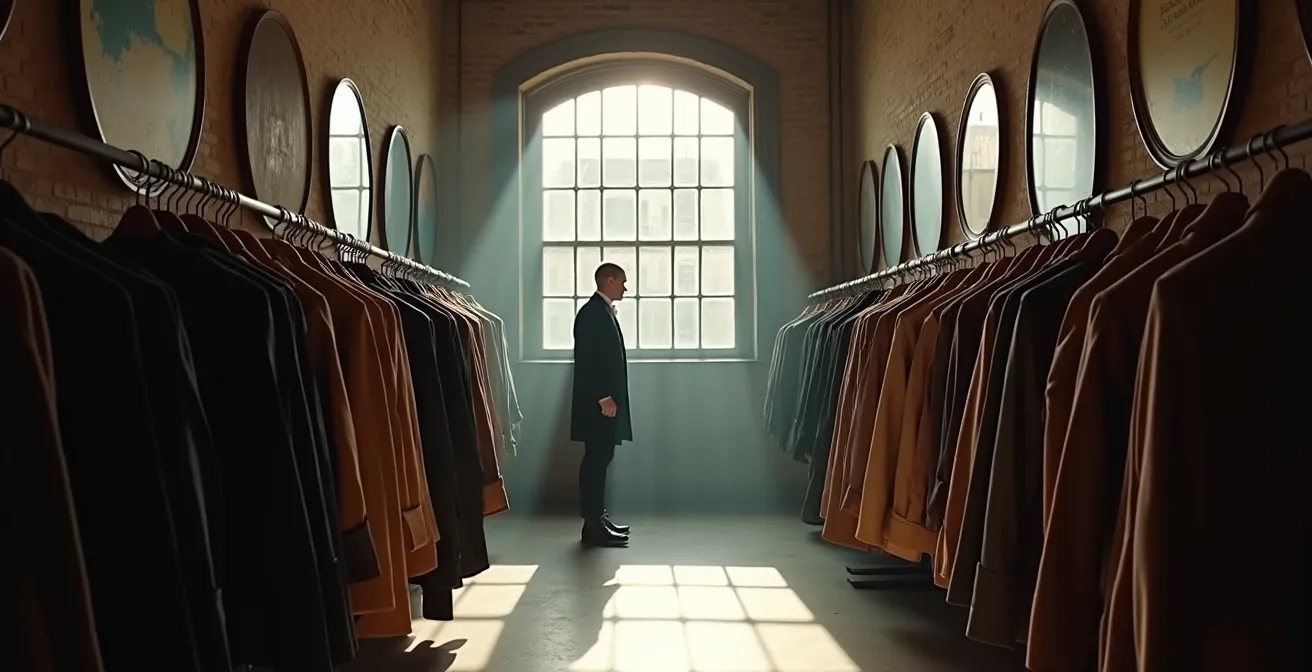
Beyond mainstream retailers, specialist auction houses provide another avenue for serious collectors. These institutions offer curated collections of rare and historically significant fashion items, providing a guarantee of provenance that is impossible to find in a market stall. For example, a house like Lyon & Turnbull sources and sells enviable collections from exclusive fashion houses, giving you the opportunity to own a verified piece of fashion history, from archive Dior to coveted Hermès bags. This is not bargain hunting; it is strategic acquisition.
So, where are the genuine bargains? For the portfolio-minded investor, they are found not by haggling over a few pounds at a market stall, but by leveraging expertise. A true bargain is acquiring an authenticated, high-quality piece from a trusted source for less than its long-term intrinsic value—whether that’s a perfect-condition trench from a consignment store or a rare piece from a specialised auction.
Designer Collaborations: Are the H&M x Designer Collections Worth the Queue?
High-street designer collaborations, epitomised by the blockbuster H&M collections, present a tantalising proposition: the chance to own a piece of a luxury designer’s aesthetic without the eye-watering price tag. The frenzied queues and instant sell-outs suggest these items are highly coveted. But are they a smart addition to a fashion investment portfolio, or are they a form of “fast luxury” with a short shelf life and minimal resale value?
The primary appeal is access. When a designer’s mainline pieces are prohibitively expensive, a collaboration offers a gateway to their creative world. However, the investment case is weak. These collections are mass-produced to a lower quality standard than the designer’s main line. While they may fetch a premium on eBay in the immediate aftermath of a launch, this value is driven by short-term hype, not lasting quality. Over time, most of these pieces depreciate rapidly, ending up with little more value than standard high-street clothing.
A far more strategic approach to “collaboration” comes from the luxury brands themselves, focusing on sustainability and the circular economy. This represents a more mature and value-oriented form of partnership that aligns perfectly with the portfolio mindset. It’s about extending the lifecycle of high-quality items rather than creating disposable ones.
Case in Point: Burberry’s Circular Partnership with Vestiaire Collective
In a forward-thinking move, Burberry collaborated with the luxury resale platform Vestiaire Collective. This partnership encourages customers to trade in their pre-owned Burberry clothing and handbags. In return, they receive a Burberry gift card to reinvest in new items from the brand. This initiative achieves two goals: it promotes a circular style project that reduces waste, and it reinforces the idea that Burberry’s core products are assets with enduring value. It’s a powerful statement that positions the brand’s heritage pieces as items to be owned, cared for, and eventually passed on, rather than consumed and discarded.
This contrast is clear: one model creates temporary hype, while the other builds long-term brand equity and customer loyalty. For the savvy investor, participating in circular initiatives like Burberry’s is a far smarter play. It not only supports a more sustainable fashion ecosystem but also encourages investment in items that are designed to last and retain their value in the first place.
Bespoke vs Made-to-Measure: Which Service Justifies the £1,500 Price Difference?
At the pinnacle of a fashion portfolio sits tailoring. For those considering an investment in a truly personal and long-lasting garment, the terms “bespoke” and “made-to-measure” are often used interchangeably, but they represent vastly different levels of craftsmanship, service, and investment. The typical £1,500+ price difference between the two is not arbitrary; it reflects a fundamental divergence in process and product, particularly in the hallowed halls of London’s Savile Row.
Made-to-measure (MTM) is an service of personalisation. It starts with an existing pattern or “block” from the tailor’s collection. Your measurements are then taken, and the standard pattern is adjusted to fit you better. While it offers a superior fit to off-the-rack clothing, the creative control is limited, and the garment is still based on a pre-existing template. It is, in essence, a very well-adjusted standard product.
Bespoke, in its purest Savile Row definition, is an service of creation. There is no pre-existing pattern. Instead, a unique pattern is drafted from scratch, exclusively for your body and posture, after extensive consultation and dozens of measurements. The process involves multiple fittings (typically three or more) where a “basted” version of the garment is tweaked and re-shaped directly on your body. This allows for unparalleled precision, accommodating the unique nuances of any physique. It is a collaboration between client and craftsman to create a true one-of-a-kind object.
The price difference is justified by labour and expertise. A bespoke suit requires hundreds of hours of work by highly skilled artisans, from the master cutter who drafts the pattern to the tailor who sews the lapels by hand. This level of construction not only provides a perfect fit but also ensures extreme durability. A bespoke suit is built to be altered and repaired over a lifetime, making it a genuine lifecycle investment. An MTM suit, with less internal seam allowance and simpler construction, offers far less flexibility for future adjustments as your body changes.
Instagram vs Newsletters: How to Find Out Where the Best Pop-Ups Are?
In the fast-paced London fashion scene, pop-ups and sample sales are where some of the most exciting portfolio opportunities can be found. These temporary events offer access to exclusive pieces, archive items, and emerging designers at a significant discount. However, their fleeting nature means that information is the most valuable currency. While a casual scroll through Instagram might yield some results, the serious fashion investor needs a more targeted, insider-led strategy to get ahead of the crowds.
Public social media platforms like Instagram are a starting point, but they are often saturated and the information can be delayed. By the time a popular account posts about a sample sale, the best items are often already gone. The real alpha is found in more private, curated channels where information is shared within a trusted community. These are the digital equivalents of a whispered tip from a friend in the know.
The most effective strategy is a multi-channel approach that prioritises niche sources over mass platforms. This involves actively seeking out communities and curators who are deeply embedded in the London fashion ecosystem. By tapping into these networks, you move from being a passive consumer of information to an active participant in the discovery process, gaining access to opportunities that the general public will miss. The goal is to get the information first, allowing you to be at the front of the queue, both literally and figuratively.
Your Action Plan: Uncovering London’s Exclusive Pop-Ups
- Join Private UK-Based WhatsApp Groups: Seek out and request to join private groups run by fashion industry insiders and personal shoppers. This is where the most timely and exclusive information is often shared first.
- Follow Specialised Instagram Accounts: Instead of general fashion influencers, follow niche accounts that focus exclusively on London sample sales, archive clearances, and emerging designer pop-ups. Their content is highly targeted and actionable.
- Subscribe to Curated Newsletters: Sign up for newsletters from influential concept stores like Dover Street Market London and other independent boutiques. They often provide their subscribers with early access and private invitations.
- Monitor BFC Talent Schemes: Keep a close watch on announcements from the British Fashion Council’s NEWGEN and Fashion East programmes. They often host showcases and pop-ups for their supported designers that are open to the public for a limited time.
- Track Venue Announcements: Follow the schedules of key BFC venues and independent galleries in areas like Soho and Shoreditch, as they frequently announce exclusive designer showcases and pop-up events.
Key Takeaways
- A ‘wardrobe portfolio’ mindset balances heritage pieces, high-potential emerging designers, and authenticated vintage.
- Investment value is not guaranteed by brand name alone; craftsmanship, material, and market strategy are critical.
- True portfolio growth comes from proactive discovery: scouting talent, navigating the authenticated resale market, and accessing insider information.
The 3-Coat Rule: Which Outerwear Do You Need for UK Weather?
Now, we return to the original question: the Burberry trench. Having explored the diverse assets available for a fashion portfolio, how do we position this iconic piece? The answer lies in a practical framework: the “3-Coat Rule” for navigating the notoriously unpredictable UK weather. This rule posits that a complete outerwear wardrobe requires three key pieces: a formal wool overcoat, a casual technical jacket, and a versatile, weatherproof trench. In this context, the Burberry trench is not just an item, but a functional and strategic pillar of your portfolio.
This is precisely the strategy Burberry itself is doubling down on. Under new leadership, the brand is successfully refocusing on its British roots and flagship outerwear, helping it resist wider market downturns. The trench coat is the brand’s strategic anchor, the product that best embodies its heritage of quality and functionality. Unlike its handbags, which have faced valuation issues, the brand’s outerwear is where its reputation remains unassailable.
The investment data confirms this. While the bags may depreciate, the trench coat is a different story entirely. It is one of the few fashion items that can genuinely be considered an asset that appreciates with time. According to investment analysis, even with regular use, pre-loved trench coats are known to sell for more than their original retail price. A classic model retailing for around £2,400 (approx. $4,300 AUD) can command over £2,800 (approx. $5,000 AUD) on the resale market, demonstrating a clear return on investment.
Therefore, investing in a Burberry trench is an unequivocally smart move, but only when viewed through the portfolio lens. It is not the *only* smart purchase, but it is the cornerstone. It provides the timeless style, durable functionality, and proven asset appreciation that stabilises the more speculative or trend-driven elements of your collection. It is the blue-chip stock in your fashion portfolio.
Now that you have the framework for building your fashion portfolio, from outerwear to accessories, applying this strategic mindset to every potential purchase is the logical next step to building lasting value.
Frequently Asked Questions About Tailoring Investment
Does bespoke hold better resale value than made-to-measure?
Yes, true bespoke from historic Savile Row tailors typically maintains measurable resale value, while made-to-measure suits are often worthless on the secondary market due to specific customization for individual body measurements.
What’s the real cost difference over 10 years?
When factoring in durability, repairs, and alteration costs, bespoke can be more cost-effective long-term. The initial £1,500 premium is offset by superior construction allowing for multiple refurbishments.
Which Savile Row houses offer the best investment potential?
Historic houses like Gieves & Hawkes, Henry Poole, and Anderson & Sheppard command the strongest secondary market prices due to their heritage and construction quality.