
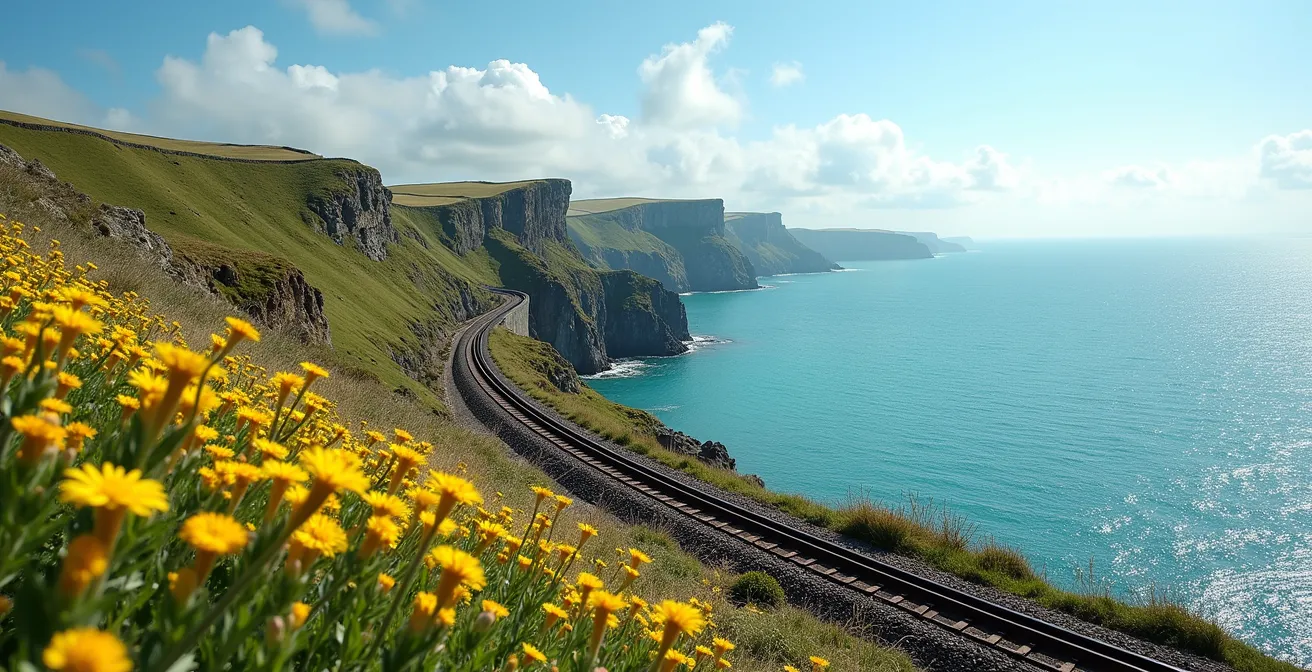
The secret to a brilliant car-free Cornish holiday isn’t just swapping your car for a train; it’s about ditching the “road trip” mindset for a “slow travel” strategy.
- Focus your stay in a well-connected ‘hub’ town like Falmouth to explore the local area in depth via ferries, buses, and coastal paths.
- Use luggage forwarding services to send your main suitcase ahead, allowing you to travel light and stress-free on public transport.
Recommendation: Before you book anything, ask your potential accommodation the five critical questions from our “Car-Free Welcome Test” to ensure your stay will be logistically seamless.
The dream is simple: swapping the roar of London for the sound of waves on a Cornish shore. But for those of us without a car, the dream quickly hits a logistical wall. The romantic image of winding country lanes is replaced by the anxiety of rural bus timetables, lugging suitcases on and off trains, and the fear of being stranded miles from the nearest scone. The default advice—”just take the train and use buses”—often ignores the very real challenges that can turn a relaxing break into a military-style operation.
Many guides talk about sustainable travel in abstract terms. They’ll praise local food and eco-labels, but they don’t tackle the granular, anxiety-inducing questions. How do you get your weekly shop to a remote cottage? How do you pack for a week of unpredictable British weather in a single backpack? And is an electric car really less green than a train when you factor everything in? The truth is, a successful car-free holiday isn’t about hope and a railcard; it’s about a strategic shift in perspective.
This guide moves beyond the platitudes. The key isn’t to replicate a car-based itinerary using public transport, but to embrace an entirely different, more rewarding model of travel. It’s about mastering a ‘logistical ecosystem’ of smart packing, well-chosen bases, and local services. It’s a philosophy of ‘slow travel’ that prioritises depth over distance, revealing a side of Cornwall that is inaccessible to those speeding from one tourist hotspot to the next. By staying in one place and exploring outwards, you not only reduce your carbon footprint but also save money and connect more deeply with the landscape you came to enjoy.
This article provides a complete framework for planning that holiday. We’ll start by decoding what “eco-friendly” really means for your accommodation, then tackle the practicalities of packing and transport. Finally, we’ll explore how to structure your days and direct your spending to have an experience that is not only sustainable, but fundamentally better.
Contents: A Blueprint for Your Cornish Escape
- Greenwashing vs Green Awards: How to Spot a Genuinely Eco-Friendly B&B?
- One Backpack Travel: How to Pack for a Week of British Weather?
- Train vs Electric Car: Which Mode of Transport Is Truly Lower Carbon for UK Trips?
- The Local Food Trap: Why “Local” Doesn’t Always Mean Sustainable?
- Why Staying in One Village for a Week Beats Touring the Whole County?
- National Trust or English Heritage: Which Membership Suits Southern England Residents Best?
- Farm Shops vs Supermarkets: Why Spending £20 Locally Protects the Landscape?
- How to Save Over £400 a Year Visiting National Heritage Sites with a Family of Four?
Greenwashing vs Green Awards: How to Spot a Genuinely Eco-Friendly B&B?
The term “eco-friendly” is everywhere, but it often means little more than a polite request to reuse your towels. For a car-free traveller, a truly sustainable B&B is one that is not just green in principle, but practical in its support of your low-carbon trip. The good news is that the sector is professionalising, with over 2,000 UK hospitality businesses having achieved Green Tourism certification, showing a real commitment beyond marketing buzzwords. Your first step is to look for credible, third-party audited certifications rather than vague, self-proclaimed “eco” credentials.
A truly eco-friendly stay understands the logistical ecosystem of a car-free visitor. They know you can’t just ‘pop to the shops’ and will have measures in place to help. This is where you move from a passive consumer to an active investigator. Before booking, don’t just ask about their recycling policy; ask about their policy for supporting guests like you. Are they on a practical bus route? Do they have secure bike storage? Will they accept a grocery delivery on your behalf before you arrive? Their answers to these questions are a far better indicator of their genuine “eco” commitment than the brand of soap in the bathroom.
To help you separate the genuinely helpful from the greenwashers, we’ve compiled a hierarchy of certifications. While any certification is a good start, understanding the difference between a basic commitment and a full-impact business model like a B Corp allows you to vote with your wallet for the businesses making the biggest difference.
| Level | Certification | Standards | Annual Cost | Audit Frequency |
|---|---|---|---|---|
| Good | Green Tourism Bronze | Basic sustainability measures | £150-£250 | Every 3 years |
| Better | Green Tourism Gold | Comprehensive environmental actions | £400-£700 | Every 3 years |
| Best | B Corp Certification | Score 80+ on full impact assessment | £1,000-£50,000 (varies) | Every 3 years |
The Car-Free Welcome Test: Your Pre-Booking Checklist
- Logistical Support: “Can you accept a grocery delivery for us before our arrival?” This tests their understanding of car-free challenges.
- Accessibility Truth: “What is the actual walking distance and terrain from the nearest bus stop to your property?” This uncovers the reality behind ‘close to transport links’.
- Local Network: “Do you have partnerships with local taxi firms or e-bike rental companies we can pre-book?” This shows they are part of the local transport solution.
- Flexibility: “Can you provide a packed lunch for an early morning departure or store our luggage if we arrive before check-in?” This shows they cater to public transport schedules, not just driver arrivals.
- Integration Plan: “Do you offer luggage storage if we arrive before check-in or after check-out via public transport?” This is a crucial final check for seamless travel days.
Ultimately, the most sustainable choice is the one that works. A B&B that makes your car-free stay easy and enjoyable is doing more for the planet than one with a perfect recycling system but leaves you feeling isolated and stressed.
One Backpack Travel: How to Pack for a Week of British Weather?
The biggest physical barrier to car-free travel is often the luggage. The thought of wrestling a large suitcase onto a packed train and then onto a rural bus is enough to make anyone reach for the car keys. The typical advice, “pack light,” is unhelpful. The real solution is to separate your journey from your luggage, embracing a ‘one backpack’ travel philosophy for the transit part of your holiday.
This approach involves two key components. First, a modular wardrobe built on layers and multi-functional items. Think a merino wool base layer, a quality fleece or wool jumper, quick-drying trousers, and a reliable waterproof and windproof outer shell. This core set, combined with a few essentials, can handle everything from a sunny coastal walk to a sudden downpour. It’s not about having less; it’s about having a versatile system. The goal is to have everything you need for the journey and your first 24 hours in a comfortable backpack.

The second, and most crucial, component is using a luggage forwarding service. This is the single biggest game-changer for car-free travel in the UK and creates a genuinely frictionless transition from city to coast. You pack your main suitcase with beach towels, extra clothes, and books, and a courier picks it up from your London home and delivers it directly to your Cornish accommodation, ready and waiting for your arrival.
Case Study: The Cornwall Luggage Forwarding Strategy
Services like Send My Bag or Luggage Mule enable travellers to forward their main suitcase directly to their Cornwall accommodation. This allows for true ‘one backpack’ travel on trains and buses, removing the primary stressor of public transport journeys. A typical service costs just £15-£25 for a 20kg suitcase from London to Cornwall, arriving within 24-48 hours. This small cost completely transforms the travel experience, making the journey part of the holiday rather than an endurance test.
By uncoupling yourself from your main luggage, you are free to enjoy the scenic train ride, navigate stations with ease, and hop on a local bus without causing a major obstruction. It transforms the journey from a logistical burden into a seamless and relaxing start to your holiday.
Train vs Electric Car: Which Mode of Transport Is Truly Lower Carbon for UK Trips?
The debate between an electric car (EV) and a train for a long-distance UK trip like London to Cornwall seems complex, but for a non-car-owner, the answer is remarkably clear. While an EV produces zero tailpipe emissions, this ignores the significant ’embedded carbon’ from its manufacturing and the source of the electricity used to charge it. When you’re making a special trip, the train is almost always the more sustainable and logical choice.
From a pure carbon perspective, rail travel is significantly more efficient per passenger than travelling by car, even an electric one with multiple occupants. Train operators like Great Western Railway, which runs the main line to Penzance, are investing in modern fleets and efficient operations. The journey itself becomes part of the experience; a train journey from London Paddington to Cornwall takes approximately 5 hours and offers stunning scenic views of the Devon and Cornwall coast that are simply missed from the motorway.
For the Londoner without a car, the choice is even simpler. Renting an EV for a week involves cost, logistics, and the hassle of finding charging points in rural areas. The train, on the other hand, delivers you directly into the heart of well-connected towns like Penzance, Truro, or Falmouth, where your car-free adventure can begin immediately. It’s a prime example of favouring access-over-ownership for a more sustainable and less stressful holiday.
Case Study: London Paddington to Penzance Carbon Comparison
While a direct flight is the worst offender, producing over three times the CO2 of a car, the comparison between train and car is more nuanced. However, for a traveller starting without a car, the embedded carbon of manufacturing a vehicle cannot be ignored. The most sustainable option is to use the existing, highly efficient infrastructure. Train services operated by Great Western Railway provide the lowest carbon footprint for reaching Cornwall from London, allowing you to relax and watch the landscape change, arriving refreshed and ready to explore.
Choosing the train isn’t just an environmental decision; it’s a strategic one. It aligns perfectly with the ‘slow travel’ mindset, starting your holiday from the moment you leave the station, not after five hours stuck in traffic on the A30.
The Local Food Trap: Why “Local” Doesn’t Always Mean Sustainable?
One of the great joys of a Cornish holiday is the food. The idea of eating fresh fish while looking at the sea it came from is a core part of the appeal. The mantra to “eat local” is a good starting point, but it’s a classic sustainable travel trap. “Local” is not a synonym for “sustainable.” A polytunnel-grown tomato from a farm a mile away can have a higher carbon footprint than a field-grown one shipped from Spain. The key is to look for two things: seasonality and appropriate scale.
Sustainable eating in Cornwall means asking more specific questions. Instead of just “local fish,” ask if it’s line-caught mackerel from a small day boat. Instead of just “local veg,” look for seasonal produce sold at a farm shop or a genuine farmers’ market. This is about understanding the story behind your food. Was it grown in a way that supports the soil and biodiversity? Was it caught using methods that don’t harm the marine ecosystem? These are the questions that lead to a truly sustainable plate.
This doesn’t have to be complicated. It’s about making conscious swaps and knowing where to look. Choosing pasture-fed lamb from a specific local farm, for instance, supports a farming system that helps maintain Cornwall’s iconic landscape. Visiting a designated farmers’ market like the one in Truro guarantees you’re buying from the producer, not a reseller stocking imported goods. It’s a small shift in mindset that has a huge impact on the local economy and environment.
- Choose line-caught mackerel from day boats over farmed salmon or trawled cod.
- Opt for pasture-fed lamb or beef from specific local farms that practice regenerative agriculture.
- Select seasonal vegetables from farm shops over out-of-season produce grown in heated polytunnels.
- Buy from genuine producer-led markets like Truro Farmers’ Market on Lemon Quay to ensure your money goes directly to the farmer.
- Visit community hubs like the Tregew food barn on a Saturday morning in Flushing for a curated selection of sustainable, local produce.
By being a little more discerning, you move beyond the “local food trap” and become an active participant in the local value loop, ensuring your holiday spending directly supports the people and practices that protect the Cornish landscape.
Why Staying in One Village for a Week Beats Touring the Whole County?
The biggest mistake car-free travellers make is trying to replicate a car-based itinerary. The classic Cornish road trip—St Ives one day, the Lizard the next, Fowey after that—is a recipe for stress on public transport. The solution is radical but simple: adopt a slow travel mindset. Pick one well-connected village or town as your base for the entire week and explore it, and its immediate surroundings, deeply.
This “hub and spoke” model transforms your holiday. Instead of spending hours in transit, you spend that time walking a new section of the coastal path, discovering a hidden cove, or becoming a regular at the local bakery. You unpack once. You get to know the rhythm of a place. This approach not only slashes your travel time and stress but also your costs. As travel experts calculate, simply moving your base from St Ives to Fowey can cost around 4 hours and £50 in transport and lost time.
Case Study: Falmouth as a Car-Free Hub & Spoke Base
Falmouth is a perfect example of a car-free hub. With two train stations, a network of local buses, and a passenger ferry service, it offers incredible access without a car. From a base in Falmouth, you can easily take a ferry to the picturesque village of St Mawes, a train to the city of Truro for its market, or a bus to the subtropical gardens of Glendurgan and Trebah. The town itself has the National Maritime Museum, Pendennis Castle, beautiful beaches, and miles of coastal path, providing more than enough to do for a week before you even consider travelling further afield.
By staying put, you trade the fleeting glimpses of a touring holiday for a genuine connection to one small corner of Cornwall. You start to feel the pulse of the village, notice the tide times, and recognise the local fisherman heading out in the morning. It’s a richer, more relaxing, and fundamentally more sustainable way to experience the county.
This isn’t about seeing less; it’s about experiencing more. By slowing down and staying local, you unlock a side of Cornwall that most tourists, speeding by in their cars, will never see.
National Trust or English Heritage: Which Membership Suits Southern England Residents Best?
For a resident of Southern England planning multiple trips, a membership to the National Trust (NT) or English Heritage (EH) is a savvy investment. But for a car-free holiday in Cornwall, the best choice isn’t about the number of properties, but their public transport accessibility. Before you buy, you must analyse which organisation’s Cornish sites align best with the bus and train network. A magnificent castle is useless to you if it requires a £30 taxi ride to reach.
Generally, the National Trust has a stronger portfolio of gardens and coastal properties in Cornwall that are surprisingly well-served by public transport. Sites like St Michael’s Mount and Glendurgan Garden have direct or nearby bus stops. English Heritage, with its flagship sites like Tintagel and Pendennis Castle, offers a different flavour. Pendennis in Falmouth is very easy to access, but Tintagel can be challenging without a car, requiring a bit more planning. The key is to check the “How to get here” section on each property’s website before you plan your day.
The ultimate strategy for the dedicated heritage visitor is to combine a membership with a local transport pass. A Cornwall Ranger or an All Cornwall Day ticket gives you unlimited travel on buses and some trains, turning the transport network into your ‘hop-on, hop-off’ service. This access-over-ownership model is the most cost-effective and sustainable way to explore Cornwall’s rich history.
| Site | Organization | Public Transport Access | Rating |
|---|---|---|---|
| Lanhydrock | NT | 1.75 miles from Bodmin Parkway station | 7/10 |
| Glendurgan Garden | NT | Bus stops at entrance (not Sundays) | 8/10 |
| St Michael’s Mount | NT | Bus from Penzance to Marazion | 9/10 |
| Tintagel Castle | EH | Infrequent bus service | 4/10 |
| Pendennis Castle | EH | Regular bus from Falmouth | 8/10 |
By planning your visits around the transport timetable, you can create powerful synergies. For example, you could visit an NT garden in the morning and an EH castle in the afternoon, all using a single bus rover ticket. This approach requires a little more forethought than jumping in a car, but the reward is a day of travel that is stress-free, scenic, and incredibly good value.
This strategic planning transforms heritage sites from isolated destinations into integrated parts of your car-free itinerary, proving that a love for history and a commitment to sustainability can go hand in hand.
Farm Shops vs Supermarkets: Why Spending £20 Locally Protects the Landscape?
When you’re staying in a self-catering cottage without a car, the weekly shop can be a major logistical hurdle. The temptation is to find the nearest supermarket, but this often involves a costly taxi ride that negates any savings. A far better approach is to embrace the network of farm shops and local producers. This isn’t just about twee sentimentality; it’s a hard-nosed economic and logistical decision that creates a powerful local value loop.
Tourism is a huge part of the Cornish economy, and your spending choices have a direct impact on the landscape. As economic research shows, tourism makes up 15% of Cornwall’s economy, with significant indirect contributions. When you spend £20 at a supermarket, most of that money leaves Cornwall immediately. When you spend that same £20 at a local farm shop, a far greater proportion stays within the community, supporting the farmers who manage the fields and hedgerows that create the scenery you came to admire.
From a purely practical standpoint, farm shops are often more accessible to the car-free visitor than you might think. Many are located on scenic bus routes, turning a shopping trip into a pleasant outing. Crucially, a growing number of them offer local delivery services for a small fee, a service that is often cheaper and more convenient than a return taxi fare to an out-of-town supermarket.
Case Study: Total Cost of Shopping Comparison
For a car-free visitor, the “cheap” supermarket is often a false economy. A £15 return taxi fare to a large supermarket on the edge of town can wipe out any savings on groceries. In contrast, many locally-run farm shops or village stores will deliver an order to your B&B or holiday cottage for a fee of around £5. By planning ahead and placing an order online or by phone, you not only save money and hassle but also directly support local farms and fishermen, helping to keep food miles down and keep the local economy vibrant.
By redirecting your food budget towards these local enterprises, you are not just a tourist; you become a temporary custodian of the Cornish landscape, ensuring your holiday has a positive and lasting legacy.
Key Takeaways
- Embrace the ‘hub and spoke’ model: Base yourself in one well-connected town to reduce travel time and stress.
- Luggage forwarding is your secret weapon: Send your main bag ahead to travel light and enjoy the journey.
- Spend with purpose: Choosing farm shops and certified B&Bs directly supports the local economy and protects the landscape.
How to Save Over £400 a Year Visiting National Heritage Sites with a Family of Four?
A common myth is that a ‘free’ day at the beach is the cheapest day out in Cornwall. Once you factor in the hidden costs of driving and parking, this is often not the case. For the car-free traveller, a day visiting a paid-entry heritage site can be surprisingly economical and offer far greater value, especially when leveraging memberships and public transport passes.
Let’s break down the real costs. A car journey to a ‘free’ beach often involves significant fuel costs and exorbitant beachside parking fees, which can easily reach £12 or more for the day. Add in the high price of food from beach kiosks, and the ‘free’ day can quickly become very expensive. In contrast, a day out using a family bus ticket to reach a National Trust or English Heritage property presents a much clearer and often lower total cost, especially if you pack your own lunch.
This table illustrates how the perceived costs can be misleading. The ‘free’ option, once all car-related expenses are included, is almost identical in price to a structured day out at a heritage site, which offers facilities, educational value, and all-weather options.
| Cost Factor | Car to ‘Free’ Beach | Bus to Heritage Site |
|---|---|---|
| Transport | Fuel: £15 | Family bus ticket: £20 |
| Parking | Beach parking: £12 | Included |
| Food | Beach kiosk: £35 | Packed lunch: £10 |
| Entry | Free | Family ticket: £35 |
| Total | £62 | £65 |
Furthermore, Cornwall is rich in heritage that is completely free to access. The county’s 300-mile coast path is a public right of way, connecting countless historical sites. The iconic engine houses of the UNESCO mining world heritage site can be explored for free, as can prehistoric stone circles like the Merry Maidens. A multi-day itinerary built around these free sites, using the bus network and your own two feet, offers an incredibly rich and virtually cost-free holiday experience.
Ultimately, a car-free holiday in Cornwall is not about limitation; it’s about liberation. It frees you from traffic jams, parking stress, and the bubble of your vehicle, allowing you to connect with the landscape, the people, and the rhythm of this unique corner of England in a way that is richer, deeper, and genuinely sustainable.