

In summary:
- Build your foundation with merino wool base layers for superior temperature and moisture control in the UK’s variable climate.
- Choose outerwear like technical trench coats that blend classic aesthetics with modern waterproof, breathable membranes.
- Preserve your gear’s performance by mastering the correct washing techniques to maintain its DWR coating.
- Select footwear and pack your commuter bag with an engineering mindset to ensure you arrive polished and wrinkle-free.
The classic British commuter’s dilemma: you brave a damp, drizzly cycle or a brisk walk to the office, only to arrive feeling less than polished. The battle between staying dry and adhering to a smart dress code often feels like a losing one. Standard advice usually falls into two unhelpful camps: either surrender to full sportswear and face the awkward office change, or suffer in silence in a traditional wool suit that acts like a sponge in the rain.
For years, the worlds of high-performance activewear and classic tailoring have existed in separate universes. But what if the solution wasn’t about choosing one over the other? What if the secret to mastering the commute was about a quiet, intelligent integration of the two? The key is not a wardrobe revolution, but a subtle evolution based on the principle of invisible performance—where cutting-edge fabric technology is hidden within timeless, corporate-appropriate silhouettes.
This isn’t about looking like you’ve just stepped off the Tour de France. It’s about strategic material intelligence and commuter engineering. This guide will deconstruct the process, showing you how to select the right fabrics, care for them correctly, and assemble a complete, weatherproof system that respects the codes of the workplace. We’ll explore everything from the foundational role of merino wool to the subtle art of packing a blazer so it emerges pristine after a journey across London.
To navigate this hybrid world of style and function, this article breaks down the essential components of a modern commuter’s wardrobe. The following sections provide a structured guide to making smart, performance-oriented choices without sacrificing professional polish.
Summary: Mastering Technical Fabrics for the British Office
- Why Merino Wool Outperforms Synthetic Blends for Temperature Regulation in the UK?
- Trench Coats vs Macintoshes: Which Offers Better Rain Protection for Pedestrians?
- The Washing Mistake That Destroys the DWR Coating on Your Rain Gear
- How to Identify Truly Breathable Leather Shoes for 10-Hour Shifts?
- Packing a Commuter Bag: How to Fold a Blazer So It Emerges Wrinkle-Free?
- The Last Mile: How to Link E-Bike Rides with Train Commutes Smoothly?
- Zone 2 Cardio: Why Brisk Walking Is Enough for Heart Health?
- Lime vs Forest: Which Dockless E-Bike Subscription Offers Best Value in London?
Why Merino Wool Outperforms Synthetic Blends for Temperature Regulation in the UK?
The foundation of any successful commuter system begins with the layer closest to your skin. In the UK’s perpetually damp and fluctuating climate, managing moisture and temperature is paramount. While synthetic base layers are often marketed for their “wicking” properties, they fall short in the typical ‘stop-go’ nature of a commute. The real star performer is Merino wool, a natural fibre with an almost magical ability to regulate your microclimate.
The genius of Merino lies in its complex structure. Unlike synthetics, which simply move sweat away from the skin, Merino fibres can both absorb and release moisture vapour. In fact, studies show merino wool can absorb up to 35% of its weight in moisture without feeling wet to the touch. This means during a packed, stuffy Tube ride or a brisk walk, the fabric absorbs your perspiration, preventing the clammy chill that occurs when you stop moving. As you cool down, it slowly releases that moisture, keeping you dry and comfortable.
This unique quality is what makes it ideal for layering under traditional office attire. A lightweight (150-gsm) Merino base layer or t-shirt can be worn invisibly under a classic Jermyn Street shirt, providing exceptional thermal comfort without adding bulk. Research from North Carolina State University, highlighted by The Woolmark Company, confirms that 100% wool base-layers offer superior comfort for activities involving intermittent effort compared to polyester or cotton. Furthermore, its natural antimicrobial properties mean it resists odour, allowing for multiple wears between washes—a significant advantage for the daily commuter.
Trench Coats vs Macintoshes: Which Offers Better Rain Protection for Pedestrians?
When it comes to iconic British outerwear, the Trench Coat and the Macintosh are titans of style. Both were born from a need for weather protection, but their modern iterations serve different purposes for the active commuter. As Eric Fatke, a buyer for Wantable’s Men’s Edit, noted, the original Mac was a revolutionary piece of performance gear. He states, “The original Macintosh coat was a workleisure performance garment way back in the early 19th Century, incorporating a new innovation, rubberized cotton, to protect against the elements.”
This history highlights a core distinction. The classic Mackintosh, made of rubberised cotton, is 100% waterproof but offers very little breathability. It’s a fortress against rain, but can quickly turn into a personal sauna during a brisk walk. The traditional Trench Coat, often made from cotton gabardine, is water-resistant and more breathable, but can become saturated in a downpour. For the modern commuter, the solution lies in the technical trench—a garment that combines the timeless silhouette of a trench with the advanced technology of outdoor gear, using fabrics like Gore-Tex or Ventile. The following table breaks down the key differences.
This comparison from an analysis on performance fabrics clarifies the trade-offs:
| Feature | Classic Mackintosh (Rubberised Cotton) | Technical Trench (Gore-Tex/Ventile) |
|---|---|---|
| Waterproofing | 100% waterproof | Water-resistant to waterproof |
| Breathability | Limited | Excellent |
| Fabric Noise | Silent | Can rustle |
| Professional Appearance | Traditional, formal | Modern, versatile |
| Weight | Heavy when wet | Lightweight |
| Best Use Case | Light rain, formal settings | Heavy rain, active commuting |
For the pedestrian or cyclist commuter facing heavy, unpredictable rain, the technical trench is the clear winner. It provides the necessary waterproofing without sacrificing the breathability required to arrive at the office dry from the inside out. It’s the perfect embodiment of invisible performance: a classic look powered by modern science.
The Washing Mistake That Destroys the DWR Coating on Your Rain Gear
Investing in a high-quality technical trench or rain jacket is only half the battle. The magic of these garments—their ability to make water bead up and roll off—is due to a Durable Water Repellent (DWR) coating. However, this finish is not permanent. It degrades over time due to dirt, oils, and, most critically, improper washing. The single biggest mistake commuters make is treating their technical gear like regular laundry.
Using standard detergents and, especially, fabric softeners, is a death sentence for DWR. Fabric softeners work by leaving a hydrophilic (water-attracting) residue on fabrics, which completely masks the hydrophobic DWR coating. Your jacket will stop beading water and start “wetting out,” becoming saturated and losing all breathability. You’ll stay dry from the rain, but get soaked from your own sweat trapped inside. Restoring this performance is a straightforward process, but it requires a specific approach.

The goal is to first clean the garment with a specialised technical wash that removes residue without leaving any of its own, and then reactivate the DWR with heat. Over time, a full re-proofing treatment will be necessary. For expensive items, using professional services from brands like Rab or Alpkit can extend their life significantly. Follow this checklist to maintain your gear’s peak performance.
Your DWR Maintenance Action Plan
- Never use fabric softener, as its surfactants mask the DWR coating.
- Use a dedicated technical wash, such as Nikwax Tech Wash or Grangers Performance Wash, to clean the garment thoroughly.
- Wash at 30-40°C on a gentle cycle, using a minimal amount of the technical detergent.
- Reactivate the DWR by tumble drying on a low heat setting for 20-30 minutes after washing.
- Re-proof the garment with a spray-on or wash-in DWR treatment every 10-20 washes, or when water no longer beads on the surface.
How to Identify Truly Breathable Leather Shoes for 10-Hour Shifts?
Your outerwear can be perfect, but if your feet are trapped in non-breathable shoes, comfort is compromised. A 10-hour day that starts with a brisk walk can leave your feet feeling clammy and overheated. The challenge is finding a dress shoe that looks the part for the boardroom but performs like an athletic shoe. The solution often lies in construction and material choice, pitting traditional craftsmanship against modern technology.
To find a truly breathable shoe, you must look beyond the surface. Opt for full-grain leather, which has natural pores, over “corrected grain” leather that is often coated with synthetic finishes that trap moisture. The shoe’s construction is equally vital. Look for unlined or half-lined shoes, which maximise air circulation. A leather insole is also far superior to a synthetic one for absorbing moisture. Finally, always pair your shoes with quality merino wool dress socks from brands like Pantherella or Smartwool to complete the moisture management system.
Case Study: Goodyear-Welted vs. Membrane Technology
A comparison of footwear choices reveals a fascinating trade-off. Traditional Northamptonshire Goodyear-welted shoes, from heritage brands like Cheaney and Barker, offer superb breathability. This comes from their construction, which uses natural materials like full-grain leather uppers and cork footbeds that mold to the foot and allow moisture to escape. Conversely, modern alternatives like ECCO shoes with Gore-Tex Surround technology provide guaranteed waterproofing through a membrane, but this can sometimes trap more heat over a long day. The key difference is longevity and feel: Goodyear-welted shoes can be resoled multiple times and improve with age, while membrane-equipped shoes offer instant weather protection but generally have a shorter lifespan and can feel less natural.
Ultimately, the choice depends on your daily reality. For most office-based commuters not wading through deep puddles, the natural breathability and long-term value of a Goodyear-welted shoe often provide the best balance of comfort and corporate style. Using cedar shoe trees between wears is a non-negotiable final step to draw out moisture and maintain the shoe’s shape and freshness.
Packing a Commuter Bag: How to Fold a Blazer So It Emerges Wrinkle-Free?
You’ve nailed your layering and your footwear, but the final presentation piece—the blazer or suit jacket—is crumpled in your bag. This is where many well-intentioned commuter outfits fail. The art of arriving with a wrinkle-free jacket is a matter of fabric choice and folding technique. As designer Joann Dai highlighted in a Fast Company interview, traditional suiting fabrics have their limits: “These fabrics are beautiful and well-made, but after a few hours, they tend to crease, wrinkle, and stain, which doesn’t look very polished or professional.”
Her solution was to incorporate technical fabrics into professional clothing. A blazer made from a technical merino blend or a high-performance polyester not only resists wrinkles but also offers stretch and breathability. However, even with the best fabric, a poor packing job will undermine your efforts. The key is to match your folding method to your fabric type, as different materials have different “memories” and recovery times. A traditional wool blazer needs to be folded carefully to protect its structure, while a technical fabric can often be simply rolled.
This table provides a quick guide to the most effective methods:
| Fabric Type | Folding Method | Recovery Time |
|---|---|---|
| Traditional Wool | Inside-out shoulder fold | 15-20 mins hanging |
| Technical Merino Blend | Simple roll method | 5 mins hanging |
| Performance Polyester | Flat fold with tissue paper | Immediate |
| Cotton-Lycra Blend | Bundle wrap technique | 10 mins steaming |
The inside-out shoulder fold is the most reliable method for traditional blazers: turn one shoulder inside-out, tuck the other shoulder into it, then fold the jacket lengthwise. For most modern technical blazers, a simple, tight roll is often sufficient and the quickest method. Regardless of the method, the goal is to minimise hard creases. Upon arrival, immediately hang your jacket. Even a few minutes will allow most minor wrinkles from transit to fall out.
The Last Mile: How to Link E-Bike Rides with Train Commutes Smoothly?
For many UK commuters, the journey involves multiple modes of transport—a bike ride to the station, a train journey, and another walk or ride to the office. This “multi-modal” commute presents a unique set of logistical challenges, particularly concerning bicycle transport. UK rail operators have strict and often confusing policies that can derail your plans if you’re not prepared.
The fundamental rule on most networks, especially during peak hours, is that non-folding bikes are banned. National Rail services typically restrict standard bikes between 07:00-10:00 and 16:00-19:00 on weekdays. On the London Underground, the rules are even stricter: only fully folded bikes are permitted at any time. This reality makes a high-quality folding bike, such as a Brompton, an invaluable tool for the serious commuter. When folded, it is treated as a piece of luggage and accepted on all forms of UK transport without restriction.
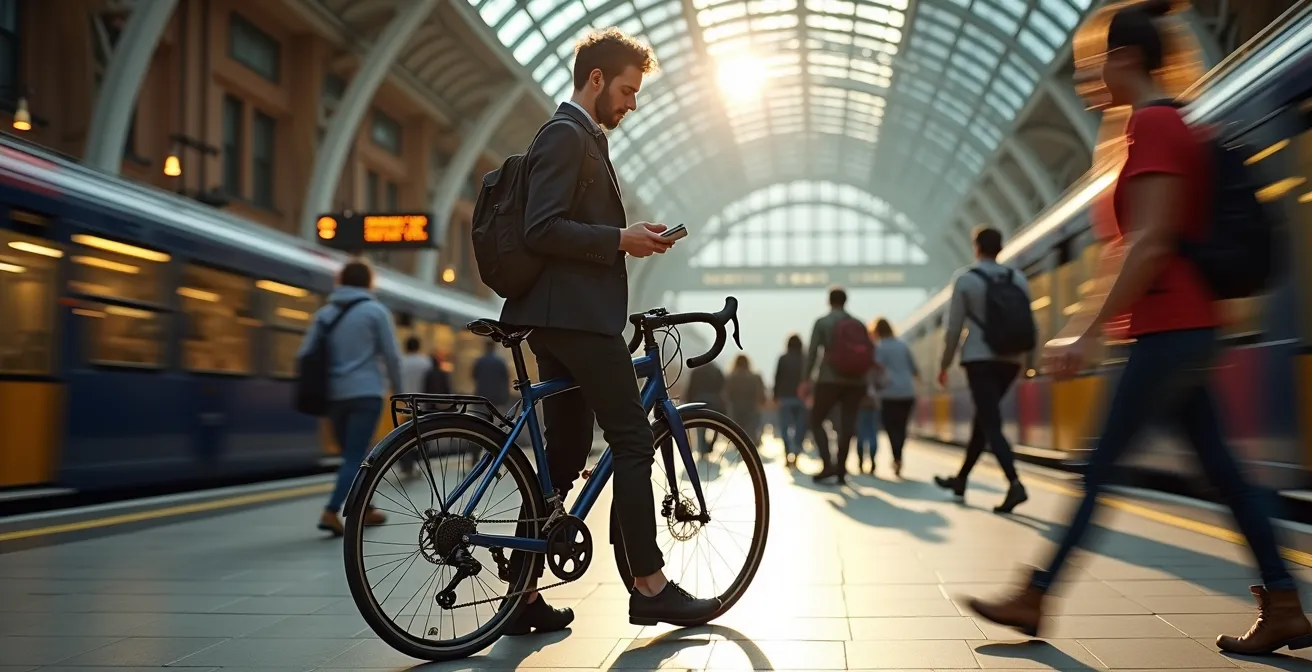
Even with a folding bike, etiquette and planning are key. Always store the bike in designated luggage racks, ensuring it doesn’t block aisles, doorways, or priority seating. For longer intercity journeys where you might have a non-folding bike outside of peak hours, it’s essential to book a dedicated bike space in advance, often via the train operator’s app at least 24 hours before travel. Finally, before committing to this system, confirm that your office building has secure bike storage facilities. There’s nothing worse than navigating the rail network only to have nowhere to safely leave your bike for the day.
Zone 2 Cardio: Why Brisk Walking Is Enough for Heart Health?
The daily commute doesn’t have to be dead time; it can be an incredibly efficient opportunity to improve your cardiovascular health. Many people believe that intense, sweaty workouts are necessary for fitness, but a growing body of research highlights the profound benefits of Zone 2 cardio. This is a low-intensity state where your heart rate is at 60-70% of its maximum—a level that can be comfortably achieved with a brisk walk.
The goal of Zone 2 training is to improve your mitochondrial efficiency, which enhances your body’s ability to use fat for fuel and improves overall endurance. For a commuter, this translates to arriving at the office energised, not exhausted. A targeted power walk can be seamlessly integrated into your journey. For instance, a 20-minute power walk from a station like Waterloo to offices on Fleet Street is a perfect Zone 2 session. To do it right, you need to be intentional: monitor your heart rate with a wearable device like an Apple Watch or Whoop to ensure you’re in the correct zone.
Your clothing system plays a supporting role here. A breathable merino base layer is crucial to prevent overheating, even at this lower intensity. Technical trousers with four-way stretch will allow for a comfortable, powerful stride without looking out of place. The most effective strategy is to wear dedicated, breathable walking shoes for the commute itself and pack your smarter dress shoes. This allows you to walk at an optimal pace without worrying about scuffing expensive leather. Always finish with a two-to-three-minute slower-paced walk as you approach your building to cool down, ensuring you enter the office feeling refreshed and ready for the day.
Key takeaways
- Merino wool is the non-negotiable foundation for temperature and moisture management in the UK’s climate.
- Classic aesthetics and modern performance can coexist; seek out technical fabrics within traditional silhouettes like the trench coat.
- The longevity of your performance gear is directly tied to proper maintenance; learn to wash and care for it correctly.
Lime vs Forest: Which Dockless E-Bike Subscription Offers Best Value in London?
For London commuters covering the last mile, dockless e-bikes have become an indispensable tool. The two main players, Lime and Forest, offer convenience but come with different pricing structures and operational quirks. Choosing the right service depends heavily on your specific commute pattern, frequency, and location. A surface-level price comparison doesn’t tell the whole story; the best value is a combination of cost, availability, and hardware quality.
Here’s a direct cost breakdown for a typical 15-minute journey between Zones 2 and 1:
| Service | Unlock Fee | Per Minute | 15-min Zone 2-1 Commute | Monthly Pass |
|---|---|---|---|---|
| Lime | £1 | £0.15 | £3.25 | £39.99 (60 min/day free) |
| Forest | £1 | £0.20 | £4.00 | Not available |
| Santander Cycles | £1.65 | First 30 min free | £1.65 | £20 (unlimited 30 min rides) |
While Santander Cycles appear cheapest for short rides, the need to find a docking station makes them less flexible. Between the dockless options, Lime’s monthly pass offers significant value for daily riders. However, cost is only one factor. Real-world usability is paramount.
Case Study: Peak Hour Availability and Hardware
An analysis of e-bike availability during the morning rush (7:30-9:00 AM) in London reveals key operational differences. Lime tends to maintain better bike coverage in core business districts like Westminster and the City of London, with users finding a bike within 2-3 minutes on average. Forest bikes, while expanding, often cluster more in residential areas like Islington and Camden. Furthermore, hardware matters in UK weather; the analysis noted that Lime bikes generally have superior mudguards, a crucial feature for arriving at the office without a spray of road grime up your back. Both services face challenges with out-of-bay parking fees in boroughs with limited designated spots, such as Tower Hamlets.
The verdict? For the serious daily commuter heading into Central London, Lime’s combination of a valuable monthly pass, better availability in business hubs, and superior hardware often presents the most reliable and cost-effective system. For occasional riders or those staying within residential zones, Forest remains a viable alternative.
Your next step is to audit your own commute and wardrobe. Identify the single weakest link—be it a jacket that wets out, shoes that don’t breathe, or a consistently wrinkled blazer—and begin your upgrade there. Building a seamless commuter system is an incremental process of intelligent engineering.