
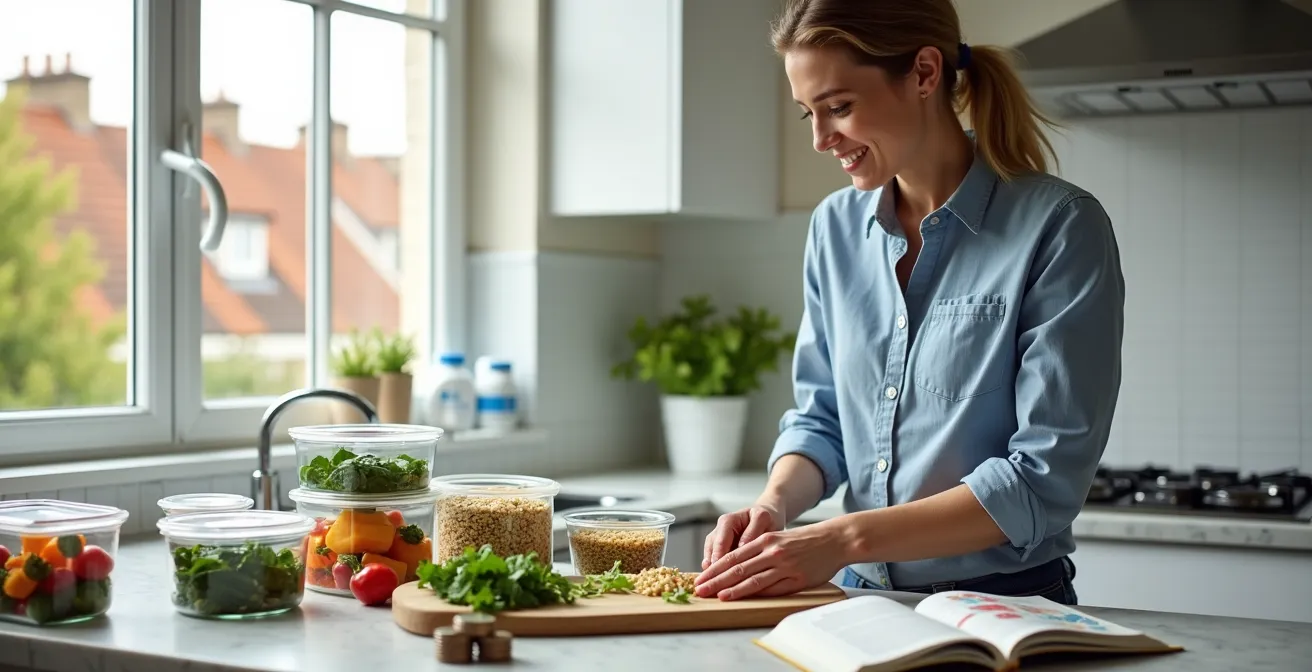
The key to beating afternoon fatigue isn’t just avoiding the meal deal; it’s architecting your lunch for sustained energy without sacrificing your budget or your evenings.
- Strategic “micro-preps” like overnight oats and a desk-drawer snack kit are more effective than massive weekly cooking sessions.
- Timing your nutrition (like caffeine cutoff and Vitamin D intake) is as crucial as what you eat for performance and immunity in a UK office environment.
Recommendation: Start by auditing your current lunch habits to identify one small, sustainable change you can implement this week.
It’s a scene played out in every Tesco, Sainsbury’s, and Boots across the country around noon: the hunt for the perfect meal deal. The sandwich, crisps, and fizzy drink combo feels like a win, a small daily triumph of convenience and value. But then comes the reckoning. That familiar 2 PM crash, the brain fog that descends over your keyboard, making the second half of the day a struggle for focus. You know you should eat better, and you’ve heard the endless advice to “just meal prep on a Sunday.” For most busy professionals, however, dedicating hours of a precious weekend to cooking feels more daunting than the afternoon slump itself.
The average UK household food spend is a key metric, and many struggle to keep it down. According to figures from the Office of National Statistics, some sample menus show how a healthy diet can be achieved on a tight budget, but the reality of office life often gets in the way. But what if the solution wasn’t about massive, time-consuming batch cooking? What if it was about a system of strategic fueling? This isn’t about deprivation or becoming a kitchen slave. It’s about making small, intelligent choices—micro-preps and smart swaps—that build a powerful energy architecture for your day. It’s about turning your food from a source of fatigue into your greatest performance-enhancing tool, all while staying under that critical £5 a day threshold.
This guide will deconstruct that system. We won’t just give you recipes; we’ll show you how to manage your energy, support your immune system through the dark British winter, and even navigate a client lunch at an Italian restaurant without derailing your goals. It’s time to move beyond the false choice between expensive convenience and exhausting prep, and embrace a smarter way to eat at work.
To help you navigate this new approach, this article breaks down the core components of office nutrition. From managing your energy levels to boosting your immunity, each section provides practical, budget-conscious strategies tailored for the UK worker.
Summary: A Strategic Guide to Office Nutrition on a Budget
- The 3 PM Slump: What to Eat at Lunch to Avoid Brain Fog?
- Vitamin D: Why Every Office Worker in Britain Needs It from October to March?
- Caffeine Half-Life: When to Switch to Decaf to Protect Your Sleep?
- Menu Navigation: What to Order at an Italian Restaurant When Watching Calories?
- Overnight Oats: The 2-Minute Breakfast Prep That Stops Snacking?
- Carbs or Fasted: What Should You Eat 30 Minutes Before a Water Session?
- Probiotics and Fermented Foods: Can Kefir Really Stop You Getting Sick?
- Why Do You Keep Getting Colds Every Winter?
The 3 PM Slump: What to Eat at Lunch to Avoid Brain Fog?
That post-lunch wave of tiredness isn’t a personal failing; it’s a biological response to poor energy architecture. A typical meal deal lunch—white bread sandwich, crisps, sugary drink—delivers a rapid spike in blood sugar, followed by an inevitable crash. This is what causes brain fog, irritability, and a desperate craving for more sugar. The key to sustained afternoon energy is to build your meal around a balanced trio: complex carbohydrates for slow-release energy, lean protein for satiety and focus, and healthy fats to keep you full and stabilise blood sugar.
Instead of a simple sandwich, think about a wholewheat wrap with chicken and avocado, a quinoa salad with chickpeas and feta, or even a hearty lentil soup from a flask. These meals provide the sustained fuel your brain needs to stay sharp. But preparation is key, which is why having an ’emergency kit’ is non-negotiable. An organised desk drawer can be your first line of defence against poor choices when you’re short on time. Stocking it with the right items turns your workspace into a hub of high performance.
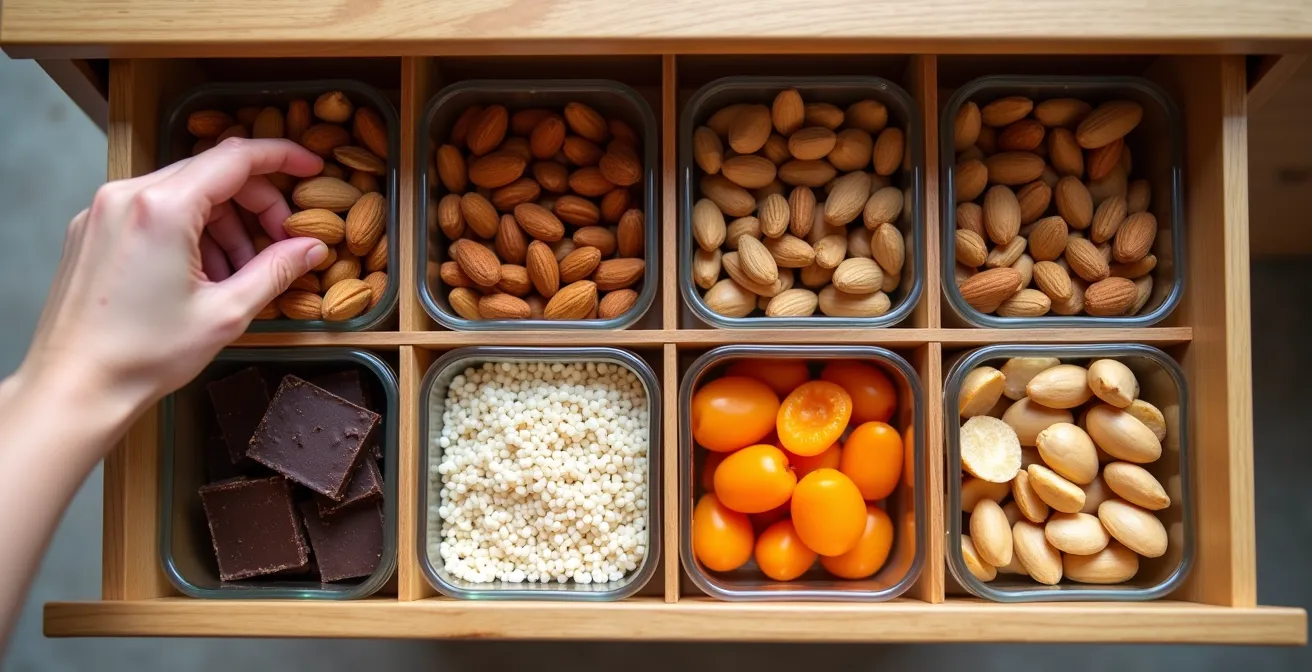
As the image shows, a well-stocked drawer prevents impulse buys. These snacks aren’t just for emergencies; they can supplement a lighter lunch. An apple with a portion of nut butter or some oatcakes with hummus can transform a simple soup into a complete, energy-sustaining meal. This isn’t about willpower; it’s about making the smart choice the easy choice.
Your 5-point lunch audit plan
- Points of Contact: List every place you get lunch or snacks during the workday (supermarket, office canteen, Pret, vending machine).
- Collecte: For three days, write down exactly what you eat and drink between 12 PM and 4 PM, including the cost. Be honest.
- Cohérence: Compare your food diary to the principles of balanced energy (protein, complex carbs, healthy fats). Where are the gaps? Is it mostly simple carbs and sugar?
- Mémorabilité/Émotion: How do you feel 90 minutes after your lunch? Energised and focused, or sluggish and foggy? Rate your energy out of 10.
- Plan d’intégration: Identify one single, easy swap. Could you replace your crisps with a bag of almonds? Or your fizzy drink with a bottle of water? Start there.
Vitamin D: Why Every Office Worker in Britain Needs It from October to March?
While your lunch provides the fuel, specific micronutrients provide the essential wiring for your body’s systems, especially your immune response and mood. For anyone working in a UK office, Vitamin D is arguably the most critical. Known as the ‘sunshine vitamin’, it’s produced by our skin in response to sunlight. The problem? The British sun simply isn’t strong enough for us to produce it during a specific period of the year. This deficiency can lead to fatigue, low mood, and a weakened immune system—precisely when office colds are rampant.
For this reason, official guidance is clear. A UK government report highlights that everyone should consider a supplement, as the NHS recommends vitamin D supplementation during the darker months from October to early March. A daily supplement of 10 micrograms (μg) is the standard recommendation to bridge this gap. While supplementation is the most reliable method, you can also support your intake through your diet. Oily fish, fortified foods, and certain mushrooms are excellent, budget-friendly sources available in all major UK supermarkets.
Integrating these foods into your weekly plan can make a significant difference. Here is a breakdown of some of the most accessible and affordable options.
| Food Source | Vitamin D Content | Average UK Price | Best Supermarket |
|---|---|---|---|
| Canned Mackerel (125g) | 8.5 μg | £0.95 | Aldi |
| Fortified Cereal (30g) | 2.5 μg | £0.15/serving | Tesco |
| Mushrooms (100g UV-exposed) | 10 μg | £1.20 | Sainsbury’s |
| Fortified Milk (200ml) | 2 μg | £0.25 | All major chains |
Caffeine Half-Life: When to Switch to Decaf to Protect Your Sleep?
That 3 PM coffee might feel like the only thing getting you through the afternoon, but it could be the very thing sabotaging your energy for the next day. The problem lies in caffeine’s half-life: the time it takes for your body to eliminate half of the caffeine you’ve consumed. For most adults, this is around 5 to 6 hours. This means that if you have a latte at 3 PM, half of that caffeine could still be active in your system at 8 PM, interfering with your ability to fall into deep, restorative sleep. Poor sleep leads to fatigue the next day, which creates a vicious cycle of relying on more caffeine.
The strategic solution is to set a personal caffeine curfew. For most people, switching to decaffeinated coffee or herbal teas after 2 PM is a powerful habit. It allows your body enough time to process the caffeine before bedtime, significantly improving sleep quality. This change can have a remarkable impact not just on your sleep, but also on your finances, as a real-world example shows.
The Real Cost of Your 3PM Latte: Sleep vs. Savings Analysis
A London office worker tracked their afternoon coffee habits for a month. They discovered that switching from a daily 3PM Costa latte (£3.50) to herbal tea from a home flask saved an impressive £70 monthly. More importantly, they reported falling asleep 30 minutes faster on average and experiencing fewer 3AM wake-ups. According to their log, they invested the savings into a quality thermos flask (£15) and a premium herbal tea collection (£20), still saving £35 in the first month alone. This small change compounded into better sleep, higher next-day energy, and more money in their pocket.
Menu Navigation: What to Order at an Italian Restaurant When Watching Calories?
Eating healthily at the office isn’t just about the lunches you prepare; it’s also about navigating the meals you don’t. Client lunches, team celebrations, and after-work dinners are part of professional life, and Italian restaurants are a frequent choice. While delicious, they can be a minefield of hidden calories, with creamy sauces, large portions of pasta, and cheese-laden pizzas quickly derailing your goals. A single dish can contain more than half of your daily recommended calorie intake.
For instance, it might be shocking to learn that a standard carbonara at major UK chains contains over 1,200 calories. However, you don’t have to decline the invitation or stick to a sad side salad. The key is to have a pre-planned strategy for menu navigation. Knowing what to look for—and what to avoid—allows you to enjoy the social occasion without the guilt or the energy crash afterwards. Simple swaps and smart requests can make all the difference.
Here are some practical, nutritionist-approved strategies for your next visit to Pizza Express, Zizzi, or your local trattoria:
- Order a starter-sized minestrone soup (around 180 cal) with a side salad (around 120 cal) for a filling and flavourful meal under £8.
- Choose tomato-based sauces over cream-based ones. A Pollo Arrabbiata can save you over 400 calories compared to a Carbonara.
- Request ‘Piccolo’ (smaller) portion sizes where available, like at Pizza Express, for an automatic 30% calorie reduction.
- Swap a regular pizza base for a cauliflower or ‘Leggera’ option, which often features a salad-filled hole in the middle.
- If you’re drinking alcohol, opt for a glass of prosecco (around 85 calories) instead of a pint of beer (which can be over 200 calories).
Overnight Oats: The 2-Minute Breakfast Prep That Stops Snacking?
The foundation of a productive day is often laid the night before, and nowhere is this truer than with breakfast. Skipping breakfast or grabbing a sugary pastry on the way to work sets you up for a mid-morning energy crash and intense cravings. This is where overnight oats become a game-changer. They are the ultimate “micro-prep”: a task that takes just two minutes before bed but delivers a perfectly balanced, energy-sustaining breakfast that’s ready to grab and go in the morning.
The formula is simple: combine rolled oats (a complex carb) with milk or yogurt (protein), and add fruit or seeds (fibre and nutrients). This combination provides a slow, steady release of energy throughout the morning, keeping you full and focused, and drastically reducing the urge to reach for the office biscuit tin. Not only is it nutritionally superior, but it’s also incredibly cost-effective, especially when you choose budget-friendly supermarket ingredients.
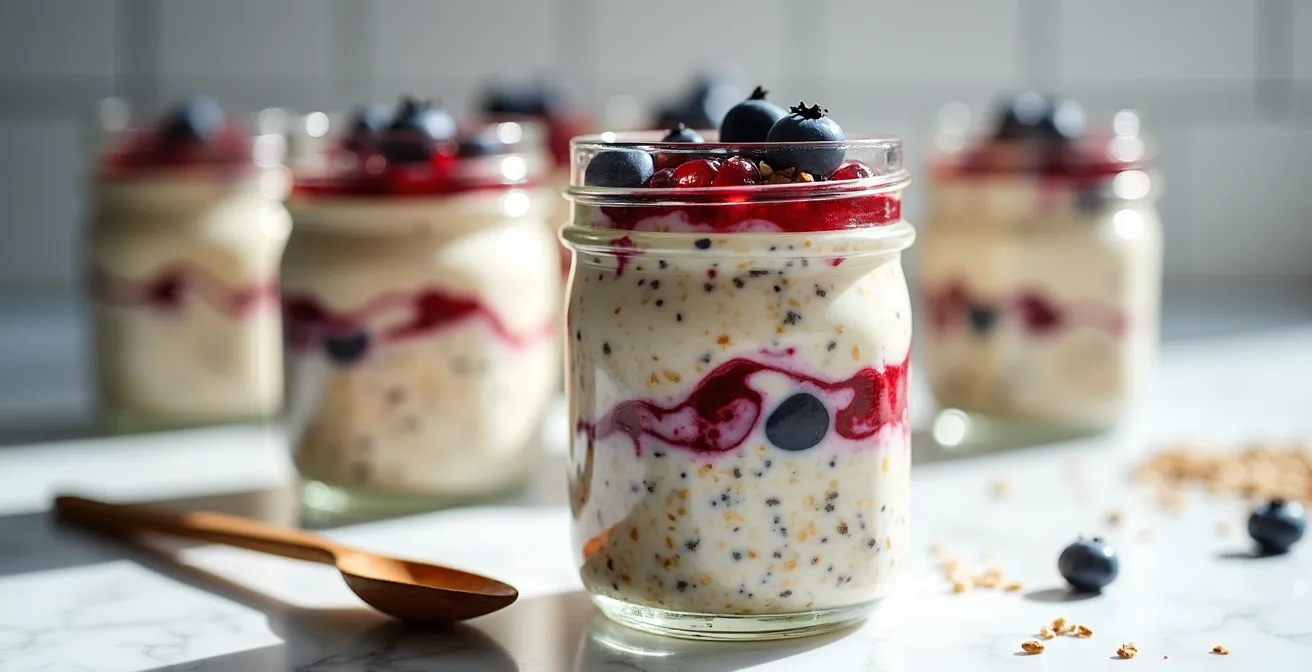
As this cost comparison demonstrates, a week’s worth of premium, healthy breakfasts can be made for less than the price of two café-bought equivalents. The savings are significant, and the small time investment yields massive returns in both health and wealth.
| Ingredient | Aldi Price | M&S Price | Weekly Difference |
|---|---|---|---|
| Rolled Oats (1kg) | £0.75 | £2.50 | £0.35 |
| Greek Yogurt (500g) | £0.85 | £2.00 | £0.46 |
| Mixed Berries (400g) | £1.49 | £3.50 | £0.80 |
| Honey (340g) | £0.89 | £2.50 | £0.32 |
| Total Weekly Cost | £3.98 | £10.50 | £6.52 savings |
Carbs or Fasted: What Should You Eat 30 Minutes Before a Water Session?
For many office workers, the lunch hour is the only window for exercise, whether it’s a run, a gym class, or a swim. This brings up a common performance nutrition question: is it better to exercise on an empty stomach (fasted) or have a small snack beforehand? The term “water session” often refers to swimming, but the principles of pre-workout fueling apply to any form of exercise. The answer depends on your goal and your body’s individual response.
Exercising in a fasted state can encourage your body to burn more fat for fuel. However, for many, performance can suffer, especially towards the end of a session, as readily available energy stores are depleted. On the other hand, a small, easily digestible carbohydrate snack about 30-60 minutes before a workout can top up your glycogen stores, providing the quick energy needed to maintain intensity and performance. This doesn’t need to be a complex meal; a piece of fruit or a small malt loaf slice is often perfect.
A study conducted with university athletes provides a useful insight, even if their training is more intense than a typical lunchtime workout. According to research from the University of Warwick, swimmers who consumed a small banana or a Soreen malt loaf slice before morning sessions maintained better stroke efficiency in the final 15 minutes compared to fasted swimmers. Interestingly, the fasted group reported feeling more mentally alert in lectures afterward, highlighting that the optimal strategy can be highly individual.
Probiotics and Fermented Foods: Can Kefir Really Stop You Getting Sick?
Building a resilient immune system is a top priority for any office worker, and a growing body of science points to the gut as the command centre of our immunity. The concept of the “gut-brain axis” shows a direct link between the health of our digestive system and everything from our mood to our ability to fight off infections. This is where probiotics and fermented foods come in. They introduce beneficial bacteria into your gut, helping to create a diverse and robust microbiome that can better defend against pathogens.
Kefir, a fermented milk drink similar to a thin yogurt, is one of the most potent and accessible sources of probiotics. It’s packed with a wider variety of beneficial bacterial strains than most yogurts. While no single food is a magic bullet, incorporating kefir into your diet can be a powerful tool for supporting gut health and, by extension, your immune resilience. And it doesn’t have to be expensive; a weekly supply can be a very affordable investment in your health, with some research suggesting that adding fermented foods to your UK shopping basket costs approximately £3-5 per week.
The UK market now has a wide variety of kefir brands, from mainstream supermarket options to authentic versions found in Polish or Eastern European shops, each with a different taste and price point.
| Brand | Price (500ml) | Taste Profile | Live Cultures | Sugar per 100ml |
|---|---|---|---|---|
| Biotiful | £2.50 | Mild, creamy | 12 strains | 4.2g |
| Yeo Valley | £2.00 | Tangy, smooth | 14 strains | 3.8g |
| Tesco Own | £1.50 | Sharp, thin | 5 strains | 4.5g |
| Polish Shop Import | £1.20 | Very tangy, authentic | Not specified | 3.2g |
Key takeaways
- The 3 PM slump is a biological reaction to high-sugar, low-protein lunches, not a personal failing.
- Strategic “micro-preps” (overnight oats, desk snacks) are more sustainable and effective than large, daunting weekly meal preps.
- Timing is crucial: Vitamin D supplementation in winter and a caffeine curfew in the afternoon are high-impact habits for UK office workers.
Why Do You Keep Getting Colds Every Winter?
If you feel like you spend every winter battling a seemingly endless cycle of coughs and colds, you’re not alone. The modern office environment can be a major contributing factor. As leading physician and author Dr. Rupy Aujla points out, the conditions are ripe for illness to spread. In his expert opinion, the combination of shared spaces and recycled air creates an environment where viruses can thrive.
Modern open-plan offices, air-conditioning, and hot-desking create a perfect storm for virus transmission in UK workplaces.
– Dr. Rupy Aujla, The Doctor’s Kitchen Podcast
This is why a proactive, year-round approach to immunity is not a luxury, but a necessity. It involves combining the strategies we’ve discussed: ensuring adequate Vitamin D levels, supporting your gut health with probiotics like kefir, getting quality sleep by managing caffeine, and eating a nutrient-dense diet. Your immune system is not a switch you can flick on when you feel a sniffle coming; it’s a complex system that needs consistent support. A simple checklist can help you build these habits into your yearly routine.
Your winter immunity plan should start long before the first frost. Building resilience is a year-round activity:
- September: Start daily Vitamin D supplementation (10μg) as per NHS guidelines.
- October: Increase zinc-rich foods like pumpkin seeds, which can be bought cheaply from bulk stores (£2/200g).
- November: Add daily kefir or live yogurt to your routine for gut health support (£1.50-£2.50/week).
- December: Be mindful of alcohol intake, limiting after-work pub visits to twice weekly to avoid disrupting sleep and immunity.
- January-March: Be extra vigilant with hand hygiene on public transport; carry a pocket hand sanitiser.
- Year-round: Prep immune-boosting lunches that are rich in garlic, ginger, colourful vegetables, and citrus.
Ultimately, transforming your office lunch from a source of dread into a pillar of your well-being is about adopting a system of small, strategic actions. Start today by choosing just one tip from this guide—whether it’s setting a caffeine curfew or prepping overnight oats—and build from there. Your energy levels, focus, and wallet will thank you.
Frequently asked questions about nutrition for office workers
Can I swim on an empty stomach?
Yes, for sessions under 45 minutes, exercising in a fasted state is safe for most people and may enhance fat burning. However, you might find your performance suffers in the final third of the session.
What’s the cheapest pre-swim snack from a corner shop?
A single banana, usually costing under 50p, provides ideal quick-release energy. A small rice pudding pot (£0.60-80) is another good option, offering carbohydrates plus some protein.
Should I drink sports drinks for a 30-minute pool session?
For any exercise session under an hour, water is sufficient for hydration. You can save money by simply adding a pinch of salt and a squeeze of lemon to your own water bottle instead of buying expensive sports drinks.