
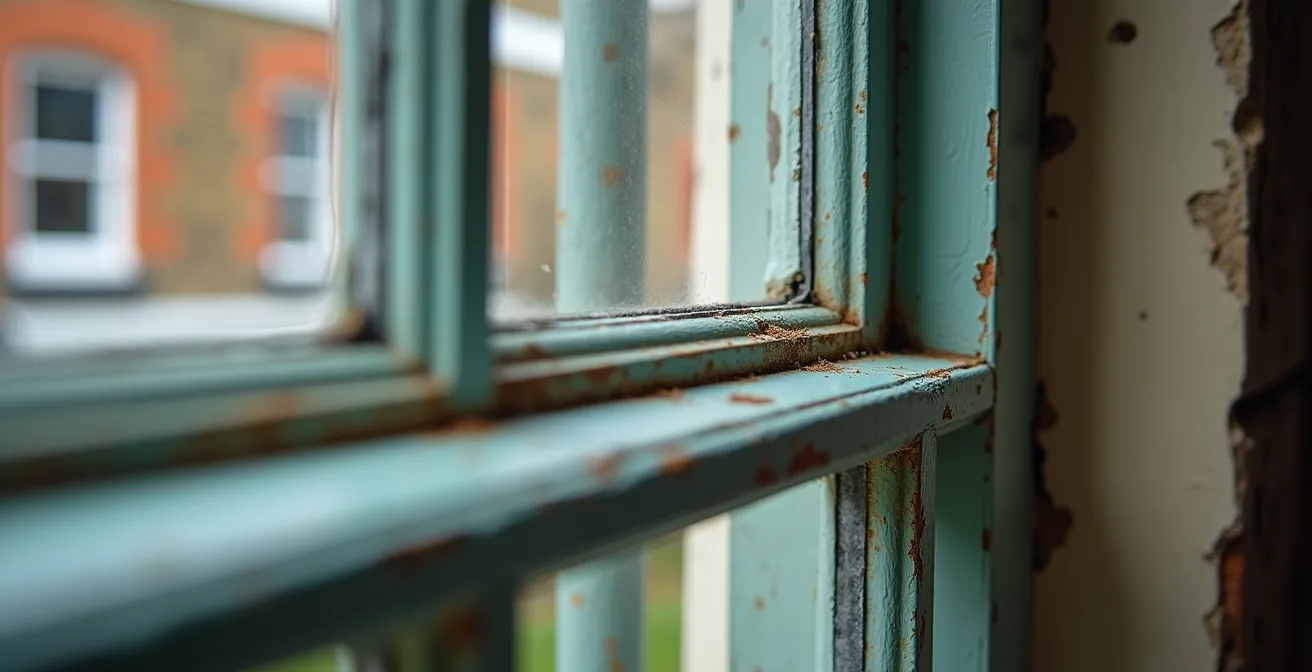
In summary:
- Your ‘Permitted Development’ rights are likely removed by an Article 4 Direction, requiring full planning permission for minor changes.
- Conservation officers prioritise the preservation of ‘character and appearance’, focusing on material authenticity and historical details, not modern convenience.
- Approval depends on demonstrating that your proposed works cause no ‘visual harm’ to the streetscape, especially on principal elevations.
- Using pre-application advice is a critical strategic step to de-risk your formal planning application and negotiate an acceptable outcome.
The fear is palpable for any homeowner in a designated conservation area. You invest thousands in beautiful new windows or a freshly painted facade, only to receive that dreaded formal letter from the local council’s planning enforcement department. It informs you that the works are unauthorised and must be reversed at your own expense. This scenario is not just a homeowner’s nightmare; it is a common reality for those who misunderstand the rigid framework governing these protected zones.
Common advice often boils down to simplistic refrains like “check with the council” or “you must use timber.” While not incorrect, this guidance fails to address the core issue. It doesn’t explain the fundamental mindset of the conservation officer who will ultimately approve or reject your application. They are not assessing your home’s needs; they are safeguarding the area’s legislated ‘character and appearance’.
The key to navigating this bureaucratic maze is not to fight the rules, but to understand and pre-empt the specific, non-negotiable principles that drive every council decision. This guide will shift your perspective from that of a homeowner to that of a planner. We will deconstruct the logic behind rejections for double glazing, explain the council’s position on paint colours and solar panels, and provide the framework to build a case for your desired improvements—a case that a conservation officer is more likely to approve.
This article provides a detailed breakdown of the key considerations a conservation officer applies when reviewing applications for external alterations in a conservation area. The following sections will equip you to prepare a more robust and successful planning application.
Summary: A Homeowner’s Guide to Conservation Area Regulations
- Permitted Development Rights: Why They Don’t Apply to Your Porch?
- Permeable Paving: How to Replace a Front Garden Without Planning Permission?
- Masonry Paint Colors: Can You Be Forced to Repaint Your Pink House?
- Street Visibility: Where to Hide Solar Panels to Satisfy Heritage Officers?
- Tree Preservation Orders: How to Apply to Prune a Tree Blocking Your Light?
- Why Local Councils Reject 40% of Double Glazing Applications in Conservation Areas?
- The Noise App: How to Gather Evidence of Neighbours’ Parties for the Council?
- How to Improve the EPC Rating of a Victorian Terrace to Band C Without Ruining the Facade?
Permitted Development Rights: Why They Don’t Apply to Your Porch?
For most homeowners in England, certain minor works like building a small porch or replacing windows fall under ‘Permitted Development’ (PD) rights, meaning a formal planning application is not required. However, residing in a conservation area fundamentally changes this position. The primary tool used by councils to protect these areas is an Article 4 Direction, a legal instrument that specifically removes some or all of your PD rights. Its purpose is to force a planning application for even minor alterations that could cumulatively erode the special character of the area.
The assumption that PD rights apply is the single most common and costly mistake made by property owners. An Article 4 Direction is not a blanket ban but a targeted control measure. A council may apply it to an entire conservation area or, as in one example, the East Riding Council implemented a direction covering works to windows and doors for just a small number of properties around the village green in Atwick. This demonstrates a surgical approach focused on protecting key visual amenity.
Therefore, your first and most critical action is not to assume, but to verify. You must definitively confirm which, if any, of your permitted development rights have been withdrawn for your specific property. Failure to do so exposes you to the significant risk of enforcement action, which can involve a legal notice to undo the work and restore the property to its previous condition, entirely at your own cost. The onus is entirely on you, the homeowner, to be aware of these local designations.
Permeable Paving: How to Replace a Front Garden Without Planning Permission?
Paving over a front garden to create a driveway is a frequent point of contention, especially with over 9,900 conservation areas across England where the loss of green space is a major concern. Standard, impermeable surfaces like tarmac or concrete almost always require planning permission because they increase flood risk by preventing rainwater from soaking into the ground. However, there is a specific exemption that aligns with both environmental and conservation principles.
If you use a permeable or porous material for your new driveway, the work may still be considered permitted development, even in some conservation areas (provided an Article 4 Direction doesn’t specifically restrict it). This is because permeable solutions, such as porous asphalt, block paving with wider gaps, or gravel systems, allow surface water to drain through naturally, mitigating flood risk. From a conservation officer’s perspective, this approach is less harmful than a swathe of black tarmac.
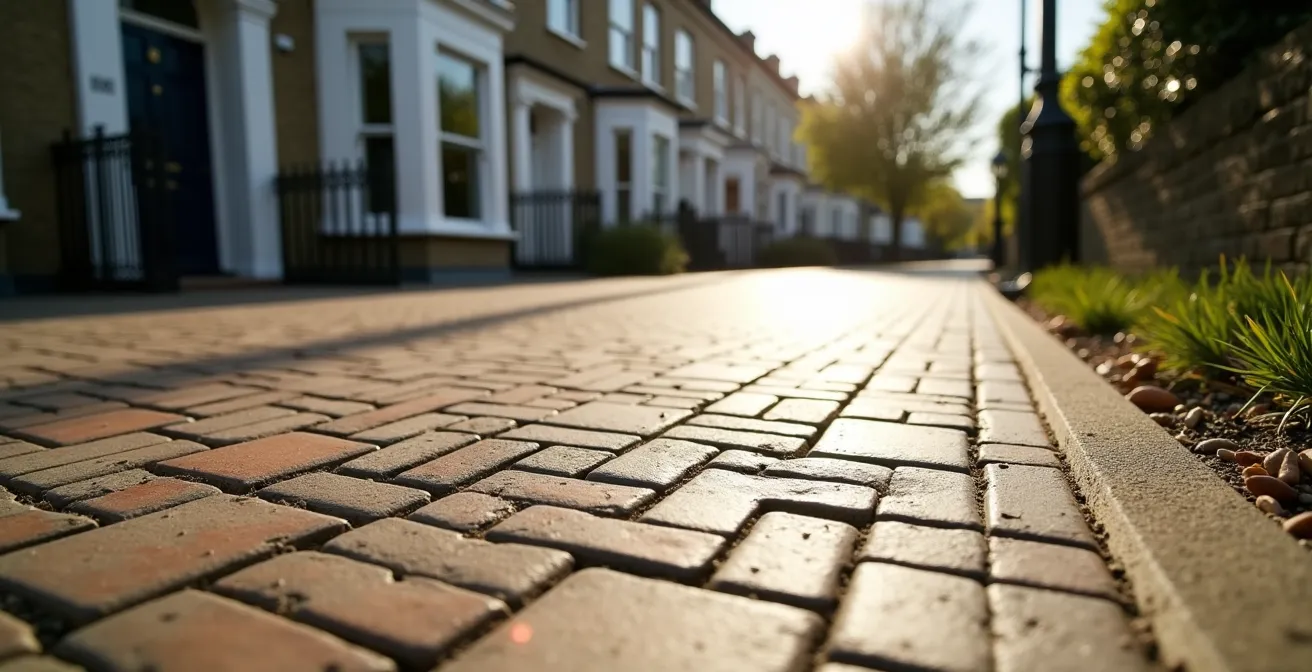
The choice of material and pattern is still critical to avoid falling foul of aesthetic controls. A conservation officer will assess whether the new hardstanding preserves or enhances the character of the property and the streetscape. Opting for materials that are in keeping with the age of the house, such as heritage-style block paving in a herringbone pattern, is far more likely to be viewed favourably than a modern, uniform resin-bound gravel. The goal is to provide functionality without creating a stark, anachronistic feature that detracts from the building’s historic context.
Masonry Paint Colors: Can You Be Forced to Repaint Your Pink House?
The colour you paint your house can indeed be subject to planning control, particularly on the ‘principal elevation’—the side that faces the public highway. While repainting generally falls under maintenance, if an Article 4 Direction is in place covering external appearance, or if the chosen colour is deemed to fundamentally harm the area’s character, the council can take action. A brightly coloured house in a street of muted, traditional tones may be considered to cause visual harm, prompting an enforcement notice.
However, the conservation officer’s concern goes far beyond the colour itself; it extends to the type of paint used. The core issue is material authenticity and building preservation. Traditional building materials, like old brick and lime mortar, are ‘breathable’. They are designed to allow moisture absorbed by the walls to evaporate. Using a modern, plastic-based masonry paint effectively seals the wall, trapping moisture inside. This can lead to damp, spalling brickwork, and long-term structural damage.
For this reason, planners will almost always favour traditional finishes like limewash. While they require more frequent application, their high breathability is essential for the health of an old building. The following table, summarising an analysis of different paint properties, highlights the key differences from a conservation perspective.
| Property | Limewash (Traditional) | Modern Masonry Paint | Conservation Officer View |
|---|---|---|---|
| Breathability | Highly breathable | Non-breathable | Essential for old brickwork |
| Moisture Management | Allows moisture escape | Can trap moisture | Critical for building health |
| Aesthetic | Matte, chalky finish | Uniform, plastic finish | Period-appropriate preferred |
| Application Frequency | Every 3-5 years | Every 7-10 years | Maintenance cycle acceptable |
So, can you be forced to repaint your pink house? Yes. If the colour is inappropriate *and*, more importantly, if the paint type is damaging the historic fabric of the building, the council has firm grounds for enforcement. As the Royal Borough of Kensington and Chelsea Planning Department advises, direct communication is vital before any work begins.
Street Visibility: Where to Hide Solar Panels to Satisfy Heritage Officers?
The installation of solar panels in conservation areas presents a direct conflict between national environmental targets and local heritage protection. While permitted development rights for solar panels exist, they are almost always removed by Article 4 Directions for any elevations visible from a public highway. The primary concern of a conservation officer is the visual impact of modern technology on the historic roofscape.
A standard application to place bulky, reflective solar panels on a front-facing Victorian roof will be rejected outright. The key to gaining approval is minimising or eliminating their visibility from the street. The most successful applications propose placing panels on a rear roof slope, a single-storey extension, or an outbuilding that is not visible to the public. As Camden Council notes in its guidance, Article 4 Directions are “aimed at ensuring that historic features are preserved.” Standard solar panels are seen as a direct detraction from these features.
A strategic approach involves formal pre-application advice. This paid service allows you to present your case to a conservation officer before submitting a full application. To make this meeting effective, you should:
- Prepare a site plan showing all potential panel locations.
- Provide photographs from key public viewpoints to demonstrate the lack of visibility for your preferred location.
- Research and present conservation-friendly alternatives, such as integrated solar tiles or slates that mimic traditional roofing materials.
- Document any other energy-efficiency measures you have already undertaken to show your commitment.
This proactive engagement demonstrates that you understand and respect the council’s heritage concerns. By presenting a well-reasoned case that focuses on concealing the panels, you shift the conversation from “if” to “where,” significantly increasing your chances of a positive outcome.
Tree Preservation Orders: How to Apply to Prune a Tree Blocking Your Light?
Trees are considered a vital component of the character and appearance of many conservation areas. As such, any tree with a trunk diameter of 75mm or more (measured at 1.5m from the ground) is automatically protected. You must give your local council six weeks’ written notice of any intended works. This period allows the council to assess the tree and, if they object to the proposed work, place a formal Tree Preservation Order (TPO) on it, granting it further legal protection.
Simply wanting more light in your garden is rarely a sufficient reason to justify significant pruning or felling a healthy tree. The council’s decision will balance your desires against the tree’s contribution to the public visual amenity. An application is more likely to succeed if it is supported by a professional report from a qualified arborist. The officer will rely heavily on this expert assessment.
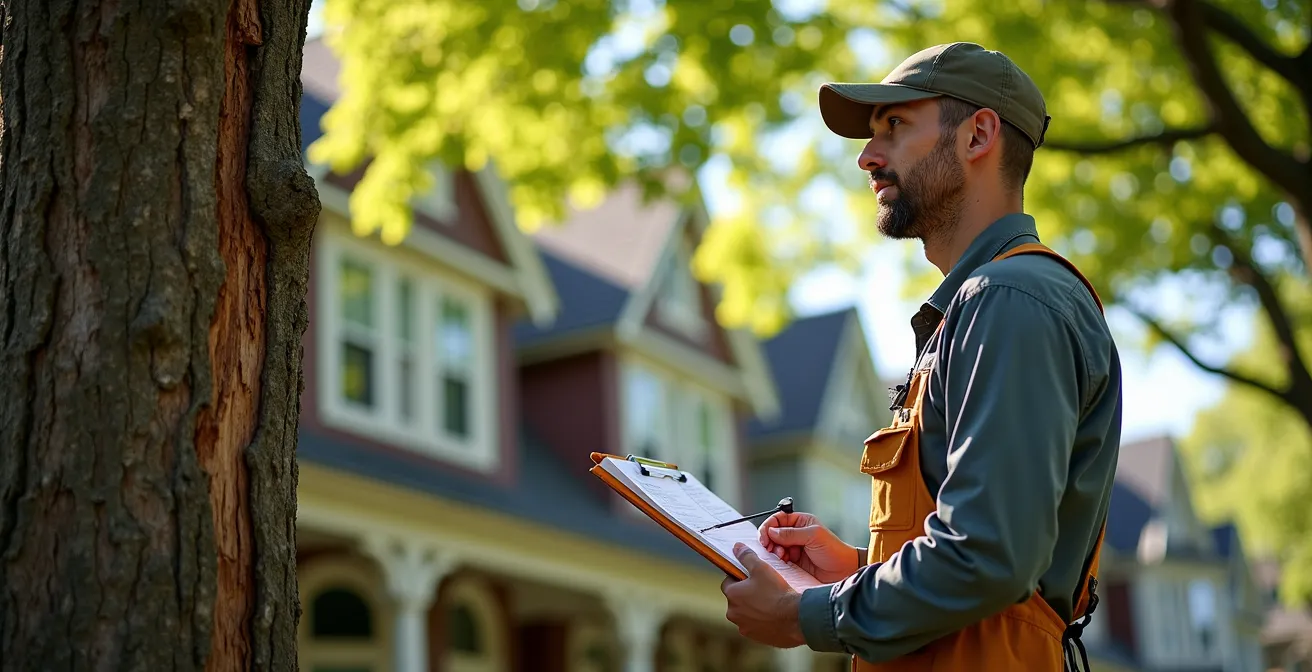
The arborist’s report should detail the tree’s health, identify any risks it may pose, and propose a schedule of works that is justified by good arboricultural practice—for example, removing deadwood or selectively thinning the crown to maintain its shape and health, which may incidentally improve light. An application based on professional advice to ensure the tree’s long-term health is viewed far more favourably than one based purely on a homeowner’s convenience. The council’s role is to protect valuable trees, and they will resist any work deemed harmful or unnecessary for its wellbeing.
Why Local Councils Reject 40% of Double Glazing Applications in Conservation Areas?
The high rejection rate for double glazing applications—often cited as around 40%—stems from a single, fundamental conflict: standard uPVC or even many modern timber units fail to replicate the specific, slender details of original historic windows. A conservation officer’s primary mandate is to protect the character and appearance of the building, and windows are considered a dominant feature of that character. The rejection is not against the principle of double glazing, but against the aesthetic damage caused by inappropriate modern products.
The process to get approval, which can often be obtained within 28 days of submitting a valid application, hinges on demonstrating that your proposed replacement is visually indistinguishable from the original. Conservation officers scrutinise several key elements with meticulous attention to detail:
- Profile Depth: Original timber windows have very slender frames and glazing bars. Modern double-glazed units are inherently bulkier to accommodate the two panes of glass, and this chunkiness is a primary reason for refusal.
- Method of Opening: If replacing a traditional sash window, the mechanism must replicate the original weight-and-pulley system, not a modern spring balance.
- Glazing Bar Configuration: The bars must be integral (physically separating the panes of glass), not “stick-on” bars applied to a single large pane of glass. This is an immediate red flag for any officer.
- Material Authenticity: While some high-end composite materials exist, most “wood-look” uPVC alternatives are easily identifiable and rarely pass scrutiny on principal elevations.
- Finishing Details: Officers will look for details like the precise angle of the putty line and the reflective quality of the glass; modern units often create a “double reflection” that betrays their modern construction.
Success depends on specifying specialist “heritage” or “slim-profile” double glazing that is explicitly designed to replicate these details. While significantly more expensive, these units are the only viable path to gaining approval for replacing original windows on a street-facing elevation.
The Noise App: How to Gather Evidence of Neighbours’ Parties for the Council?
When dealing with a noise issue from a neighbour, the council’s Environmental Health department, not the planning department, is the relevant authority. To act, they must be satisfied that the noise constitutes a ‘statutory nuisance’ under the Environmental Protection Act 1990. This has a specific legal meaning that goes beyond mere annoyance.
As guidance for Environmental Health Officers clarifies, the standard is high. A formal investigation is based on whether the noise is materially interfering with the use and enjoyment of a person’s home. The council needs robust, objective evidence to make this judgement. Your subjective account of “loud parties” is insufficient. This is where technology like The Noise App becomes a crucial tool for evidence gathering. This service, used by many UK councils, allows you to make short, time-stamped audio recordings of the noise on your smartphone and submit them directly into an evidence log for the council.
When gathering evidence, it is critical to be systematic. Keep a written diary that complements the app’s recordings. For each incident, note:
- The date and the start/end times of the noise.
- The type of noise (e.g., loud music, shouting, banging).
- The location of the noise (e.g., neighbour’s garden, living room).
- The effect the noise has on you (e.g., “prevented me from sleeping,” “could not hear my television”).
The noise must be more than just annoying; it must be materially interfering with the use and enjoyment of their home.
– Environmental Health Officers Guidance, Environmental Protection Act 1990 Interpretation
This combined evidence—objective audio recordings from The Noise App and a detailed log of its impact—transforms your complaint from a personal grievance into a formal record of a persistent problem. This is the quality of evidence an Environmental Health Officer requires to justify launching a formal investigation and, if necessary, serving an abatement notice on your neighbour.
Key Takeaways
- The default position in a conservation area is that your ‘Permitted Development’ rights have been removed by an Article 4 Direction; you must verify this first.
- A conservation officer’s primary duty is to prevent ‘visual harm’ to the area’s ‘character and appearance’, meaning material authenticity and historical detail are paramount.
- Pre-application advice is not a formality but a crucial strategic negotiation to de-risk your planning application and agree on an acceptable approach with the council beforehand.
How to Improve the EPC Rating of a Victorian Terrace to Band C Without Ruining the Facade?
Improving the Energy Performance Certificate (EPC) rating of a period property to the government’s target of Band C presents a significant challenge. Many standard solutions, like external wall insulation or uPVC windows, are non-starters in a conservation area as they would cause unacceptable harm to the historic facade. The key is to adopt a ‘fabric-first’ approach, focusing on a hierarchy of interventions that are both effective and minimally invasive.
The most impactful and least controversial measures are those that are not visible from the outside. Comprehensive draught-proofing and topping up loft insulation to 300mm are highly effective, require no planning permission, and offer an excellent return on investment. These should always be the first steps. The next tier of intervention involves internal or secondary measures. Secondary glazing, for instance, has a 95% approval rate as it is fitted internally and leaves the external historic window untouched.
Only after these measures are exhausted should you consider more invasive options like replacement windows. As this breakdown of energy efficiency solutions shows, the cost and planning risk increase significantly for solutions that affect the facade.
| Solution | EPC Impact | Conservation Approval Rate | Typical Cost |
|---|---|---|---|
| Secondary Glazing | +5-10 points | 95% (internal only) | £300-500 per window |
| Draught-proofing | +3-5 points | 100% (invisible) | £200-300 per window |
| Loft Insulation (300mm) | +10-15 points | 100% (not visible) | £300-500 total |
| Heritage Double Glazing | +10-15 points | 60-70% (case by case) | £800-1200 per window |
By following a logical priority order, you can make substantial gains in energy efficiency while respecting the property’s heritage value. Presenting your application for more visible works (like heritage double glazing) as the final step in a series of less invasive improvements demonstrates to the conservation officer that you have taken a considered and sympathetic approach.
Action Plan: Auditing Your Victorian Terrace for EPC Upgrades
- Draught-proofing Audit: Systematically identify and list all air leakage points. Check chimneys, suspended floors, window frames, doors, and loft hatches. No permission is needed for these works.
- Loft Insulation Check: Measure the current depth of your loft insulation. The target is 270-300mm. Topping this up is a high-impact, low-cost action that requires no permission.
- Window Assessment: List all windows. Prioritise fitting secondary glazing to single-glazed windows on principal (street-facing) elevations. This preserves the external appearance and typically does not require permission.
- Floor Insulation Potential: Check if you have suspended timber floors. Insulating these from below is highly effective and usually requires no permission, as it is not visible.
- Glazing Replacement Strategy: Only after completing the above, identify windows on rear or non-visible elevations. These are the prime candidates for a planning application for slim-profile heritage double glazing.
The next logical step for any homeowner is to use this framework to conduct a systematic audit of their own property, identifying which interventions offer the greatest benefit with the lowest planning risk before approaching the council.
Frequent questions about Replacing Windows in a Conservation Area: What Will the Council Approve?
Do I need permission for emergency tree work after storm damage?
Yes, even emergency work requires notification to the council within 5 days of the work being carried out, with photographic evidence of the danger posed.
What qualifications should my tree surgeon have?
Look for Arboricultural Association approved contractors with qualifications like ‘Dip Arb L6’ or ‘MArborA’ as councils rely heavily on their professional assessments.
How long does a tree work application take?
Councils have 6 weeks to determine tree work applications in conservation areas, or 8 weeks if a TPO is involved.