
In summary:
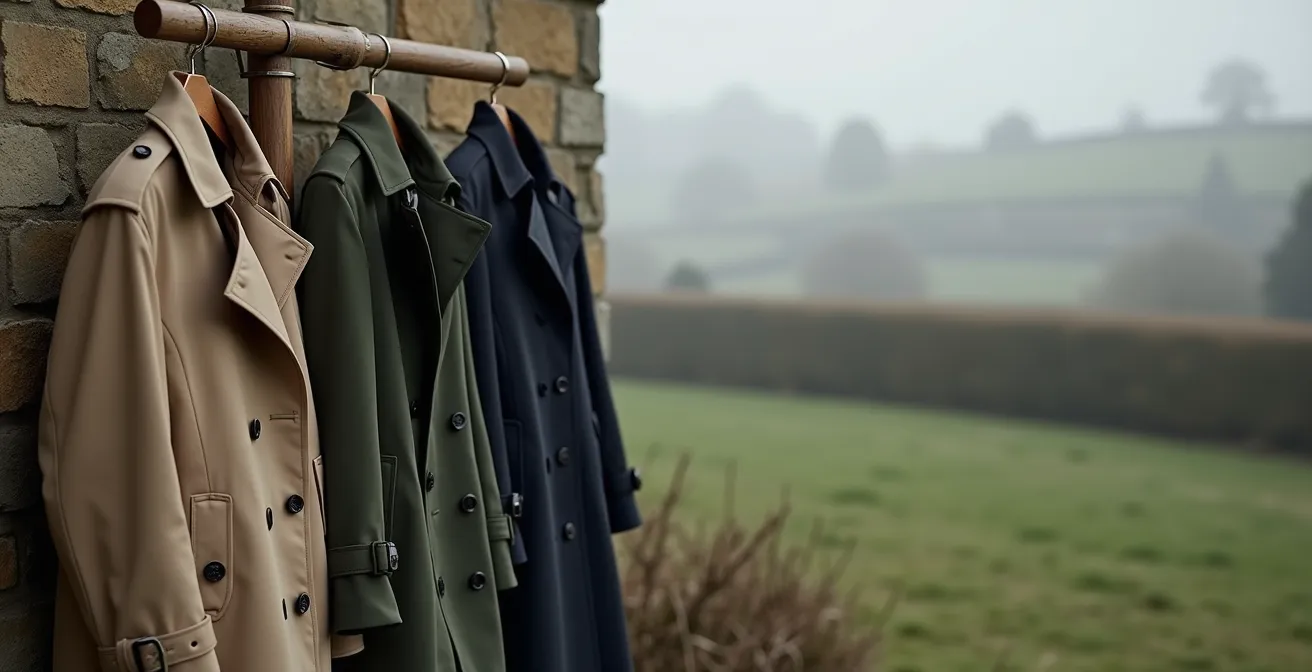
- Stop buying individual coats and adopt the ‘3-Coat Rule’: a system of three specific outerwear roles, not just items.
- Build your wardrobe around a core of soft, versatile neutrals that thrive in the UK’s diffuse light.
- Focus on thermoregulating base layers like merino wool to handle dramatic temperature shifts without bulk.
- Invest in quality, repairable pieces from heritage brands for a lower cost-per-wear and reduced environmental impact.
The hallway of a typical British home tells a familiar story: a jumble of coats for every conceivable—and inconceivable—weather scenario. There’s the heavy winter beast, the ‘just-in-case’ raincoat, a smart coat for work, and a casual jacket for the pub. Yet, when faced with a morning that promises both bright sun and sudden downpours, a sense of wardrobe paralysis sets in. You have an arsenal of outerwear, but somehow, never the right piece.
The common advice is to simply accumulate more: a classic trench, a technical puffer, a waxed cotton jacket. This approach treats your wardrobe like a collection of disconnected items, leading to clutter and decision fatigue. It overlooks the fundamental truth of dressing for the UK: versatility isn’t about having more options, but about having the right system. What if the secret wasn’t owning more coats, but a smarter, curated trio where each piece serves a distinct, non-overlapping function?
This is the essence of the 3-Coat Rule. It’s a minimalist philosophy designed to provide maximum functionality with minimum clutter. This guide will deconstruct this strategic framework, moving beyond a simple shopping list to a curatorial method. We will explore how to build a cohesive color palette that works with everything, why the right base layers are more critical than the outer shell, and how to leverage accessories to transform a single look. It’s time to reclaim your hallway and master the art of being perfectly, and minimally, prepared.
To navigate this wardrobe strategy effectively, this article is structured to guide you through each critical decision. The following summary outlines the key pillars of building a versatile and functional closet adapted for the British climate.
Summary: Your Guide to a Curated UK Wardrobe
- Neutrals and Accents: How to Pick a Color Scheme That Matches Everything?
- Chelsea Boots or Loafers: Which Shoe Is More Versatile for Work and Weekend?
- The Merino Layer: How to Dress for a 10-Degree Temperature Drop?
- Decision Fatigue: Why Wearing Similar Outfits Daily Boosts Productivity?
- Accessories Power: How to Change a Look Using Just Scarves and Jewellery?
- Starting a Professional Wardrobe: The 3 Suits Every London Banker Needs First
- Packing a Commuter Bag: How to Fold a Blazer So It Emerges Wrinkle-Free?
- Organic Cotton vs Recycled Polyester: Which Is Truly Better for the Planet?
Neutrals and Accents: How to Pick a Color Scheme That Matches Everything?
The foundation of a versatile wardrobe isn’t a specific garment, but a considered colour palette. In the UK, this is particularly crucial. The character of a colour can change dramatically under different lighting, and since over 60% of winter days in the UK have grey, diffused light, harsh colours like pure black or stark white can appear flat and draining. The key is to lean into softer, more complex neutrals that have depth even on the most overcast days.
Think in terms of a nature-inspired British palette. Colours like deep navy, olive green, taupe, and charcoal grey are far more forgiving and sophisticated than black. They provide a neutral base that pairs effortlessly with almost anything. For instance, a Cotswold Stone palette—honey, cream, and soft grey—evokes a natural warmth, while a Scottish Highlands theme of heather, peat, and slate offers a richer, moodier alternative. These core neutrals ensure your main pieces (coats, trousers, knitwear) are always interchangeable.
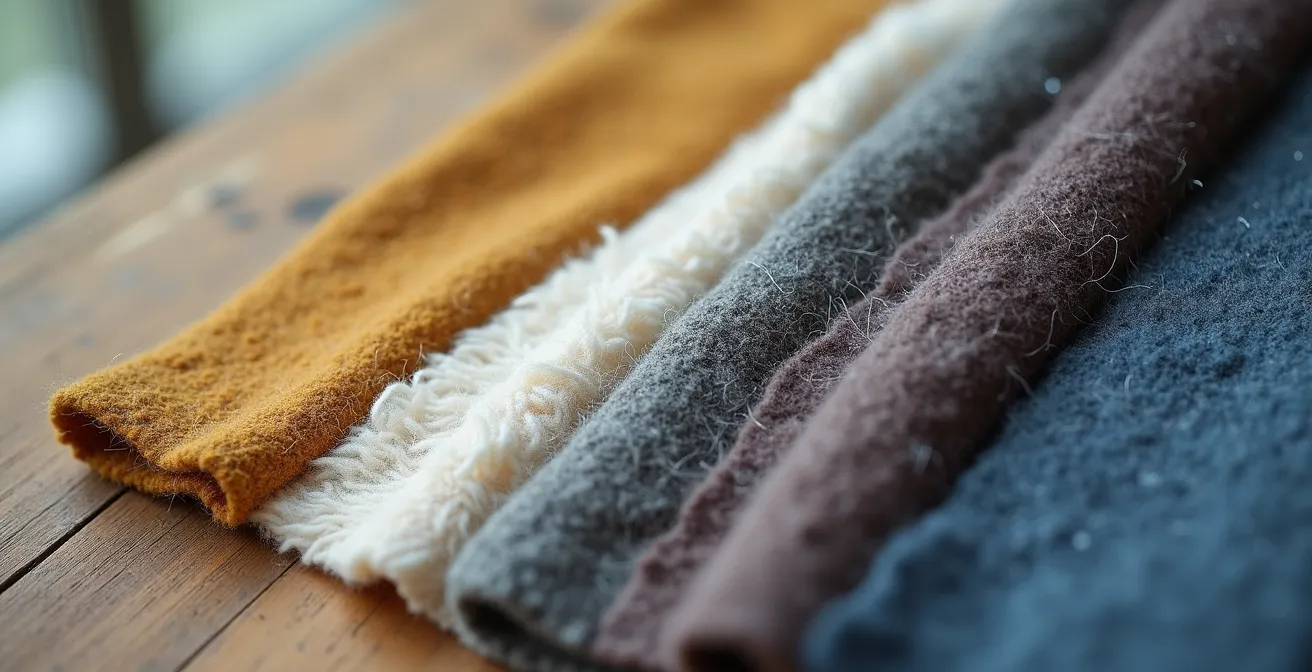
Once your base is established, accent colours can be introduced strategically. These are the vibrant jewel tones or earthy hues that bring personality to an outfit. A flash of burgundy in a scarf against a navy coat, or an ochre jumper under an olive jacket, creates visual interest without compromising the wardrobe’s overall harmony. The goal is a system where every piece works with at least three others, eliminating the “I have nothing to wear” dilemma. This curated approach to colour is the first step in defeating wardrobe clutter.
Chelsea Boots or Loafers: Which Shoe Is More Versatile for Work and Weekend?
Footwear is the anchor of any outfit, and in the UK, it must be a marriage of style and sheer practicality. The debate between Chelsea boots and loafers is a perfect case study in evaluating versatility against the backdrop of British life. While both can be stylish, only one truly rises to the challenge of a year-round, multi-scenario wardrobe. The loafer, elegant as it is, often falls short in the face of a sudden downpour or a cobbled street.
The Chelsea boot, particularly a Goodyear-welted model with a rubber sole, emerges as the undisputed champion of versatility. It effortlessly bridges the gap between smart-casual office wear and a relaxed weekend at the pub. Its sleek silhouette pairs as well with tailored trousers as it does with denim, while its construction is inherently more suited to the damp pavements and variable terrain of British towns and cities.
This table breaks down the practical considerations for anyone building a minimalist shoe collection in the UK.
| Criteria | Chelsea Boots | Loafers |
|---|---|---|
| Puddle Resistance | Excellent with rubber sole | Poor – leather sole slips |
| Pub to Office Versatility | Perfect smart-casual bridge | Too delicate for pub floors |
| UK Weather Durability | Built for rain and cold | Best for dry conditions |
| Cost-per-wear Value | High – year-round use | Moderate – seasonal |
Investing in quality is paramount. A case study of heritage shoemakers from Northamptonshire, such as Crockett & Jones, reveals a compelling financial argument. A £400 pair of their Goodyear-welted Chelsea boots, lasting over a decade with care, results in a cost-per-wear of just £0.11 per day. This is a fraction of the cost of replacing cheaper, less durable alternatives annually, proving that true minimalism is about buying better, not just buying less.
The Merino Layer: How to Dress for a 10-Degree Temperature Drop?
The greatest challenge of dressing for UK weather isn’t the cold or the rain, but the dramatic temperature swings within a single day. A crisp, cool morning can turn into a warm, sunny afternoon, while a daily commute can involve moving from a 2°C platform to a 25°C packed Tube carriage. The solution isn’t a bulky coat; it’s intelligent layering, and the hero of this strategy is merino wool.
Unlike cotton, which holds moisture and makes you feel cold, or synthetics that can feel clammy, merino wool is a master of thermoregulation. Its natural fibres are incredibly fine and create tiny air pockets that trap body heat in the cold. Conversely, when you’re warm, the wool wicks moisture vapour away from your skin to cool you down. Critically, scientific research shows merino wool can absorb up to 30% of its own weight in moisture without feeling damp to the touch, preventing the chilling effect of sweat.
Case Study: The London Commuter’s Temperature Challenge
Commuters in the UK face extreme temperature variations daily. A three-layer system comprising a merino base layer t-shirt, a merino mid-layer cardigan, and a weather-resistant outer shell was tested. The system successfully maintained the wearer’s optimal body temperature across all zones—from a heated home to a cold train platform and a crowded, warm Tube carriage. The wool’s ability to both insulate and breathe prevented overheating and subsequent chilling, proving its superiority for dynamic environments.
A simple, effective system consists of a fine-gauge merino t-shirt or long-sleeve top as a base, a mid-weight merino jumper or cardigan as a removable mid-layer, and a shell jacket for wind and rain. This allows you to add or subtract layers with ease, ensuring you remain comfortable no matter what the day brings. Investing in high-quality merino is an investment in year-round comfort and a decluttered wardrobe free of single-purpose garments.
Decision Fatigue: Why Wearing Similar Outfits Daily Boosts Productivity?
The concept of a ‘work uniform’ is often associated with creative visionaries like Steve Jobs, but its benefits extend far beyond Silicon Valley. Adopting a streamlined, near-daily uniform is a powerful strategy for reducing decision fatigue—the deterioration of decision-making quality after a long session of making choices. Every morning, deciding what to wear consumes mental energy that could be better spent on more important tasks. By simplifying this choice, you conserve that precious resource.
The truly discerning man understands that less is the ultimate luxury. When you can only own a few items, you are naturally inclined to ensure they are the best you can acquire.
– The VOU Editorial Team, The VOU Style Guide
Creating a personal uniform doesn’t mean wearing the exact same clothes every day. Instead, it’s about defining a personal ‘wardrobe archetype’ and building a small, curated collection of high-quality, interchangeable pieces within that style. For example, a ‘Shoreditch Creative’ might have a uniform of dark denim, a chore jacket, and minimalist trainers, while a ‘Manchester Professional’ might opt for smart trousers, a fine-gauge merino knit, and Chelsea boots. The key is consistency in silhouette and palette.
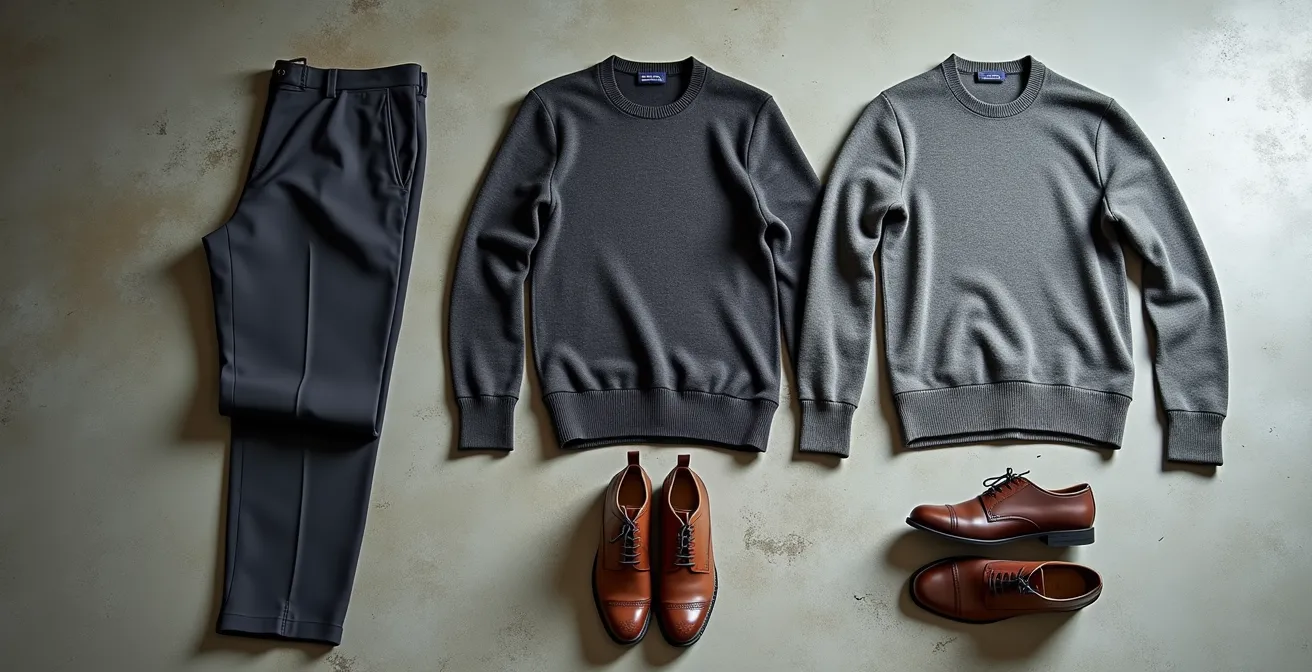
The trick to keeping this approach interesting is to focus on variety in texture over colour. Wearing the same style of grey flannel trousers daily can be elevated by rotating between different knitwear textures—a smooth cashmere one day, a ribbed wool the next, and a fine-gauge merino on another. This maintains visual interest and a sense of newness without reintroducing the cognitive load of coordinating entirely different outfits. It’s a sophisticated, minimalist approach that looks considered while feeling effortless.
Accessories Power: How to Change a Look Using Just Scarves and Jewellery?
In a minimalist wardrobe built on a foundation of neutral staples, accessories are not mere afterthoughts; they are powerful, functional tools. They are the most efficient way to inject personality, colour, and adaptability into your core outfits without adding clutter. A well-chosen scarf or a piece of jewellery can completely transform the tone of a look, taking it from professional to casual, or adding a necessary layer of warmth.
British-made accessories, in particular, often serve a dual purpose of style and practicality. The heritage brand Johnstons of Elgin, established in 1797, exemplifies this. Their Scottish-woven cashmere scarves provide warmth equivalent to a light jacket layer while adding a sophisticated splash of colour to a neutral coat. A single heritage scarf, through different draping techniques, can alter the look of five different outerwear styles, demonstrating an incredible return on investment for a single item.
A curated accessory collection for the UK climate should be small but strategic. The focus should be on quality materials and functional design. Here are the essentials:
- The Chunky Lambswool Scarf: Indispensable for coastal winds and deep winter days. Choose a weight of 200g+ and wrap it twice for maximum protection against the cold.
- The Fine Cashmere Scarf: The epitome of city elegance. It can be draped loosely for a boardroom meeting or tied for warmth, all without adding bulk under a blazer or coat.
- The Compact, Wind-Resistant Umbrella: A non-negotiable. Investing in a heritage brand like Fox Umbrellas ensures it won’t fail you in a sudden squall. A classic black with a wooden handle complements any outfit.
By investing in these key pieces, you create a modular system. The same navy coat can look formal with a silk scarf, rugged with a chunky wool scarf, or professional with no scarf at all. This is the essence of doing more with less, the core tenet of a truly functional minimalist wardrobe.
Starting a Professional Wardrobe: The 3 Suits Every London Banker Needs First
The landscape of professional attire, even in the historically formal City of London, has fundamentally shifted. The era of needing a five-day rotation of dark, heavy suits is over. In fact, recent workplace surveys indicate a 70% reduction in formal suit requirements post-pandemic, favouring a more flexible, ‘smart-casual’ approach. For a young professional starting out, this means investing smarter, not bigger. The modern “three suits” are not three identical garments, but three versatile foundations.
The essential trio for a London professional now consists of:
- The Core Business Suit: A single, impeccably tailored suit in a versatile mid-grey or deep navy wool. This is your go-to for crucial client meetings and formal occasions. The key is that its jacket and trousers must also work as separates.
- The ‘Broken’ Suit: This isn’t a suit at all, but a combination of a structured blazer (e.g., in a subtle check or a rich texture like flannel) and a separate pair of high-quality trousers (e.g., charcoal wool or smart chinos). This combination offers dozens of permutations.
- The High-Performance Travel Suit: A modern essential, often made from a wool-blend with technical fibres for stretch and wrinkle-resistance. It’s perfect for business trips or long days, ensuring you look sharp upon arrival without the fuss.
Navigating the world of London tailoring can be daunting. From the bespoke temples of Savile Row to accessible made-to-measure services, understanding the landscape is key to making a wise investment.
| Location | Specialty | Price Range | Lead Time |
|---|---|---|---|
| Savile Row | Bespoke suits | £3,000-£10,000 | 8-12 weeks |
| Jermyn Street | Shirts & accessories | £100-£400 | Ready to wear |
| SuitSupply | Made-to-measure | £400-£800 | 3-4 weeks |
| Charles Tyrwhitt | Ready-to-wear | £200-£500 | Immediate |
By focusing on these three foundational “suits” and choosing the right tailoring service for your budget, a professional can build a commanding and highly versatile wardrobe with fewer, better pieces.
Packing a Commuter Bag: How to Fold a Blazer So It Emerges Wrinkle-Free?
For the daily commuter, the journey is an extension of the workday, and arriving looking polished is non-negotiable. A crumpled blazer is an instant sign of a frazzled journey. The challenge is packing it into a backpack or briefcase without it emerging as a mess of creases. Fortunately, a specific folding technique, favoured by seasoned travellers, protects the structure and fabric of a jacket, ensuring it unrolls perfectly upon arrival.
The most effective method is the ‘Inside-Out Shoulder Tuck’. Unlike a simple fold, this technique uses the jacket’s own structure to protect its most important feature: the chest and lapels. It’s a simple, quick procedure that can be done in under a minute once mastered. The key is to ensure the lapels and shoulders are perfectly aligned before the final roll.
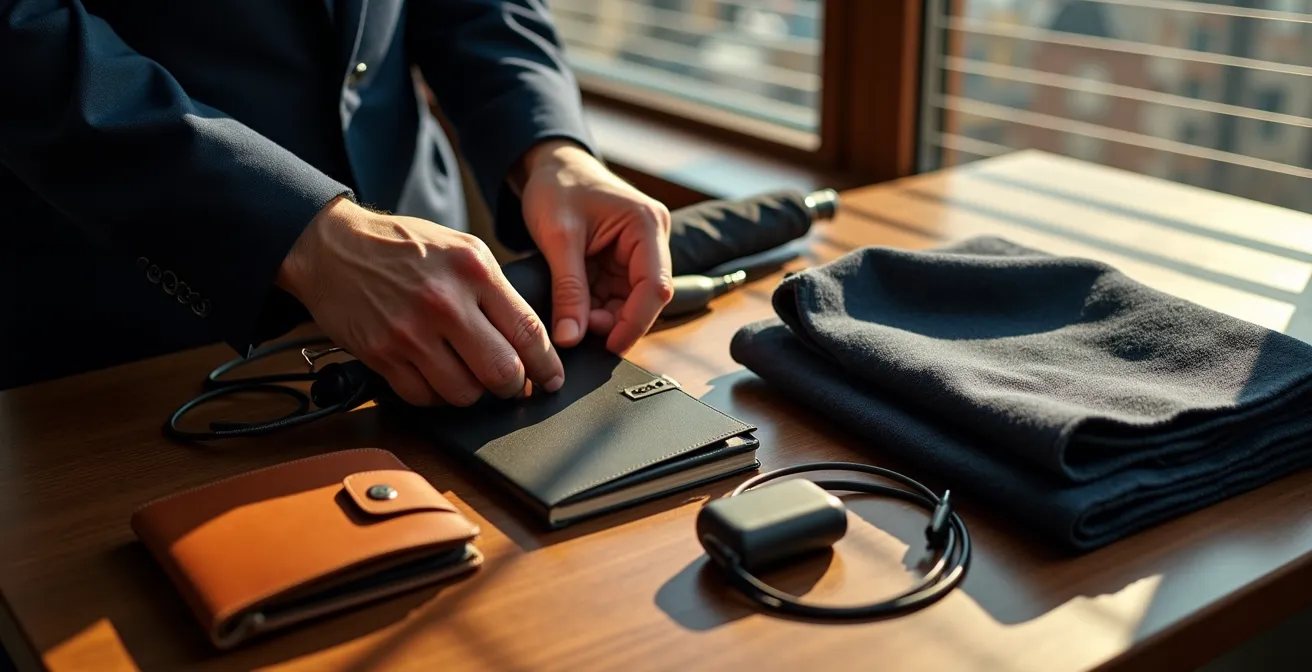
Beyond the blazer, a well-curated commuter bag is a mark of a prepared professional. A 2024 survey of 500 City workers identified an optimal kit. British brand Troubadour’s backpacks, with their suspended laptop compartments, were noted as particularly effective for protecting both tech and tailoring. The contents are just as important: a lightweight Knirps umbrella, a compact power bank, and noise-cancelling earbuds are considered essentials for navigating the London commute.
Your Action Plan: The Inside-Out Shoulder Tuck Method
- Invert one shoulder: Turn one shoulder of the blazer completely inside-out, while keeping the other side as normal. This creates a protective, self-lined pocket.
- Nest the shoulders: Fold the normal shoulder neatly into the inverted one. The goal is to tuck one shoulder pad inside the other, aligning the lapels perfectly to prevent creasing down the front.
- Fold and roll: Fold the jacket lengthwise once, creating a long, neat rectangle. Then, gently roll it from the bottom hem up towards the collar. The structured shoulder area now protects the delicate chest canvas.
- Pack strategically: Place the rolled blazer in your bag with the rolled edge facing down. Upon arrival, it will unroll in seconds, virtually wrinkle-free.
Key takeaways
- The ‘3-Coat Rule’ is a system, not a shopping list, focusing on three distinct functional roles: professional, thermal, and casual.
- Material science is key. Thermoregulating fabrics like merino wool are essential for managing the UK’s temperature swings.
- True value lies in cost-per-wear. Investing in durable, repairable items from heritage brands is both economically and environmentally smarter.
Organic Cotton vs Recycled Polyester: Which Is Truly Better for the Planet?
In the quest for a more sustainable wardrobe, the conversation often gets simplified to a choice between materials like organic cotton and recycled polyester. While both offer benefits over their conventional counterparts, a truly minimalist and sustainable approach focuses on a more powerful principle: longevity. The most sustainable garment is the one you already own, and the second most sustainable is one built to last a lifetime.
This is where natural fibres like high-quality wool truly excel. Not only do they offer superior performance in terms of thermoregulation and durability, but they are also part of a natural cycle. For example, while recycled polyester sheds microplastics with every wash, wool is biodegradable. In the right conditions, environmental studies confirm merino wool requires only around 12 months to fully biodegrade, returning its nutrients to the soil.
Case Study: The ‘Buy Once, Repair Forever’ Model
UK-focused sustainable brands like Finisterre and Patagonia demonstrate the power of longevity. Finisterre, whose recycled wool peacoats are built to last over 15 years, has a thriving repair service that handled over 2,000 garments in 2023 alone. This extended the average life of their coats by 7 years. This model, focused on durability and repairability, reduces a garment’s environmental impact by an estimated 73% compared to fast-fashion alternatives that are replaced every couple of seasons.
Therefore, when choosing your core outerwear pieces, the most important question isn’t just “What is it made of?” but “How long will it last, and can it be repaired?”. A well-made wool coat or a Goodyear-welted pair of boots that can be resoled represents a far greater commitment to sustainability than a trendy jacket made from recycled materials that will fall apart in two years. This shift in mindset—from disposable materials to permanent investments—is the cornerstone of a truly conscious and curated wardrobe.
By adopting this strategic, minimalist approach, you can transform your relationship with your wardrobe. Begin today by auditing your current outerwear collection not by quantity, but by function, and identify the gaps in your own 3-coat system.