
Investing in culture is not a cost but a direct economic driver, creating measurable financial returns and retaining vital talent in Northern towns.
- Cultural events create an immediate economic ripple effect, boosting local SME revenue far beyond the initial investment.
- Vibrant cultural hubs provide high-value career paths that actively reverse the graduate “brain drain” to London.
Recommendation: Shift from viewing arts funding as a subsidy to seeing it as a strategic investment in your local economic and social infrastructure.
As a local councillor or business owner in the North of England, you are relentlessly focused on tangible results. When public funds or private investment are discussed, the question of Return on Investment (ROI) is paramount. In this context, allocating a significant budget to an arts festival, a theatre renovation, or a community art project can feel like an unaffordable luxury—a “nice-to-have” rather than a strategic necessity. The common narrative is that culture is a cost centre, and its benefits are intangible, vague notions of “wellbeing” or “vibrancy” that don’t translate to a healthier bottom line for local businesses or a stronger council tax base.
You’ve heard the usual arguments: arts create jobs, they make places more attractive. But these platitudes often lack the hard evidence needed to convince a skeptical audience. They fail to explain the specific mechanisms by which a creative project generates real, quantifiable economic value. While major projects like the Levelling Up Fund are reshaping the physical landscape, the role of culture within this transformation is often misunderstood and, consequently, undervalued.
But what if this perspective is fundamentally flawed? What if the true key to sustainable regeneration lies not just in new roads and buildings, but in a robust “cultural supply chain”? This article moves beyond anecdotes to deconstruct the economic engine of culture. We will demonstrate, with evidence and clear examples from towns like Hull and Manchester, how targeted cultural investment is not a drain on resources but a powerful catalyst for economic growth, talent retention, and genuine community revitalisation. It’s time to analyse culture not as an expense, but as one of the most effective regeneration tools you have at your disposal.
This guide will break down the precise ways in which culture generates value, providing a clear framework for evaluating its impact. We will explore the direct financial returns, the effect on talent migration, the practicalities of developing cultural spaces, and the crucial methods for measuring what truly matters.
Contents: The Economic Case for Culture in the North
- How Does a £50,000 Art Festival Generate £200,000 for Local Cafes?
- The Brain Drain: How Cultural Hubs Stop Graduates Moving to London?
- Mill Conversions: The Challenges of Turning Factories into Art Spaces?
- High Art vs Community Art: Which Model Truly Engages Local Residents?
- Wellbeing Metrics: How to Prove an Art Project Reduced Social Isolation?
- Tech Hubs: Why Startups Are Choosing MediaCityUK Over Shoreditch?
- Arts Council Rejected You: Where Else Can You Apply for Creative Funding?
- Will HS2 Really Cut Commuting Times Between Manchester and London Enough to Matter?
How Does a £50,000 Art Festival Generate £200,000 for Local Cafes?
The skepticism surrounding the ROI of a cultural event is understandable. How can an investment in something as ephemeral as a festival translate into hard cash for local businesses? The answer lies in the economic ripple effect, a chain reaction where initial spending is multiplied as it circulates through the local economy. A £50,000 festival budget isn’t just spent on artists; it’s spent on local printers, security firms, material suppliers, and marketing agencies. These businesses, in turn, pay their local employees, who then spend their wages in local shops, pubs, and cafes.
This initial injection is magnified by visitor spending. Festival-goers require accommodation, food, and transport. The Hull UK City of Culture 2017 is a prime example. The programme created lasting commercial relationships between cultural organisations and local SMEs, establishing supply chains that continued for years. This demonstrates that the impact isn’t just a short-term spike; it’s the foundation of a new, resilient cultural supply chain. The festival becomes an anchor client for dozens of small local businesses, providing them with reliable income and the confidence to grow.
To truly grasp this, consider the journey of the visitor’s pound. They buy a coffee before a show, a meal after, and a souvenir from a local shop. The cafe owner uses that revenue to buy milk from a local dairy and bread from a local baker. This is the multiplier effect in action, where every pound spent on culture is re-spent multiple times within the community, generating tax revenue and supporting jobs far beyond the creative sector itself.

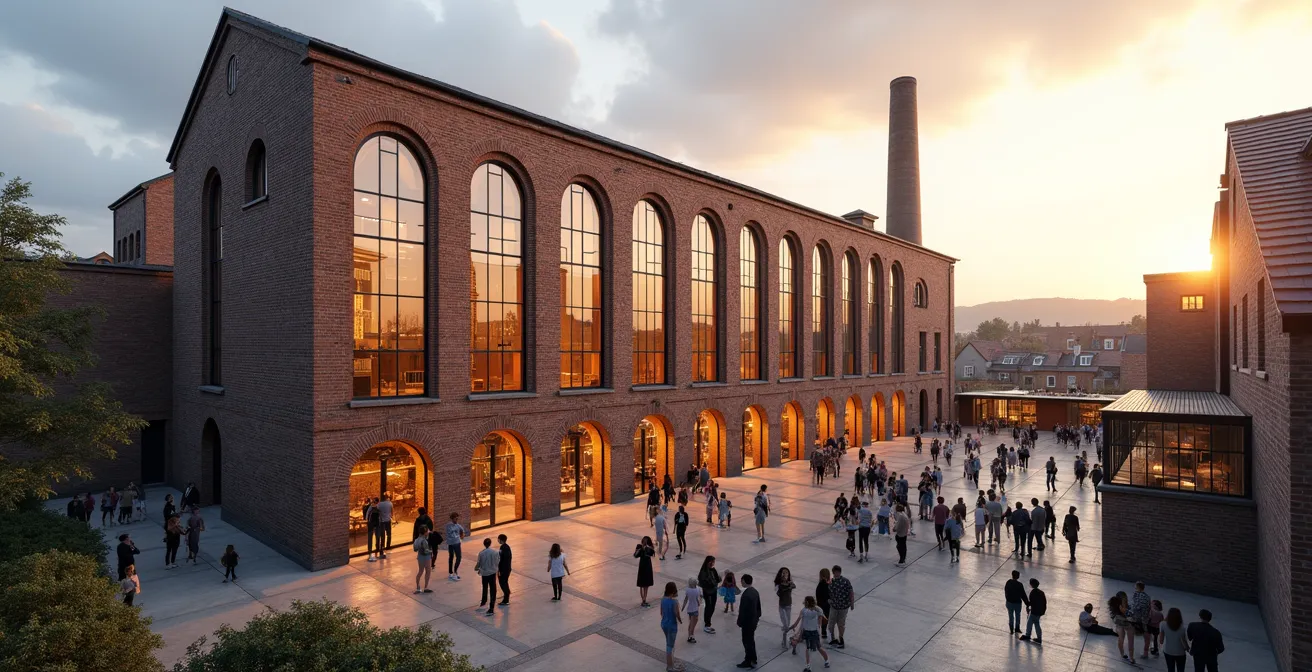
As this image illustrates, the festival floor is directly connected to the local high street. The flow of attendees from cultural events into commercial spaces is not accidental; it’s a direct consequence of creating a compelling reason for people to visit and spend time—and money—in the town centre. The most significant impact of Hull’s City of an Culture year was an estimated £676m of new private and public investment, proving the long-term catalytic power of a single year of focused cultural activity.
The Brain Drain: How Cultural Hubs Stop Graduates Moving to London?
For decades, a key challenge for Northern towns has been “brain drain”—the migration of ambitious graduates to London in search of high-quality career opportunities. Investing in culture is one of the most effective strategies for reversing this trend through a process of talent anchoring. It’s not just about creating jobs; it’s about creating the *right kind* of jobs and, crucially, a desirable quality of life that convinces skilled individuals to build their careers and lives locally.
Cultural hubs act as magnets for the creative and tech industries, which thrive on collaboration and a vibrant local scene. These are the high-value, future-proof sectors that graduates aspire to work in. Recent analysis shows that Manchester’s startup ecosystem is a powerful testament to this, with over 60,000 people employed across more than 1,600 startups. This ecosystem didn’t appear by chance; it was nurtured by investment in cultural infrastructure and a critical mass of creative organisations that make the city an exciting place to be.
A vibrant cultural offering—independent cinemas, live music venues, galleries, and festivals—is no longer a peripheral benefit. For the modern workforce, it’s a key factor in deciding where to live. A graduate choosing between a job in London and one in Manchester or Leeds is not just comparing salaries. They are comparing rent, quality of life, and the sense of community. Culture directly improves these factors, making Northern cities more competitive in the national war for talent.
The following table breaks down the tangible advantages a Northern tech hub like MediaCityUK has over a London equivalent like Shoreditch. The significantly lower cost of living and operations allows startups to be more sustainable and offer a better work-life balance, directly contributing to employee retention.
| Factor | MediaCityUK/Salford | Shoreditch/London | Advantage |
|---|---|---|---|
| Office Space (per sq ft/year) | £25-35 | £65-85 | 60% lower in MediaCity |
| Average Tech Salary | £35,000-55,000 | £45,000-80,000 | 30% lower wage costs |
| 1-bed flat rental (monthly) | £800-1,200 | £2,000-3,000 | Better employee retention |
| Specialized talent pool | Media tech cluster | General tech hub | Niche expertise in North |
Mill Conversions: The Challenges of Turning Factories into Art Spaces?
The iconic mills and factories of the North are powerful symbols of its industrial past. Repurposing these heritage buildings into vibrant art spaces, studios, and creative hubs is a cornerstone of cultural regeneration. However, the romantic image of a bustling arts centre in a former spinning mill belies a host of complex and costly challenges. Acknowledging these difficulties is crucial for any realistic investment plan.
Firstly, there are the structural and regulatory hurdles. Many of these buildings are Grade I or II listed, which means renovations must adhere to strict conservation rules. Integrating modern necessities like high-speed digital infrastructure, effective thermal insulation, and full DDA (Disability Discrimination Act) compliance within a protected historic fabric requires innovative architectural solutions and specialist craftsmanship, which comes at a premium. The scale of this work is significant, but successful projects deliver immense value; for example, Historic England’s Heritage Action Zones programme has seen 77 historic buildings regenerated, bringing 8,400 square metres of derelict commercial space back into productive use.
Secondly, the funding landscape has shifted. Post-Brexit, projects can no longer rely on the European Regional Development Fund. Instead, they must navigate a complex web of UK-based schemes like the Levelling Up Fund and the Shared Prosperity Fund. Each has its own specific criteria, application processes, and bureaucratic requirements. Successfully securing funding requires a sophisticated understanding of how to frame a cultural project in terms of its economic and social outcomes, aligning it with national policy objectives.
Finally, there is the challenge of financial viability. The high upfront capital cost of conversion must be balanced against a sustainable long-term business model. This often means creating a mixed-use space that combines subsidised artist studios with more profitable commercial units, such as offices, cafes, or event spaces. This blend of cultural and commercial activity is essential to ensure these magnificent buildings have a future as dynamic as their past.
High Art vs Community Art: Which Model Truly Engages Local Residents?
A common debate in cultural regeneration is the tension between “high art” – major institutions, prestigious exhibitions, and internationally recognised artists – and “community art” – local-led projects, workshops, and participatory events. For a councillor focused on engaging the broadest possible constituency, the instinct might be to favour grassroots projects. However, the most successful models show this is a false dichotomy. The true impact comes from the symbiotic relationship between the two.
Major institutions, often perceived as exclusive, can act as powerful catalysts. They have the resources, networks, and fundraising capacity to attract significant investment. The key is ensuring this investment benefits the entire community. As Paul Bristow of Arts Council England notes, a critical function of these large organisations is to support the local ecosystem:
The most successful regeneration projects use ‘High Art’ institutions as a catalyst to fund and provide a platform for hyper-local community art projects. Their education and outreach departments are the critical bridge.
– Paul Bristow, Arts Council England: Culture and Devolution
This “bridge” is where genuine engagement happens. The major gallery doesn’t just host an exhibition; it runs workshops in local schools. The new theatre doesn’t just stage a play; its actors work with community groups to create their own performances. This approach was masterfully executed in Hull, where 95% of Hull residents attended at least one cultural event during its City of Culture year. This extraordinary level of participation was achieved by weaving community-led activities into the fabric of the main programme.
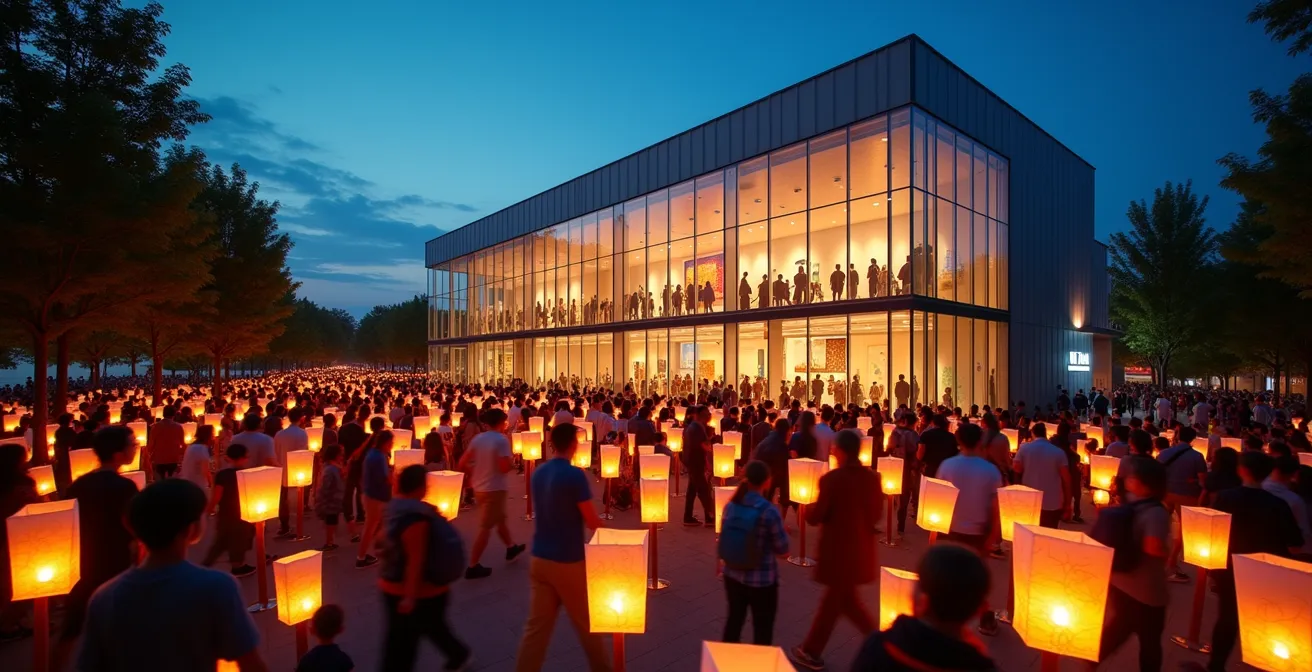
This image of a community lantern parade outside a modern gallery perfectly captures this synergy. The institution provides the backdrop, the credibility, and often the funding, while the community brings the life, authenticity, and mass participation. This model ensures that cultural investment is not seen as something imposed upon a town, but something that is co-created with its residents, fostering a sense of ownership and pride that is essential for long-term success.
Wellbeing Metrics: How to Prove an Art Project Reduced Social Isolation?
While economic ROI is a critical metric, the social impact of culture—particularly on health and wellbeing—is equally significant. For a council grappling with rising social care costs and public health challenges, proving that an art project can reduce social isolation or improve mental health is a powerful argument for investment. The challenge, however, is moving from anecdotal evidence (“people seemed happier”) to credible, quantitative data.
Measuring wellbeing requires a structured approach. You can’t simply ask people if they feel less lonely. Instead, you must use established methodologies, often dividing them into two categories:
- Quantitative Metrics: These involve using standardised, validated surveys before and after a project. For instance, you could use the ONS4 (Office for National Statistics) wellbeing questions, which measure life satisfaction, worthwhileness, happiness, and anxiety on a scale of 0-10. You could also use specific scales like the UCLA Loneliness Scale to measure changes in social isolation among participants. Tracking GP visit frequency or social prescription referrals for a cohort of participants can also provide hard data on health service usage.
- Qualitative Metrics: This is about capturing the story behind the numbers. It involves structured interviews, focus groups, and collecting personal testimonies. While not a statistic, a powerful, detailed account of how a community choir or a local history project helped an isolated older person reconnect with their community provides compelling evidence for councillors and funders. The key is to gather this evidence systematically, not haphazardly.
Imagine a scenario: a 12-week ceramics workshop is funded for a group of 20 older residents identified as being at risk of social isolation. Before the first session, each participant completes the ONS4 and UCLA Loneliness Scale. After the final session, they complete it again. A 15% average improvement in life satisfaction scores and a 20% reduction in reported loneliness is a hard statistic you can present in a report. This is no longer a “soft” outcome; it’s a measurable public health intervention.
By combining robust quantitative data with compelling qualitative stories, you can build an undeniable case that investing in cultural participation is a highly effective, preventative measure that delivers significant social value and, ultimately, cost savings in other areas of public service.
Tech Hubs: Why Startups Are Choosing MediaCityUK Over Shoreditch?
The decision for a tech startup to choose a base is a calculated one, balancing access to talent, clients, and funding against the cost of operations. While London’s Shoreditch has long been seen as the UK’s tech epicentre, Northern hubs like MediaCityUK in Salford are now presenting a more compelling and sustainable proposition, particularly for startups in specialised sectors. This is not just about cheaper rent; it’s about a smarter, more integrated ecosystem.
The unique advantage of MediaCityUK is the co-location of major industry anchors like the BBC, ITV, and Ericsson. This creates an unparalleled client and talent pipeline that a more generalized hub like Shoreditch cannot replicate for media tech. A startup developing a new piece of broadcast software or an immersive tech experience has its potential customers and collaborators literally on its doorstep. This proximity de-risks the startup journey, providing opportunities for pilot projects, partnerships, and attracting experienced staff from the big players.
Furthermore, this cluster is actively nurtured. It is home to specialised incubators like the Immersive Technologies Innovation Hub, funded by Innovate UK, which focuses on high-growth areas like virtual production and esports. The University of Salford’s dedicated MediaCity campus ensures a constant flow of specialised graduates directly into this ecosystem, solving a critical talent pipeline issue. This strategic alignment of industry, academia, and government support creates a powerful competitive edge.
The social and economic impact of this model is profound. It creates high-value jobs and provides clear pathways into the tech industry for local people, generating enormous social value alongside commercial success. The IN4 Group’s 2024 Social Impact Report for the region demonstrates £44 million in social impact generated, supporting over 3,000 people into tech careers. This proves that a well-supported cultural and tech cluster is a powerful engine for inclusive growth, making a tangible difference to the lives and opportunities of the local community.
Key Takeaways
- The economic impact of culture is not abstract; it is a measurable ripple effect that multiplies every pound invested throughout the local economy.
- Vibrant cultural scenes are a critical tool for “talent anchoring,” making Northern towns competitive in retaining skilled graduates.
- True community engagement is achieved through a synergy between major “high art” institutions and grassroots, participatory projects.
Arts Council Rejected You: Where Else Can You Apply for Creative Funding?
For many creative projects, a rejection from Arts Council England (ACE) can feel like the end of the road. As the primary funding body, its decisions carry immense weight. However, the funding landscape, particularly in the North, is becoming increasingly diverse. A rejection from ACE should not be seen as a failure, but as a prompt to re-evaluate your project’s outcomes and explore a broader funding ecosystem.
The key is to think beyond “arts funding” and consider what other problems your project solves. Devolution has empowered Mayoral Combined Authorities, many of which have their own culture funds with different priorities to ACE. The Greater Manchester Culture Fund, for example, may have specific objectives around local identity or community cohesion that your project aligns with perfectly. Corporate Social Responsibility (CSR) budgets are another untapped resource; Northern-based law firms and property developers often dedicate funds for local arts projects that have a clear, demonstrable community impact.
Furthermore, reframing your project’s purpose can open doors to entirely new funding streams. Does your project improve mental health? Approach Public Health England. Does it explore local history and identity? Target the National Lottery Heritage Fund. This requires you to be strategic, emphasising the social, health, or heritage outcomes of your work, not just its artistic merit. The following checklist provides a practical guide to navigating this diverse landscape.
Action Plan: Securing Alternative Creative Funding
- Target Mayoral Funds: Research the specific cultural strategies of your Mayoral Combined Authority (e.g., Greater Manchester, Liverpool City Region) and tailor your application to their stated local priorities.
- Approach Corporate CSR: Identify major Northern-based companies in sectors like law and property. Pitch your project based on its direct community impact and alignment with their local CSR goals.
- Leverage Crowdfunding Platforms: Use platforms like Spacehive. Investigate if your local council (e.g., Bradford Council) offers match-funding schemes that can double public donations for community projects.
- Reframe for Non-Arts Funders: Analyse your project’s outcomes. Re-write your proposal to highlight benefits that align with funders like Public Health England (wellbeing) or the National Lottery Heritage Fund (heritage).
- Explore Specific Regional Funds: Check eligibility for targeted pots like the Northern Cultural Regeneration Fund, which is designed to support capital projects in areas with historically low cultural investment.
Will HS2 Really Cut Commuting Times Between Manchester and London Enough to Matter?
For years, High-Speed 2 (HS2) was presented as a critical piece of infrastructure for connecting the North to London and levelling up the country. However, following the cancellation of the Northern legs, the debate has fundamentally shifted. The question is no longer just about shaving minutes off a journey to the capital, but about a much larger strategic choice: what is the most effective way to invest in transport to unlock the North’s economic potential?
The core argument against a London-centric model is that the greatest barrier to growth for most Northern businesses and residents is not the link to London, but poor connectivity *within* the North. A business in Leeds struggles more with recruiting talent from Liverpool or Sheffield than from London. The cancellation of the HS2 northern leg, while controversial, has forced a pivot towards this intra-regional need. As a result, the government announced that £4.7 billion of reallocated HS2 funding would be invested directly into the North through a Local Transport Fund, empowering local leaders to decide their own priorities.
This shift represents a significant strategic opportunity. Instead of a single, mega-project focused on one corridor, investment can be spread across multiple projects that deliver more immediate and widespread benefits, such as improved local bus services, upgraded tram networks, and road maintenance. This approach connects towns to their nearest cities, enabling more people to access jobs, education, and cultural opportunities within their own region.
The table below contrasts the different investment priorities, highlighting that while HS2 primarily benefits a smaller group of long-distance business travellers, local transport improvements and projects like Northern Powerhouse Rail have a much broader impact on daily commuters and regional communities, which is the bedrock of sustainable economic regeneration.
| Investment Focus | Economic Impact | Beneficiaries | Timeline |
|---|---|---|---|
| HS2 (London-Manchester) | Frees West Coast capacity | Business travelers | 2030s completion |
| Northern Powerhouse Rail | Links Liverpool-Manchester-Leeds | Daily commuters | Under review |
| Local transport improvements | Connects towns to cities | Regional communities | 2024-2027 |
| Levelling Up investments | £208m for Northern regeneration | Left-behind areas | Immediate impact |
To build a truly thriving Northern economy, you must look beyond singular, top-down solutions. The evidence shows that a portfolio of targeted, locally-led investments in both cultural and physical infrastructure delivers the most powerful and lasting ROI. Now is the time to apply this evidence-based approach to your own town’s regeneration strategy.