
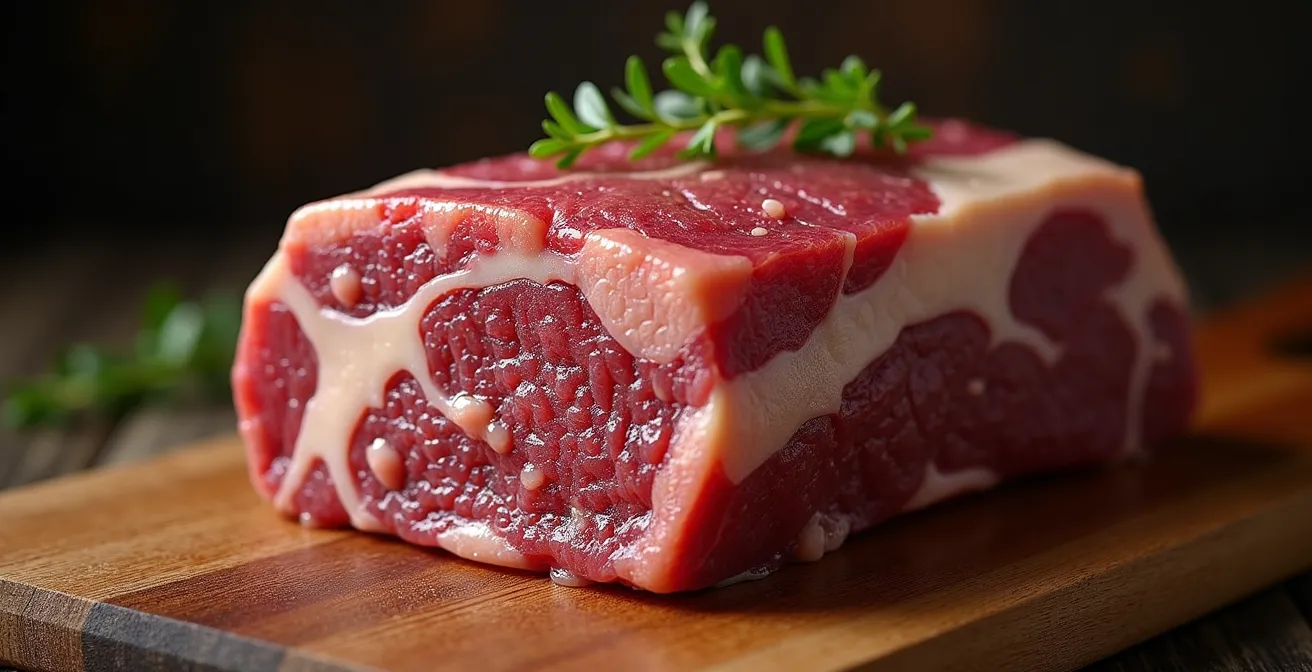
That extra tenner for aged Yorkshire beef isn’t a cost; it’s an investment in a deep, nutty flavour and tenderness that standard beef simply cannot match.
- This superior quality comes from the craft of dry-aging, a process which concentrates flavour by removing water.
- The animal’s natural grass-fed diet is a key factor, which you can see in the rich, yellow colour of the fat.
Recommendation: Trust a butcher who understands this ‘chain of craft’ and never, ever cut into your roast without resting it properly.
You’re standing at the butcher’s counter, planning the perfect Sunday roast. You see two beautiful rib roasts. They look similar, but one, labelled “Dry-Aged Yorkshire Beef,” costs a good £10 more per kilogram. You pause. Is it really worth it? Many will tell you it’s more “tender” or has a “deeper flavour,” but these are just words. They don’t capture the real story or the tangible difference you’ll experience on the plate. That difference isn’t just about a fancy label; it’s about a tradition, a science, and a chain of craft that begins in the rolling pastures of Yorkshire and ends with the perfect centrepiece for your family meal.
I’m a butcher. Not just a man who cuts meat, but a guardian of that tradition. For years, I’ve seen people hesitate, weighing the cost without truly understanding the value. The secret isn’t just in the aging; it’s in the breed, the feed, and the masterful control of the environment. The truth is, that extra £10 buys you an entirely different product, one with a story you can see in its marbling and smell in its nutty aroma. It’s an investment in an experience that standard supermarket beef simply cannot replicate.
Forget the vague promises. I’m going to give you a butcher’s eye. This guide will walk you through the craft behind that price tag. We’ll explore the crucial difference between aging methods, learn how to judge a cut by its fat, and master the cooking techniques that honour the animal and the process. We’ll even ensure its perfect companion, the mighty Yorkshire pudding, rises to the occasion. By the end, you won’t just be buying beef; you’ll be selecting a masterpiece.
To help you master this craft from start to finish, we will break down every essential step. From understanding the aging process to perfecting the final roast, this guide is structured to turn your Sunday lunch into a true culinary event.
Contents: The Butcher’s Guide to Yorkshire Beef
- Dry-Aged vs Wet-Aged: Which Method Produces the Most Tender Ribeye?
- How to Cook Grass-Fed Beef to Medium-Rare Without It Becoming Tough?
- Marbling and Fat Color: What Does Yellow Fat Tell You About the Cow’s Diet?
- The Fridge Mistake That Ruins the Flavor of Expensive Aged Beef
- Yorkshire Puddings: The Secret to Getting Them to Rise 4 Inches High
- Why Does a Pub Burger Cost £18 in the Cotswolds vs £12 in Town?
- The Resting Rule: Why Cutting Meat Too Soon Ruins a Slow Roast?
- Brisket and Shoulder: How to Turn Cheap Cuts into Tender Feasts?
Dry-Aged vs Wet-Aged: Which Method Produces the Most Tender Ribeye?
When we talk about aged beef, we’re talking about two very different paths. The most common method, especially in supermarkets, is wet-aging. The beef is sealed in a vacuum bag and left to mature in its own juices. This process uses the meat’s natural enzymes to tenderise the muscle fibres. It’s efficient and prevents weight loss, which keeps the price down. However, it can sometimes impart a slightly sour or metallic taste to the meat. It creates tenderness, but not the depth of flavour we’re after.
Then there is dry-aging. This is the art form. It’s the reason for that extra cost and the source of that incredible flavour. Here, large cuts of beef are hung in a carefully controlled environment—a refrigerated room with precise temperature, humidity, and airflow. For weeks, the beef is left to hang, exposed to the air. Two things happen. First, enzymes break down the muscle tissue, making it incredibly tender. Second, and most importantly, the meat loses water through evaporation. This process can result in up to 30% weight loss during dry-aging, which concentrates the beef’s flavour into a rich, nutty, and almost buttery kernel. A dark, hard crust called a pellicle forms on the outside, which is trimmed off before sale, further reducing the final weight.
This is where true craftsmanship shines. For instance, some Yorkshire butchers have perfected this process. At Grid Iron Meat near Ripon, they use a purpose-built maturation room lined with Himalayan rock salt. The salt helps to purify the air and draw out even more moisture, intensifying the flavour and allowing them to age beef for 100 days or more. Walking into that room is like stepping back in time; you’re hit with a sweet, nutty aroma that tells you something special is happening.
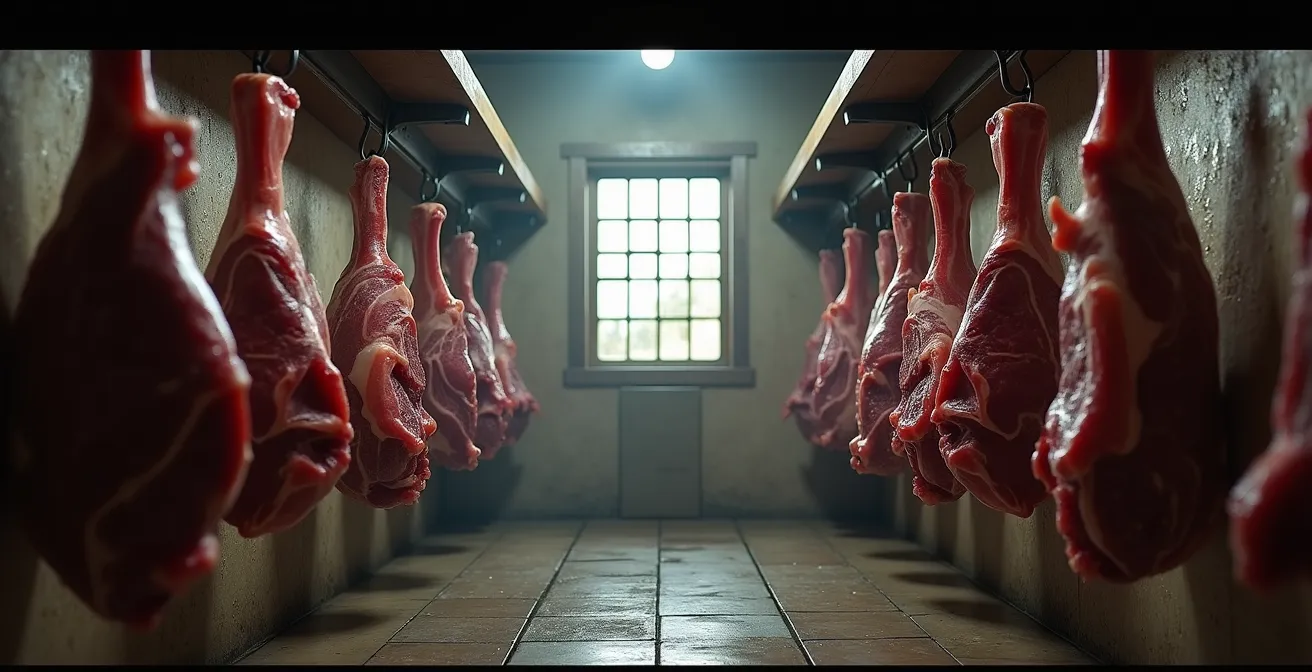
This is the fundamental difference you are paying for. Wet-aging is a simple, modern convenience for tenderness. Dry-aging is a time-honoured tradition for flavour. It requires space, time, expertise, and a willingness to lose a significant portion of the product to achieve something extraordinary. For a ribeye, where flavour is king, dry-aging is unequivocally the superior method.
How to Cook Grass-Fed Beef to Medium-Rare Without It Becoming Tough?
You’ve invested in a magnificent piece of grass-fed, dry-aged beef. Now comes the crucial part: cooking it. Grass-fed beef is naturally leaner than its grain-fed counterpart. This means it has less intramuscular fat (marbling) to keep it moist, so it can go from perfectly medium-rare to tough and chewy in a matter of minutes. The key is to respect the meat with a combination of high heat to start and gentle heat to finish.
First, let your roast come to room temperature for at least an hour. A cold piece of meat will cook unevenly. Pat it dry with a paper towel—a dry surface is essential for a good crust—and season it generously with coarse sea salt and freshly cracked black pepper. Get a heavy-bottomed roasting tray searing hot on the hob and sear the beef on all sides until it’s a deep, rich brown. This isn’t just for colour; it’s the Maillard reaction, creating hundreds of new flavour compounds that define a great roast.
Once seared, transfer it immediately to a hot oven. The exact temperature and time depend on the breed and its fat content, as some native Yorkshire breeds cook differently. A reliable meat thermometer is your best friend here; it removes all the guesswork. Aim for the internal temperatures listed below and remember to pull the roast out a few degrees early, as it will continue to cook while it rests.
The following table, based on our experience with native Yorkshire breeds, provides a solid guide for achieving that perfect medium-rare finish. Note how leaner breeds benefit from slightly lower target temperatures.
| Breed | Fat Content | Recommended Internal Temp | Cooking Notes |
|---|---|---|---|
| English Longhorn | Good fat covering and marbling | 52-54°C | Well-suited to high heat |
| Belted Galloway | Great marbling | 50-52°C | Benefits from gentler heat |
| Dexter | Darker colour, strong flavour | 48-50°C | Quick sear, lower temp roast |
After roasting, the most critical step is resting. This is non-negotiable. It allows the muscle fibres to relax and reabsorb all those delicious juices. We’ll cover that in more detail later, but for now, know that a proper rest is the final, vital act in ensuring your grass-fed beef is tender and juicy, not tough.
Marbling and Fat Color: What Does Yellow Fat Tell You About the Cow’s Diet?
Before it even hits the pan, a great piece of beef tells a story. With a butcher’s eye, you can read that story in the fat. There are two things to look for: marbling and fat colour. Marbling is the fine web of intramuscular fat that runs through the muscle. During cooking, this fat melts, basting the meat from within, keeping it moist and imparting a rich, buttery flavour. A good piece of aged beef will have a fine, evenly distributed network of marbling, not thick, clumsy chunks of fat.
Even more revealing, however, is the colour of the external fat cap. In standard, commercially-reared beef, the fat is often a stark, bright white. But in high-quality, slow-grown, grass-fed beef, you’ll often see a beautiful, creamy, yellow-hued fat. This yellow colour is a direct sign of the animal’s diet. Grass and hay are rich in a natural pigment called beta-carotene (the same compound that makes carrots orange). Cows store this pigment in their fat cells, giving the fat that distinctive golden tint. It’s a visual guarantee that the animal spent its life grazing on natural pastures.
This isn’t just an aesthetic point; it directly translates to flavour. That beta-carotene is a precursor to Vitamin A and is associated with a more complex, slightly grassy, and deeply savoury taste profile in the finished product. As the experts at Swaledale Butchers, another fine Yorkshire purveyor, put it:
This slower, sustainable growth process enhances both flavour and appearance, producing dry-aged beef with darker flesh and rich fat, often yellow-hued – a true reflection of their grass and hay diet.
– Swaledale Butchers, Native Breed Beef Guide
So when you see that creamy, yellow fat on a cut of Yorkshire beef, don’t shy away from it. Recognise it for what it is: a badge of honour. It’s the visual proof of a natural life and a promise of a richer, more profound flavour. It’s one of the key details that a knowledgeable home cook learns to look for, and it’s a big part of what makes that piece of meat worth the extra investment.
The Fridge Mistake That Ruins the Flavor of Expensive Aged Beef
You’ve brought home your prized possession: a beautiful, dry-aged steak or roast. The biggest mistake you can make now is to simply toss it in the fridge next to last night’s curry and a wedge of Stilton. Dry-aged beef is like a sponge for aromas, and its carefully cultivated flavour can be ruined by improper storage. The pellicle—that dark, dry crust formed during aging—is a protective barrier, but it’s not invincible.
The ideal environment for aging beef is a highly controlled one. Professional aging rooms, like those described by The Aging Room Chamber, maintain a climate where beef should live in a climate between 34.7 to 35.6 degrees Fahrenheit (1.5°C to 2°C) with specific humidity levels. Your home fridge is a chaotic, high-humidity environment by comparison, full of competing odours. Storing unwrapped aged beef in this environment can lead to cross-contamination of flavours, making your nutty, rich steak taste faintly of whatever else is in there.
Furthermore, wrapping it tightly in plastic is just as bad. This traps moisture against the surface, softening the pellicle and encouraging the growth of bacteria that can create off-flavours. You effectively begin to undo the work of the dry-aging process. Your expensive steak starts to become a wet-aged one, losing its unique character.
So, how do you protect your investment at home? If you’re cooking it within a day or two, you need to create a mini-aging environment inside your fridge. This involves isolating it from strong odours and allowing air to circulate. Following a precise method is crucial to preserving the flavour you paid for.
Your Action Plan: Home Fridge Storage for Aged Beef
- Assess your fridge: Find the coldest, most isolated spot, away from pungent foods like cheese, onions, or leftovers. A dedicated “meat-only” fridge is the gold standard if you’re a serious enthusiast.
- Prepare the storage setup: Place the unwrapped beef on a wire rack. This allows air to circulate around the entire cut. Place the rack over a tray of rock salt to help absorb excess moisture and odours.
- Isolate from odours: Ensure the beef is not in a shared, sealed container. The goal is air circulation, but you must keep it away from aromatic foods. Sharing space can lead to a disastrous cross-contamination of flavour profiles.
- Leave it naked: The beef should be unwrapped or unbagged. This maintains the dry surface (pellicle) and prevents the ‘sweating’ that occurs in plastic wrap.
- Allow for pellicle formation: If you’ve just bought a freshly cut steak from a larger aged primal, leaving it this way for 24-48 hours allows a new, thin pellicle to form, further concentrating the surface flavour before cooking.
Yorkshire Puddings: The Secret to Getting Them to Rise 4 Inches High
A magnificent Yorkshire beef roast is a king on the dinner table, but every king needs a crown. And that crown is a batch of towering, crispy, golden Yorkshire puddings. As a Yorkshireman, I consider it a personal offence to see a glorious roast served with flat, dense, or greasy puddings. Getting them to rise dramatically isn’t black magic; it’s science, and it comes down to a few non-negotiable rules.
The first secret is temperature shock. The batter must be fridge-cold, and the fat must be screaming hot. This is the single most important principle. The extreme heat causes the liquid in the batter to turn to steam almost instantly, forcing the pudding to puff up and rise dramatically. Use beef dripping from your roast for the best flavour—it’s part of the same chain of craft. Put a little dripping in each well of your pudding tin and get it in the hottest part of your oven until it’s smoking. Don’t be timid here; if it’s not smoking, it’s not hot enough.
The second secret is the batter itself. It needs to be the consistency of single cream, and it must be well-rested. Making it the night before and leaving it in the fridge is the professional’s choice. This allows the starch granules in the flour to swell and the gluten to relax, resulting in a more tender, taller pudding. Whisk eggs, flour, and milk until smooth, then let it rest. It’s a simple step that makes a world of difference.
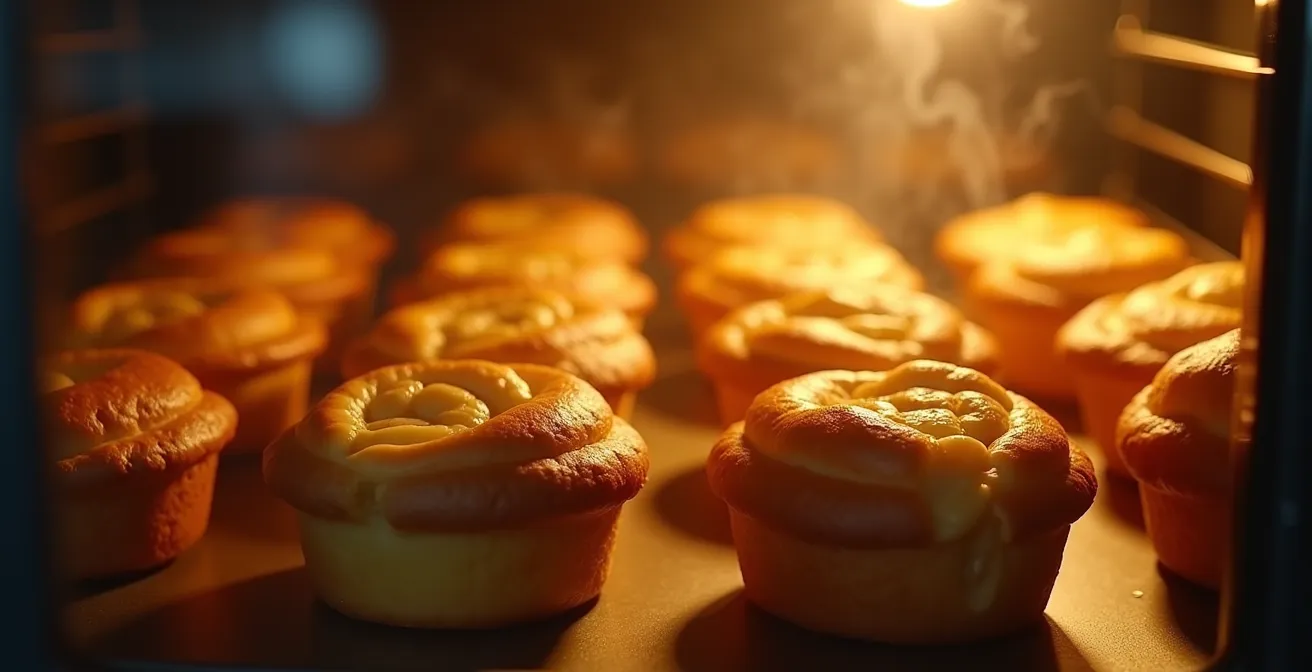
Finally, once you pour the cold batter into the hot fat, get it back in the oven immediately and, whatever you do, do not open the oven door for at least 20-25 minutes. Opening the door causes the temperature to drop, which will make your puddings deflate into sad, soggy discs. Have faith, let the oven do its work, and you will be rewarded with glorious, four-inch-high puddings that are crispy on the outside, soft and custardy on the inside, and ready to be filled with rich gravy.
Why Does a Pub Burger Cost £18 in the Cotswolds vs £12 in Town?
The difference between a standard £12 pub burger and a premium £18 gastropub burger often comes down to one key component: the quality and provenance of the meat. While location and overheads play a part, a significant portion of that price hike is a direct reflection of the investment in superior beef, often dry-aged and from a specific, high-quality source. A standard burger patty is a commodity; an aged Yorkshire beef burger is a culinary statement.
The cost difference begins at the source. A generic catering patty is made from unspecified cuts, often from multiple animals, supplied by a large national distributor. The focus is on consistency and low cost. In contrast, a premium patty from a craft butcher will be made from specific, well-marbled cuts from a single, named farm. The mince might be an 80/20 lean-to-fat ratio, carefully formulated for juiciness and flavour, and often made from meat that has undergone a significant aging process.
This breakdown shows just how much the patty itself contributes to the final cost. The raw material for the premium burger can cost more than three times as much as the standard one, and that’s before considering the artisan bun, homemade relish, and hand-cut chips that usually accompany it.
| Component | Standard Catering Burger | Aged Yorkshire Beef Burger |
|---|---|---|
| Patty Cost | £1.50 | £4.00-£5.00 |
| Meat Source | Generic supplier | Dry Aged 80/20 perfect lean to fat ratio |
| Aging Process | None/minimal | 32-day dry aged |
| Supply Chain | National distributor | Specific Yorkshire farm |
Case Study: R&J Yorkshire’s Finest Salt Aged Range
A prime example of this is R&J, who were the first butchers in Yorkshire to launch a dedicated Salt Aged range. In 2015, after maturing beef for 60 days in their Himalayan Salt Chamber, they began supplying this signature product to top chefs and gastropubs. This pioneering approach gives chefs a unique selling point and a story to tell. They can confidently charge a premium because they are serving a product with unparalleled provenance and a depth of flavour that a standard burger simply cannot match. The £18 price tag isn’t just for a burger; it’s for the R&J Salt-Aged experience.
So, that £18 burger isn’t just an “expensive burger.” It represents a commitment to the entire chain of craft—from the farmer who raised the native breed animal to the butcher who aged it for 32 days, to the chef who grinds it fresh. You’re paying for a concentrated, beefy flavour that can only come from time, care, and quality raw materials.
The Resting Rule: Why Cutting Meat Too Soon Ruins a Slow Roast?
You’ve done everything right. You bought a fantastic piece of aged beef, you’ve cooked it to the perfect internal temperature, and it’s sitting on your counter, looking and smelling divine. The temptation to carve into it immediately is immense. But to do so would be to commit the ultimate culinary sin and undo all your hard work. Resting meat isn’t an old wives’ tale; it is the most critical step between the oven and the plate.
Think of the muscle fibres in your roast. During cooking, these fibres tense up and squeeze their moisture towards the centre of the cut. If you slice into the roast straight out of the oven, all that superheated juice, which is under pressure, has nowhere to go but out, flooding your carving board and leaving you with a dry, disappointing piece of meat. This is the flavour, the juiciness, and a good part of your investment literally going down the drain.
Resting allows the meat to undergo a crucial final transformation. As it sits, the muscle fibres begin to relax. The temperature equalises throughout the roast, and those precious juices are slowly reabsorbed back into the meat, distributing themselves evenly. This process is helped by “carry-over cooking.” Even after you remove it from the oven, the residual heat continues to cook the meat. For a large joint, you can expect the internal temperature to rise by another 5-8°C during the resting period. This is why you must always pull your roast from the oven before it reaches its final target temperature.
So how long should you rest it? The rule of thumb is to rest it for at least half the cooking time. For a one-hour roast, that’s a minimum of 30 minutes. Place it on a warm plate (not a hot one, or it will keep cooking too fast) and tent it loosely with foil. Do not seal the foil tightly, as this will trap steam and soften that beautiful crust you worked so hard to create. When you finally carve, you’ll see the difference: a perfectly rosy, tender slice of beef, and a carving board that is almost dry. You kept the flavour where it belongs—in the meat.
Key Takeaways
- Aging is everything: Dry-aging concentrates flavour by losing water, which is why it costs more and delivers an intense, nutty taste.
- Look for yellow fat: It’s the sign of a natural, grass-fed diet and is a direct indicator of a richer, more complex flavour profile.
- Respect the rest: Resting your roast for at least half its cooking time is non-negotiable for a juicy, tender result. It allows the muscle to reabsorb the flavour.
Brisket and Shoulder: How to Turn Cheap Cuts into Tender Feasts?
While a prime ribeye is a thing of beauty, a true appreciation for beef comes from understanding how to transform tougher, more economical cuts into something spectacular. This is where the quality of the animal and the skill of the cook truly shine. Cuts like brisket and shoulder come from the hardworking muscles of the cow. They are packed with connective tissue (collagen) and have a deep, beefy flavour, but they require a different approach: long, slow cooking.
The secret is that the “chain of craft” we’ve been talking about matters just as much, if not more, with these humble cuts. A brisket from a well-reared, native breed animal will have a far superior flavour and fat content than a generic one. For example, some Yorkshire farmers specialise in unique breeds that are perfect for this style of cooking. As the butchers at Grid Iron Meat note about one particularly special breed:
Dexter cattle are the smallest breed in Europe and produce neat cuts of beef with a darker colour and strong, beefy flavour. Beer fed Dexter beef from Mount Grace farm has stronger marbling and creamy fat content.
– Grid Iron Meat, British Native Breeds Guide
This is crucial. That stronger marbling and creamy fat from a quality Dexter will melt down over a long cook, basting the meat and ensuring a succulent result. When you apply low, moist heat over several hours—whether in a slow cooker, a low oven, or a pressure cooker—that tough collagen breaks down and transforms into rich, unctuous gelatin. This is what gives slow-cooked beef its signature ‘fall-apart’ texture and mouth-coating richness.
So, don’t overlook these cuts. A slow-braised brisket with root vegetables or a pulled beef shoulder, cooked for hours until it shreds with a fork, can be just as memorable as a prime roast. The key is to start with a quality piece of meat from an animal that has been well-reared. By choosing a cut from a native breed known for its flavour, like a Yorkshire Dexter, you are ensuring that your long, patient cooking will be rewarded with a truly tender and delicious feast.
So the next time you’re at the counter, don’t just buy a piece of meat. Invest in a story. Ask your butcher about the breed, the age, and the feed. Apply the right technique for the right cut, and always, always rest your meat. Your Sunday roast, and everyone gathered around your table, will thank you for it.
Frequently Asked Questions About Aged Yorkshire Beef
Can you tell me about the farm’s pasture management?
Our beef comes from farms where the cattle feed on natural grass pastures. In winter, their diet is supplemented with hay and silage grown on the same farm. This consistent, natural diet, combined with the slow growth of native breeds, is what produces the fantastic marbling and distinctive, rich flavour you find in our beef.
What native breeds do you offer?
We work with a cooperative of dedicated Yorkshire farmers to source traditional English breeds. This typically includes heritage cattle like Dexter, Hereford, and Shorthorn. These breeds are chosen for their superior flavour and texture, which are perfectly suited for traditional butchery and aging processes, rather than for the rapid growth favoured in commercial farming.