
Deciding when to consider surgery for knee osteoarthritis is rarely straightforward. Many people live with knee pain for months or years, weighing the fear of an operation against the impact on daily life. The question is not simply whether surgery is technically possible, but whether the timing is right for you individually.
There is no universal moment when surgery becomes necessary. The decision depends on how osteoarthritis affects your quality of life, whether conservative treatments have been properly explored, and what a specialist assessment reveals. This article explains the concrete signs that suggest surgery may be worth discussing, the non-surgical options that should typically be tried first, and how to prepare for an informed conversation with your GP or orthopaedic specialist.
Understanding these signals helps you move from uncertainty to a structured approach: recognising when your symptoms have changed, knowing what questions to ask, and making a decision based on clinical evidence rather than fear or pressure.
What Is Knee Osteoarthritis and How Does It Progress?
Knee osteoarthritis, sometimes called gonarthrosis, occurs when the protective cartilage cushioning the knee joint gradually wears away. As this cartilage deteriorates, the bones in the joint may begin to rub together, causing pain, stiffness and reduced movement. This process develops slowly, often over years, and its progression varies considerably from one person to another.
In the early stages, you might notice occasional stiffness after sitting for long periods or mild discomfort after walking. Over time, these symptoms may become more persistent: pain that interrupts sleep, difficulty climbing stairs, or a noticeable reduction in walking distance. Some people experience swelling, a grinding sensation during movement, or a feeling that the knee might give way.
Osteoarthritis is common, particularly among people over 50. According to a clinical document from the North Yorkshire Clinical Commissioning Group (NHS), around 20% of adults over 50 and 40% of those over 80 report some level of disability related to knee pain from osteoarthritis. Despite these figures, most patients do not require surgery, with symptoms often managed successfully through conservative measures aligned with NICE recommendations.
Understanding what causes osteoarthritis can help explain why the condition progresses at different rates in different people. Factors such as previous injury, genetic predisposition, body weight and activity levels all play a role in how the joint deteriorates over time.
The progression of osteoarthritis does not follow a single predictable pattern. Some people experience relatively stable symptoms for many years, while others notice a more rapid decline. This variability is why the decision to consider surgery is always individual and must be based on how the condition affects your particular circumstances, rather than on a fixed timeline or severity grade alone.
When Is It Time to Consider Surgery for Knee Osteoarthritis?
Direct answer: Surgery may be worth considering when persistent knee pain significantly limits daily activities and sleep despite several months of properly followed conservative treatment, and when a specialist’s clinical and radiological assessment confirms that the joint damage justifies an operation. There is no fixed moment that applies to everyone.
The key signals that surgery might be appropriate include pain that persists despite taking prescribed painkillers regularly, difficulty sleeping due to night-time discomfort, and a noticeable reduction in your ability to walk, climb stairs or carry out everyday tasks. If physiotherapy, weight management and medication have been tried consistently for several months without sufficient relief, this suggests conservative options may have reached their limits.
NICE guidance indicates that evidence on referral criteria for joint replacement remains limited, but notes that non-response to analgesics may be associated with a need for surgery. This does not mean surgery is automatically indicated simply because painkillers have stopped working; rather, it forms one part of a broader clinical picture that a specialist will assess.
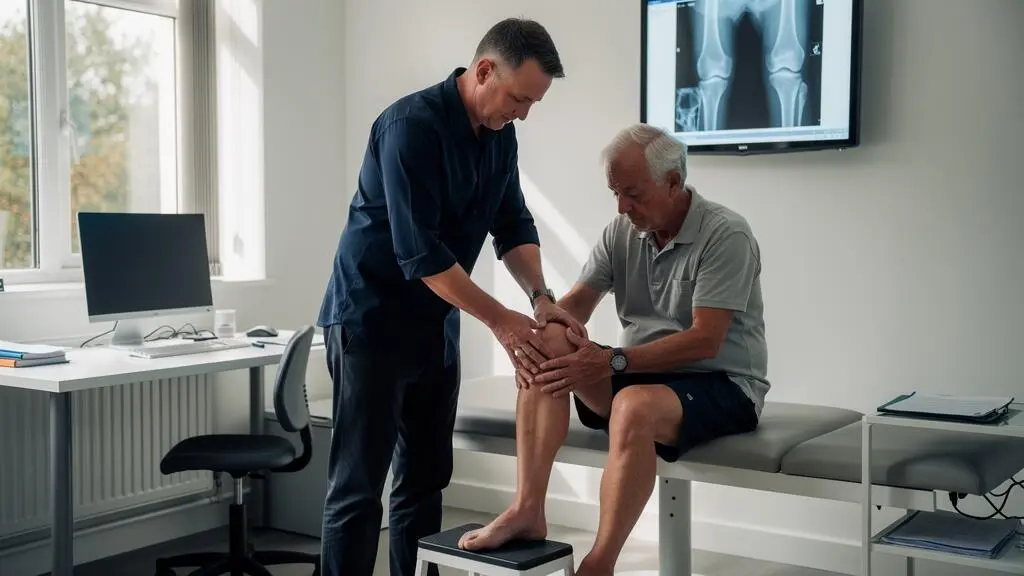
A consultant orthopaedic surgeon evaluates several factors when considering whether surgery is appropriate. These include a physical examination of the knee, imaging such as X-rays to assess the extent of joint damage, your overall health and fitness for surgery, and crucially, the impact of osteoarthritis on your quality of life. The decision is not made on pain alone, but on a combination of objective findings and your individual circumstances.
It is important to recognise that considering surgery does not mean an operation will happen immediately. The process typically involves a referral from your GP to a specialist, further assessment, and a discussion about whether the potential benefits outweigh the risks in your case. This shared decision-making approach ensures you remain informed and involved at every stage.
One common concern is whether waiting too long might cause irreversible harm. According to NHS inform, surgery performed before the knee becomes severely stiff may be associated with better outcomes, though operating earlier in life can increase the likelihood of needing a future revision. This balance reinforces why the timing must be assessed individually rather than rushed or delayed based on generalisations.
Which Non-Surgical Options Should Be Tried First?
Before surgery is considered, a range of conservative treatments should typically be explored. These options aim to reduce pain, maintain mobility and slow the progression of symptoms, and for many people they provide sufficient relief without the need for an operation.
Painkillers and anti-inflammatory medications are often the first step. Paracetamol and non-steroidal anti-inflammatory drugs (NSAIDs) such as ibuprofen can help manage pain, though their long-term use should be discussed with a GP due to potential side effects. Topical NSAIDs, applied directly to the skin over the knee, may also be recommended.
Physiotherapy plays a central role in managing knee osteoarthritis. A physiotherapist can design an exercise programme to strengthen the muscles around the knee, improve flexibility and reduce strain on the joint. Structured exercise, including low-impact activities such as swimming or cycling, helps maintain joint function and can reduce pain over time. Weight management, where relevant, can also significantly reduce the load on the knee and slow deterioration.
Additional aids may be useful depending on your symptoms. Walking sticks or frames can reduce pressure on the knee during daily activities, whilst knee braces or supports may provide temporary relief. Some people find benefit from heat or cold packs applied to the joint.
Imaging plays an important supporting role in monitoring the condition. X-rays show the extent of cartilage loss and any bone changes, helping clinicians assess how the osteoarthritis is progressing. In some cases, an MRI may be used to examine soft tissues in more detail. Understanding the value of imaging in tracking joint health can inform decisions about when to escalate treatment.
In the UK, the typical pathway begins with your GP. After an initial assessment, your GP may recommend a trial of conservative treatments lasting several weeks or months. If symptoms do not improve sufficiently, a referral to an orthopaedic specialist can be arranged. Within the NHS, waiting times for specialist appointments and surgery can vary, and some patients choose to pursue private consultations for faster access, though this involves out-of-pocket costs.

It is important to have realistic expectations about what conservative treatments can achieve. They can reduce pain, improve function and help you remain active, but they cannot reverse the underlying cartilage damage. If you have followed a well-structured programme of physiotherapy and medication for at least three months without adequate relief, and your symptoms continue to limit your daily life, it may be appropriate to discuss surgical options with a specialist.
What Are the Surgical Options and the Risks Involved?
When conservative treatments have been thoroughly explored and symptoms remain disabling, surgery may be discussed. The two main surgical options for knee osteoarthritis are osteotomy and knee replacement, each suited to different patient profiles and stages of joint damage.
An osteotomy involves cutting and reshaping the bone around the knee to shift weight away from the damaged part of the joint. This procedure is typically considered for younger, active patients with osteoarthritis affecting only one compartment of the knee. It preserves the natural joint and can delay the need for a knee replacement, though it may not be appropriate if the arthritis is widespread.
Knee replacement, or knee arthroplasty, involves removing the damaged joint surfaces and replacing them with artificial components made of metal and plastic. A partial knee replacement addresses only the affected compartment, whilst a total knee replacement resurfaces the entire joint. This option is more commonly recommended for older patients with advanced osteoarthritis affecting multiple areas of the knee.
NHS inform confirms that adults of any age can be considered for knee replacement surgery, though it is more frequently recommended for older people. The choice between osteotomy and replacement depends on factors such as your age, activity level, the extent of joint damage and your overall health, all of which will be assessed by your orthopaedic surgeon.
Like any surgery, knee operations carry risks. Potential complications include infection, blood clots, nerve or blood vessel damage, and ongoing pain or stiffness. There is also a possibility that the artificial joint may wear out or loosen over time, requiring revision surgery. Your surgeon will discuss these risks in detail and assess whether you are medically fit to undergo the procedure safely.
Recovery and rehabilitation are important considerations. After knee replacement surgery, physiotherapy typically begins within a day or two to restore movement and strength. Most people use walking aids initially and gradually progress to normal activities over several weeks. Full recovery, including a return to low-impact sports or hobbies, can take several months. The success of the surgery depends partly on how well you engage with the rehabilitation programme.
A common concern among patients in their sixties or seventies is whether they are too old for surgery. Age alone is not a barrier; what matters more is your overall health, fitness and ability to participate in post-operative rehabilitation. Many people in this age group achieve excellent outcomes, regaining mobility and significantly reducing pain. For further context on managing knee arthritis, you may find it useful to read about knee arthritis risks and treatments.
It is essential to enter any surgical decision with realistic expectations. Surgery can relieve pain and restore function, but it is not a cure for osteoarthritis, and outcomes vary. A thorough discussion with your specialist, covering both the benefits and the limitations, is the foundation of an informed choice.
How to Prepare for an Informed Discussion with Your Doctor
Preparing for a consultation about knee surgery can help you make the most of the appointment and ensure your concerns are addressed. Taking a structured approach demonstrates to your GP or specialist that you are serious about understanding your options and making an informed decision.
Start by keeping a symptom diary for a few weeks before the appointment. Record the frequency and intensity of your pain, noting when it occurs and what activities trigger or worsen it. Track how well you sleep, how far you can walk comfortably, and any activities you have had to stop or modify. This objective record helps the clinician assess the impact of osteoarthritis on your daily life more accurately than memory alone.
Gather details of all the conservative treatments you have tried. List medications, dosages and how long you took them, along with any physiotherapy programmes, exercise regimes or other interventions. If you have had imaging such as X-rays or MRI scans, bring copies or make sure your GP has access to the results. This information allows the specialist to see what has already been attempted and to identify any gaps in your treatment plan.
Prepare a list of specific questions to ask during the consultation. Examples might include: ‘Given that physiotherapy and painkillers have not relieved my pain for several months, is it appropriate to consider surgery now?’, ‘What are the likely benefits and risks of surgery in my case?’, ‘How long is the typical recovery period, and what support will I need at home?’, and ‘What happens if I choose to wait longer before deciding?’ Writing these questions down ensures you do not forget them during the appointment.
It can be helpful to bring a family member or friend to the consultation. They can take notes, help you remember what was discussed, and provide support as you weigh your options. If you feel uncertain about any aspect of the advice you receive, do not hesitate to ask for clarification or request time to think things over before making a decision.

Understanding the NHS referral pathway is also valuable. Your GP is the usual first point of contact and can refer you to an orthopaedic consultant if appropriate. Waiting times for NHS appointments and surgery can vary by region, so ask about expected timescales. If you are considering private treatment, research the costs involved and check whether your private health insurance covers consultations and procedures.
Finally, obtaining a specialist opinion is an important step even if you are unsure whether surgery is right for you. A consultant can provide an expert assessment of your joint, explain what surgical and non-surgical options remain available, and help you understand the likely trajectory of your condition. This does not commit you to surgery; it simply ensures you have all the information needed to make a decision that suits your circumstances.
If you are managing symptoms whilst waiting for a consultation or treatment, exploring options for accessing prescriptions without a GP appointment may help you maintain comfort and mobility in the interim.
How do I know if my knee osteoarthritis is severe enough for surgery?
Am I too old to have a knee replacement?
What happens if I delay knee surgery?
How long does it take to recover from knee replacement surgery?
What questions should I ask my GP about knee osteoarthritis surgery?
Deciding when to consider surgery for knee osteoarthritis is a personal and individual process. There is no universal threshold of pain or disability that applies to everyone, and no fixed timeline that dictates when an operation must happen. What matters is how osteoarthritis affects your daily life, whether conservative treatments have been thoroughly explored, and what a specialist assessment reveals about the condition of your joint.
By recognising the concrete signs that conservative options may no longer be sufficient—persistent pain, sleep disturbance, reduced mobility—and by preparing carefully for discussions with your GP and specialist, you can approach this decision with confidence. Surgery is not always necessary, but when it is appropriate, it can significantly improve quality of life and restore the ability to carry out activities that matter to you.
The most important step is to seek professional advice when you feel your symptoms are no longer controlled. An informed conversation with a clinician, supported by clinical examination and imaging, ensures that any decision you make is based on evidence, shared understanding and a realistic assessment of the benefits and risks.